
Background on the 2004 ICC arrest warrant for Bosco Ntaganda, wanted for war crimes allegedly committed in the DRC including civilian massacres and the recruitment of child soldiers. In 2009, the Congolese government decided not to arrest Bosco, and instead appointed him a deputy comm...

Situation brief on the International Criminal Court's prosecution against Thomas Lubanga, the former leader of the Union des Patriotes Congolais (UPC) who has been charged with genocide and crimes against humanity. Due to problems with the prosecutor's proposed use of evidence, the tr...

Two years after the first election in the Republic Congo (DRC) since independence, the country can at a crossroads. Among the principal challenges facing the government, there is that of how the Congo will face its recent history of massive human rights violations man to lay the groun...

Cette étude vise à communiquer les perspectives, les attentes et les besoins des personnes déplacées du Soudan du Sud aux décideurs politiques concernés, afin d'éclairer les efforts de justice transitionnelle déployés dans le cadre de l'accord de paix revitalisé de 2018 au Soudan du S...

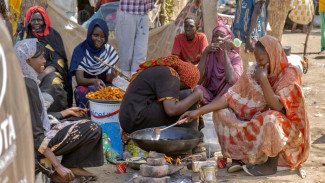
several women in colorful dresses crouch around an open fire pit, cooking food in a large pan.

This briefing paper analyzes and reflects on the development of the ICC prosecutor’s strategy and application of procedural rules, since operations began at the International Criminal Court more than a decade ago. The mixed results of the court’s first cases, which arise from the situ...

Since 1996, the Democratic Republic of Congo (DRC) has experienced constant war. The most serious crimes were committed and continue to be committed, particularly in the eastern region. Congolese society reacts by calling for military justice and other actions.

Les réfugiés et personnes déplacées du Soudan du Sud représentent actuellement 40 % de la population totale du pays. Pourtant, ces groupes ont été largement exclus des discussions politiques en cours concernant le processus de justice transitionnelle. Un nouveau rapport de l'ICTJ vise à faire entendre leurs points de vue et leurs attentes et à garantir leur inclusion dans la conception et la mise en œuvre du processus.

NEW YORK, 19 juillet 2016 — Le Centre International pour la Justice Transitionnelle (ICTJ) vient de publier un nouveau guide pour les néophytes, les journalistes et les activistes, qui les conduit à travers le dédale de la « complémentarité », un principe fondamental de la Cour Pénale Internationale...

Two years after the Democratic Republic of Congo (DRC) held its first elections since independence, the country is at a crossroads. Among the key challenges facing the DRC today is the question of how the country will address the massive human rights atrocities of its recent past to e...

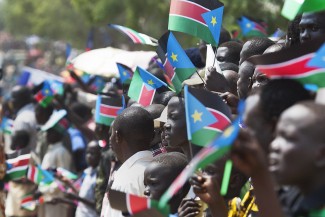
La transition du Soudan du Sud vers un régime démocratique, grâce à des élections générales très attendues et inédites depuis l'indépendance, doit encore attendre deux ans. Malgré cette dernière prolongation, le pays a franchi des étapes importantes dans son processus de justice transitionnelle.