Latest News

Explore our feature stories, opinion articles, and press releases.

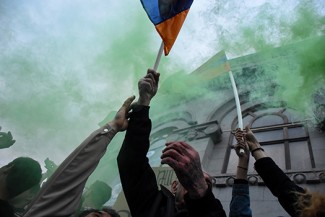
While Armenia may rightfully seek acknowledgment from its neighbors of the genocide and other egregious violations, for its part, it must have the courage to reckon with its own recent past in the 30 years since achieving statehood, which includes war crimes, systematic corruption, and large-scale human rights abuses against its own citizens. Failing to do so ultimately threatens the young republic’s democracy.

This year marks ICTJ’s 20th anniversary. For the past two decades, the organization has engaged in more than 50 countries, providing technical assistance and other critical support to victims, civil society, governments, and other stakeholders. Since its beginnings, ICTJ has served as a meeting point for transitional justice experts and practitioners and a hub of knowledge, research, and analysis. As a think tank that does, it has been at the forefront of the field’s evolution.

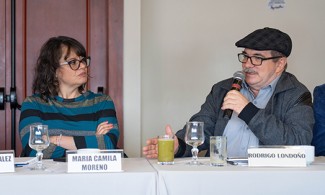
A significant portion of Colombian society has been indifferent to the pain of those who lived through the war in the flesh. Some have even denied the existence of an internal armed conflict. This is why it is necessary for us to recount our early and recent history. A new, more comprehensive and nuanced narrative must emerge from the testimonies of victims, responsible parties, and even spectators of this unending war.
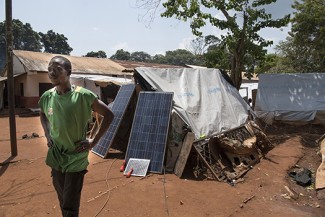
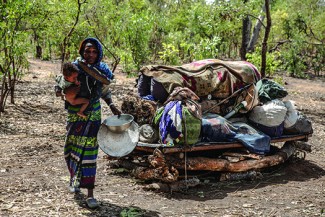
With a special court that has yet to open a trial and a truth commission that is not up and running, international attention on victims in the Central African Republic is waning. Since 2015, the unfulfilled promises of justice made to these victims have failed to address their daily realities and needs for immediate moral, physical, and material reparations, writes Rim El Gantri, one of the authors of a recent study by ICTJ and Cordaid.

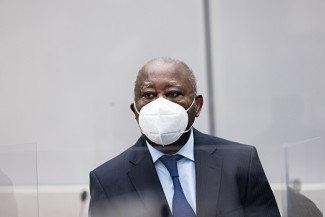
On March 31, 2021, the Appeals Chamber of the International Criminal Court upheld the Trial Chamber I’s acquittal of former Ivorian President Laurent Gbagbo and Charles Blé Goudé of all charges relating to crimes against humanity they allegedly committed during Côte d’Ivoire’s 2010-2011 post-election crisis. While the acquittal may be frustrating to many pursuing justice and accountability in Côte d’Ivoire, a silver lining is that it could mean tangible benefits for victims.

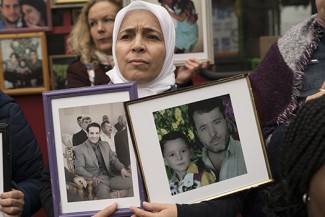
New York, March 10, 2021—“We want to turn the page, but not at the cost of justice”—that was a message repeated by victims of human rights abuses interviewed in a new report released today on transitional justice in the Central African Republic (CAR). Produced by the International Center for Transitional Justice and Cordaid, ‘A Drop of Water on a Hot Stone’: Justice for Victims in the Central African Republic presents findings from a study exploring victim-centered approaches to justice in CAR and their feasibility in a context of profound fragility and extreme poverty.

Ten years have passed since Tunisians took the streets to demand “Employment, Freedom, and National Dignity.” The revolution’s loud, courageous voice against corruption, extreme inequality, and repression echoed around the globe and inspired the “Arab Spring.” Today, Tunisians are still proud of their revolution. However, they continue to strive for goals, yet unattained, that the political class does not even seem to understand. It was thus not surprising to see large protests on the 10th anniversary, demanding concrete action and new public policies to advance social justice and better integrate marginalized regions and populations.

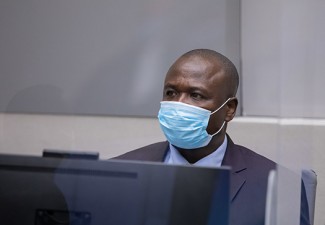
On February 4, 2021, the International Criminal Court issued its judgment in the case of the Prosecutor v Dominic Ongwen. The ICC found Ongwen guilty of 61 counts of crimes against humanity and war crimes committed in Northern Uganda between July 1, 2002, and December 31, 2005. The verdict recognizes the enduring impact of the crimes on the victims, their families, and Ugandan society more generally.

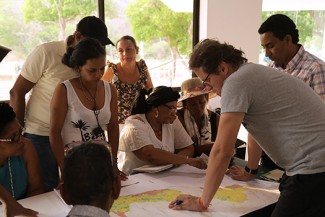
New York, January 25, 2021—"You cannot deliver 500 kilograms of transitional justice,” explains a high-level UN official in a new ICTJ report released today that explores the theoretical and practical challenges of measuring the results of transitional justice processes. These processes are complex and politically contested and are thus notoriously difficult to evaluate. The report offers key insights related to and tools for evaluating and monitoring transitional justice processes and assessing their impact.

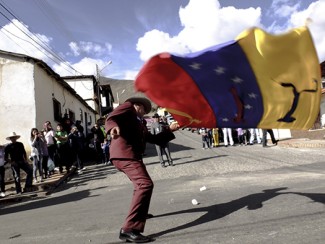
In Venezuela, there is now an absence of representative democracy and a vacuum of public trust in politicians. However, this situation presents an opportunity for other actors and other approaches, so far disparaged by hardliners on both sides. Civil society organizations, which have earned credibility through their dedicated work addressing the humanitarian crisis and defending human rights, can seize this opportunity.