Latest News

Explore our feature stories, opinion articles, and press releases.

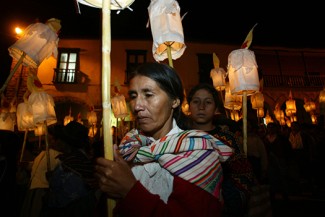
Indigenous peoples are still some of the most marginalized and vulnerable communities around the world. In a conflict, they are often some of the most affected as their resource-rich territories are coveted by powerful and violent groups, their identity and loyalty perceived with mistrust, and their...

ICTJ was pleased to host the newly elected United Nations Special Rapporteur on the promotion of truth, justice, reparations, and guarantees of non-recurrence, Fabian Salvioli (Argentina), at its New York office, where he discussed his vision and priorities.

The 2030 Agenda for Sustainable Development establishes an ambitious set of goals and targets, the achievement of which will be a formidable challenge for any country struggling with poverty and inequality. This challenge increases dramatically for countries currently experiencing or emerging from violent conflict.

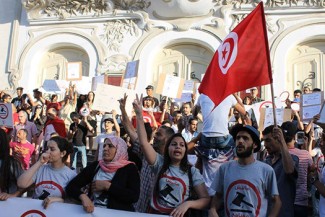
ICTJ's Virginie Ladisch spoke with Heythem Guesmi, a young Tunisian activist who is fighting systemic oppression, economic exclusion, and impunity that persist despite the Revolution’s initial success, and Thenjiwe McHarris, a young organizer working with Black Lives Matter in the United States—a movement whose urgency also stems from historic marginalization leading to widespread impunity and systematic failures in law enforcement.

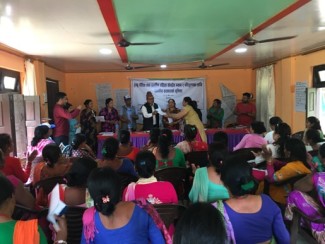
Nepal’s new local government structure – comprised of districts, municipalities, sub-municipalities, and wards formed within the new federal system under the 2015 Constitution – offers the possibility of some individualized redress for victims at the community-level. This article by Elena Naughton was published in the Kathmandu Post on May 6, 2018.

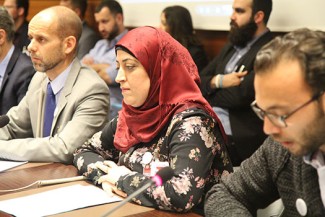
On March 22 in Geneva, we listened to the experiences of Syrians affected by attacks on schools. The Save Syrian Schools project presented the results of its one-year-long research—an unprecedented collaboration of 10 Syrian human rights organizations and the ICTJ.

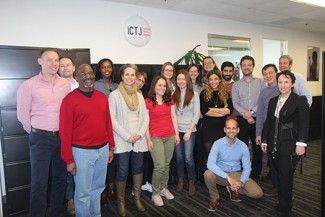
Sixteen practitioners participated in the Intensive Course on Transitional Justice and Peace Processes held in New York from March 5 to March 9, 2018. Participants included leaders in their respective fields, including human rights law, community justice and legal services, peacebuilding, education, and humanitarian affairs. Selected course presentations, led by ICTJ experts and other specialists in the field, delved into cases of current, recent, and paradigmatic peace processes and questions of justice within a comparative context.

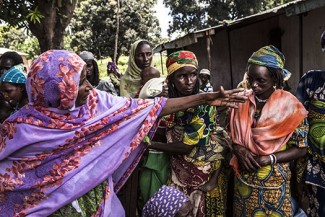
In recent months, the crisis in the Central African Republic (CAR) that erupted five years ago has seemed farther than ever from resolution. A new report by ICTJ, I Am 100% Central African: Identity and Inclusion in the Experience of Central African Muslim Refugees in Chad and Cameroon, offers important insights on how a higher political commitment to inclusion could help transform a volatile rebuilding process into a sustainable peace.

To mark the launch of our new publication, "Forms of Justice: A Guide to Designing Reparations Application Forms and Registration Processes for Victims of Human Rights Violations", we sat down with Karl Gaspar to talk about his experience participating in the reparations process as a victim in the Philippines.

To mark the launch of our new publication, "Forms of Justice: A Guide to Designing Reparations Application Forms and Registration Processes for Victims of Human Rights Violations", we sat down with Jairo Rivas about his work in designing reparations forms in Peru and Colombia.