
From Abidjan to Korhogo: A Journey to Assess Victims’ Needs in Côte d’Ivoire

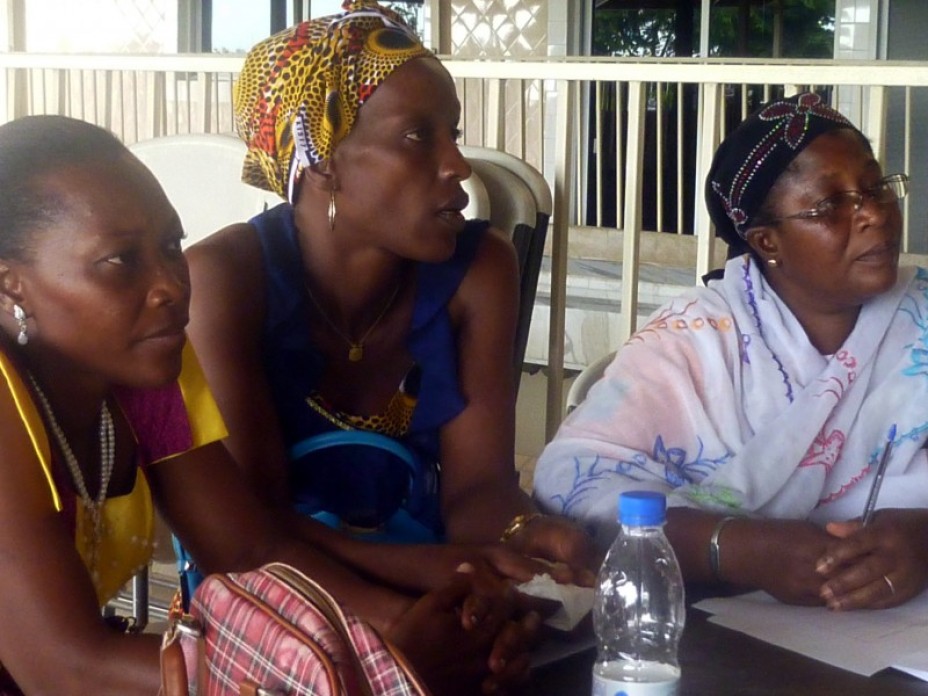
Three women looking to the right.

During consultations, three women from Abobo and Yopougon listen to their peers’ recommendations for reparations policies. During consultations, women were given opportunities to work exclusively with other women, allowing them space to more comfortably express their needs and ICTJ a way to better understand them.

People gathered around a table talking.

In Abidjan, Gbade Amandine offers her concerns to the group. In the course of the consultations, ICTJ sought to engage with all segments of Ivorian society, including young people, who suffered immensely during the conflict and its aftermath whether they endured violence directly, lost family members or participated in the violence themselves.

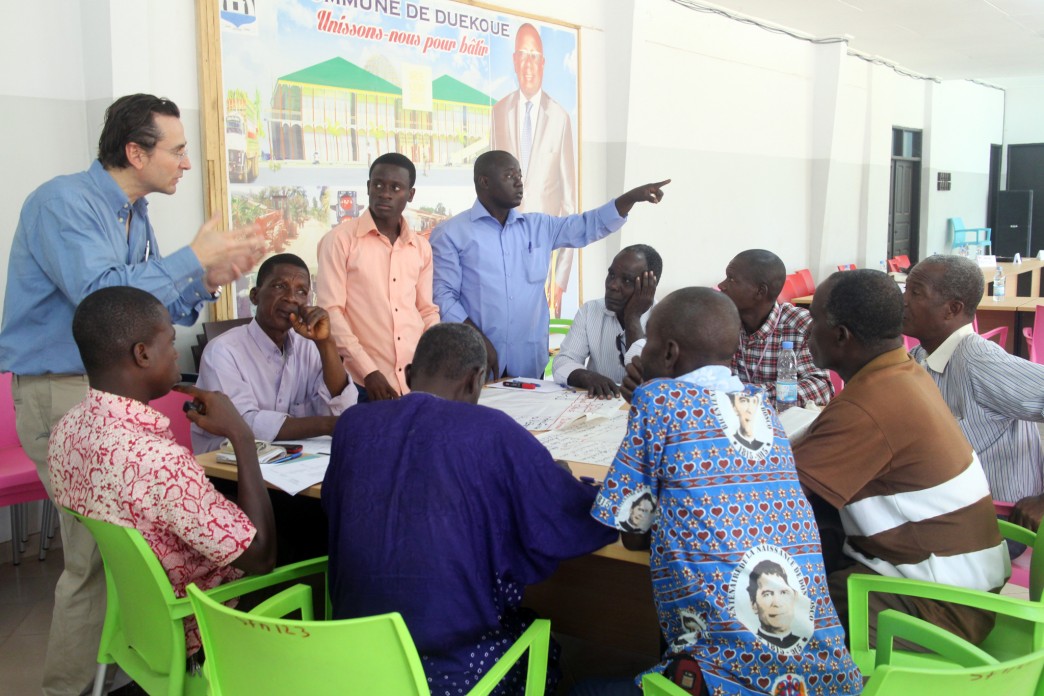
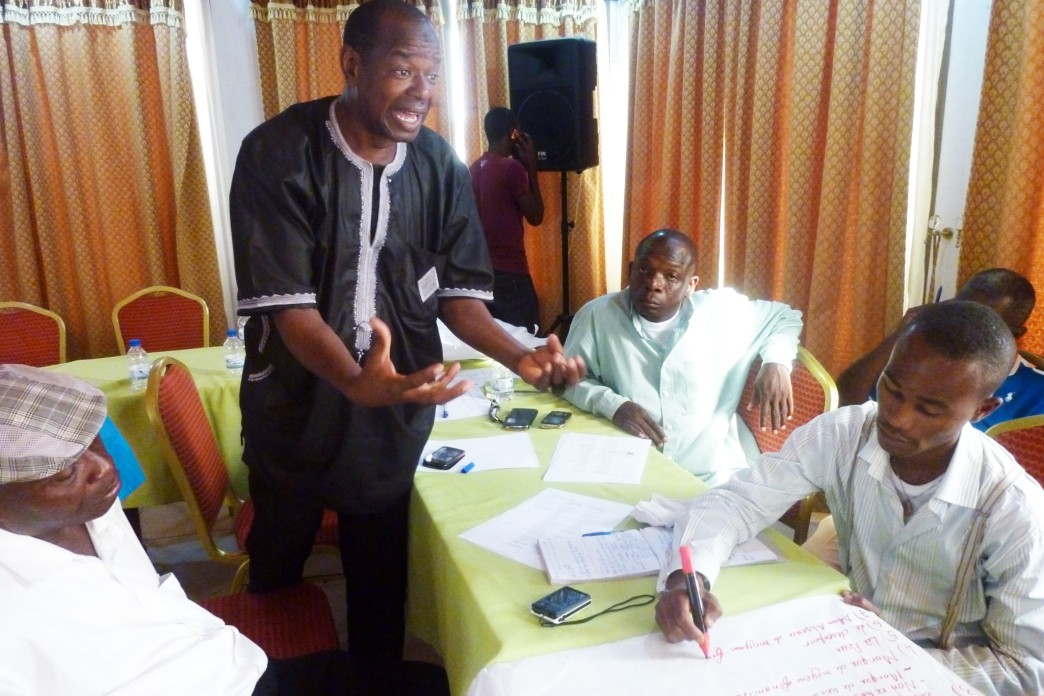
People gathered around a table talking.

ICTJ’s Cristián Correa (left) encourages a practical approach to recommendations offered in a small group discussion in Duékoué in the western part of the country. As participants called for reparations measures like scholarships or lump-sum payments, Correa stressed the need for logistical considerations as well. For instance, if a school is overcrowded, how can that issue be addressed so that scholarships are meaningful? Or if victims are to receive reparations payments processed through banks, how will they get them when the nearest bank is hours away? These practical concerns are critical to actually providing the reparations promised by the government.

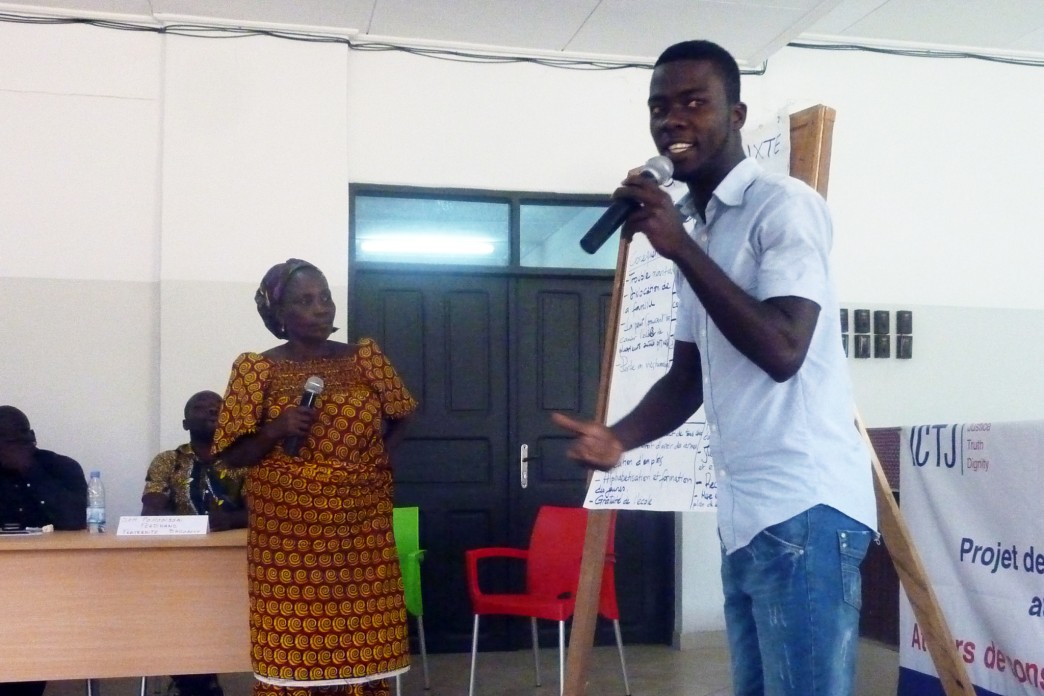
A man presenting.

A man from Duékoué discusses how 2010’s post-election violence played out across different dimensions of family life in Duékoué, specifically amongst families of those who were detained during the conflict. In his discussion, he insists on the need for reparative justice from the state, and also what the community should do to help implement reparations and remain engaged.

A man presenting.

During Côte d’Ivoire internal conflict, the state abandoned its responsibility to protect its citizens and allowed the education system to fall into disarray, especially in some areas occupied by opposition forces. The insufficient infrastructure persists today. Moussa Soulama wants to address this urgent issue, demanding the reconstruction of schools as part of a comprehensive plan of community reparations.

A woman presenting.

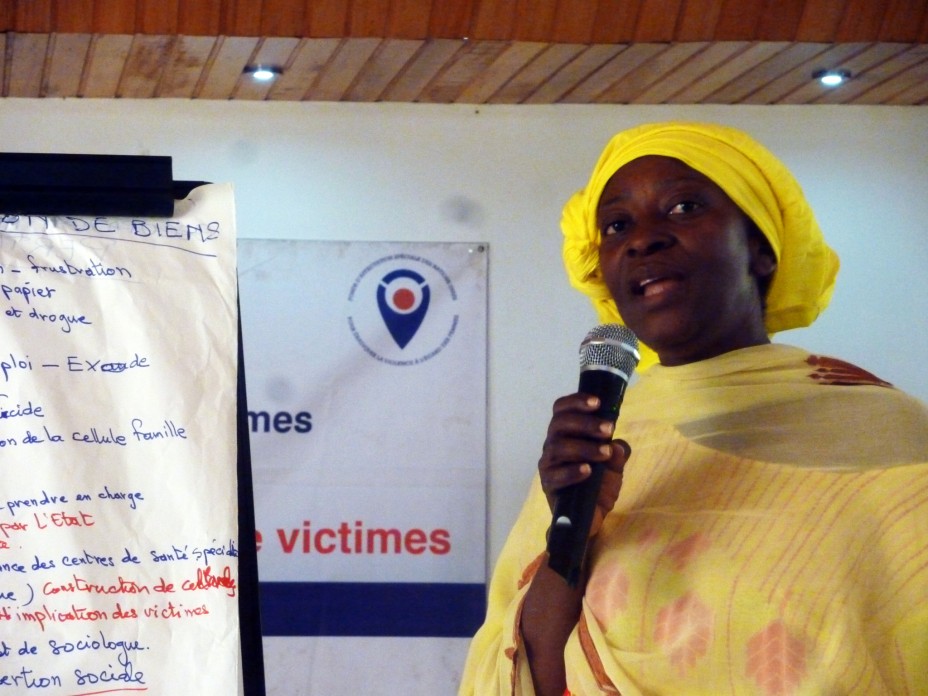
Poverty, healthcare and a lack of access to education are all major issues facing victims in Bouaké, in central Côte d’Ivoire, says Mrs Sanogo Mariam. During the forum, she discussed how the conflict affected women, what obstacles they must overcome now, and what specific policies would help them accomplish that.

A woman speaking into a microphone.

Following the consultation in Bouaké, participants took to the local airwaves to discuss their experiences. The broadcast explored testimonies from victims on all sides, emphasizing their shared experiences during the conflict and their shared needs in its aftermath.

The participants hoped to encourage the general public, especially fellow victims, to be informed about and participate in the reparations process.

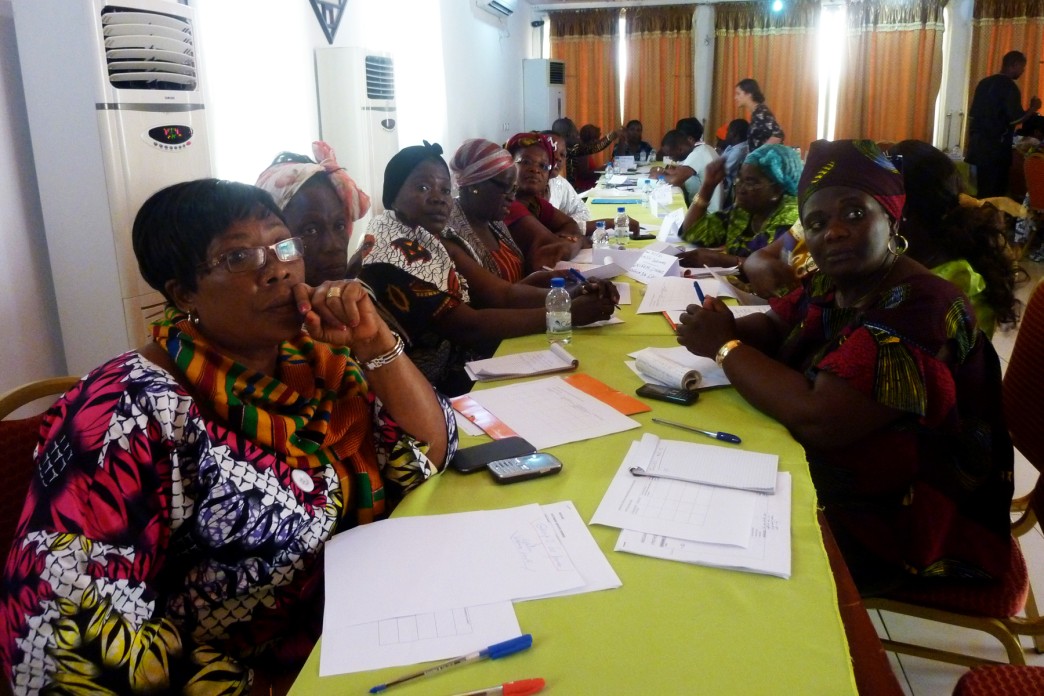
Women gathered around a table talking.

Women participate in a small group session during the consultation in Bangolo, in western Côte d’Ivoire. Bangolo is a community divided into two distinct religious groups – the Malinke and the Autochthones –and during the consultation these groups participated alongside one another.

“In the weeks that followed the consultation women told us that community quarrels between these two groups boiled over once more. However, the women in these communities joined together and calmed the conflict that had begun to brew between the men. The women said that the consultation helped empower them to act, as it had offered them a platform to offer their ideas while the male leaders listened. In asserting themselves once more, the women were able to prevent the disagreement from worsening,” says Correa.

Correa adds that this illustrates the importance of consultation sessions: “Defining a policy is always complicated, but sometimes the how matters more than the what. That these women were empowered to step in and prevent further conflict illustrates this point.”

Men around a table writing.

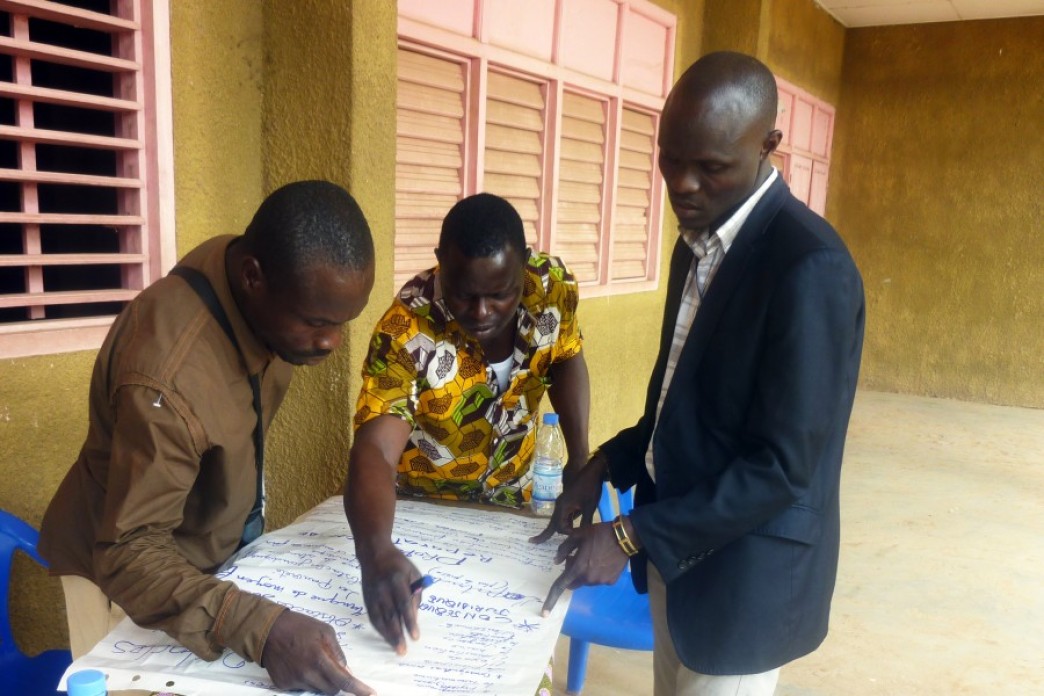
A group of men from different communities in Bangolo discuss the common consequences they face in the aftermath of the violence. Together, they presented a series of proposals to address these challenges.

People gathered around a table talking.

Young people in the northern city of Korhogo engage in consultations conducted by members of the Réseau Action Justice et Paix (RAJP), a network of organizations that work with ICTJ to address issues facing the next generation of Ivorians. RAJP activists have consulted nearly 2,000 of their peers since 2013 in order to compile reparation recommendations. Earlier this year RAJP presented these recommendations to policy makers in Abidjan and to their communities throughout CDI in a series of radio programs. Read about their work here.

In Côte d’Ivoire, the state aims to restore victims’ rights and offer reparations to those affected by 2010’s post-election violence. A couple of years ago ICTJ came to the conclusion that discussions about how to provide reparations to victims had not sufficiently considered victims' opinions and needs, particularly of those living in the provinces or in marginal areas, some of whom were the most affected by the conflict.

To help address these shortcomings, ICTJ organized consultations throughout the country, providing victims with forums to discuss their needs. Participants discussed the consequences of the conflict, the obstacles they now face as a result, and what sorts of policies would meet their needs. The forums included men, women and youth in Côte d’Ivoire, reflecting the diversity of experiences during the conflict and the needs that manifest themselves in communities today.

The demands and suggestions expressed in these consultations form the basis of our new report, “Recommendations for Victim Reparations in Côte d’Ivoire.”

Go inside the consultation process with Senior Associate Cristián Correa of ICTJ’s Reparative Justice Program, who besides conducting the project and co-authoring the report photographed the experience.
