6 results

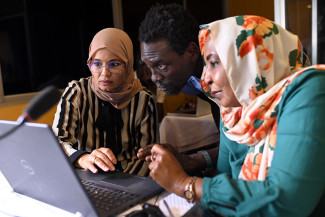
ICTJ recently convened human rights defenders, journalists, and lawyers from Libya, Sudan, Syria, Tunisia, and Yemen for a workshop on digital, open-source investigations. Held on November 3-8 in Kampala, Uganda, the course trained participants on open-source tools with a view to strengthening their work investigating, documenting, and monitoring human rights violations.

Since 2014, conflict in Yemen has caused hundreds of thousands of deaths, displaced millions, destroyed the economy, and exacerbated systemic marginalization, creating one of the world’s worst humanitarian catastrophes. Yet currently, transitional justice and reconciliation take up little space in the Yemeni political arena. In this context, ICTJ has released a new report that explores pathways to a just and sustainable peace in Yemen.

This report explores pathways for transitional justice in Yemen, emphasizing victims’ experiences, political dynamics, and existing justice mechanisms. It examines national and local efforts, including mediation and reconciliation initiatives, and highlights the role of Yemeni civil s...

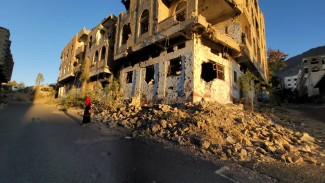
The sun shines into an urban courtyard of what it appears to be residential buildings.

Yemen's nine-year conflict has devastated the country and created one of the world’s worst humanitarian crises. The regional upheaval stemming from the ongoing war on Gaza has created more obstacles on the country's already complex path toward peace and shifted attention away from the set of UN-brokered commitments agreed upon by the parties to the conflict in December 2023, which include a nationwide ceasefire. Amid these challenges, it is more imperative than ever to support civil society and victims and bring attention to victims’ grievances and needs.

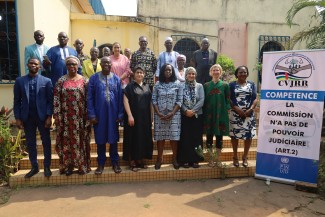
In 2021, the Central African Republic created the Truth, Justice, Reparation and Reconciliation Commission (CVJRR) to establish the truth, pursue justice, and restore victims’ dignity, with a view to ultimately achieving national reconciliation. In this fragile country, battered by successive episodes of violence, justice, in its broadest sense, has always been and remains a lifelong demand of victims. After a lengthy operationalization phase, the CVJRR is now finally getting ready to start registering and hearing victims’ testimonies. The first step in this process is statement taking, which requires taking several key factors into account to be successful.

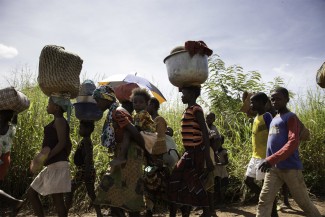
After seven years of waiting for the UN-backed Special Criminal Court (SCC) in the Central African Republic to begin operations, victims of the country’s civil war had hoped to finally see the first tangible step toward justice on April 25 when the first trial opened in the capital Bangui. The trial was initially set to begin on April 19, 2022, but was abruptly postponed when the defense attorneys failed to show up in an apparent boycott over their wages. When the defense lawyers returned to court on April 25, they immediately requested an adjournment, which was granted, and the trial was postponed again until May 16. It is very likely that this incessant postponement will further deflate already diminished confidence among victims in the SCC’s ability to deliver justice.