



718 results

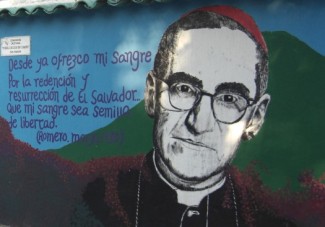
On the International Day for the Right to the Truth and 35 years after the assassination of Archbishop Oscar Romero, ICTJ Vice President Paul Seils explains why the pursuit of the truth is not a second-best option in the absence of other remedies: it is the most basic requirement of taking seriously the dignity of victims.

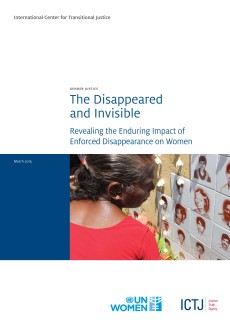
This briefing paper is the summary of “The Disappeared and the Invisible: Revealing the Enduring Impact of Enforced Disappearances on Women,” a comprehensive study by ICTJ that identifies the impacts and government responses to enforced disappearances as they relate to women in 31 cou...

A major new report from ICTJ canvasses 31 countries to see how the crime of enforced disappearance affects women, as both the disappeared and the female relatives of the disappeared. It finds that across cultures, women face serious barriers to seeking relief due to discriminatory laws and practices.

This report examines the impact on women of enforced disappearances committed during Lebanon’s civil war, focusing in particular on the effects on wives of the missing or disappeared—and their children. The research is based on interviews conducted by ICTJ with 23 wives of missing or ...

This report canvasses 31 countries to see how the crime of enforced disappearance affects women as both the disappeared and the female relatives of the disappeared. It finds that across cultures, women face serious barriers to seeking relief due to discriminatory laws and practices. I...

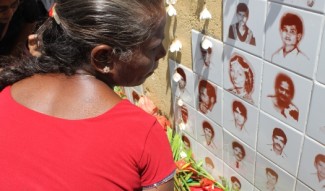
In recognition of International Women’s Day, our experts on Gender Justice have identified eight of the many ways in which women’s lives are affected by disappearances.

ICTJ releases of three short documentaries about the work of civil society organizations in Colombia intent on revealing the truth about the impact of the country's armed conflict.

As peace talks advance between the Government of Colombia and the FARC guerilla group, an essential element of negotiations is how best to examine the truth about violence and abuses committed during the armed conflict. On February 25, 2015, the International Center for Transitional Justice and the Kofi Annan Foundation will host a conference in Bogotá, titled “Truth Commissions and Peace Processes: International Experiences and Challenges for Colombia.”

Ahead of Pope Francis' visit to Bosnia Herzegovina, ICTJ's Communications Director, Refik Hodzic, asks the leader of the Catholic Church to actively contribute to "a genuine reckoning needed for a genuine peace" in a society still stuck in the past, even 20 years after the war.

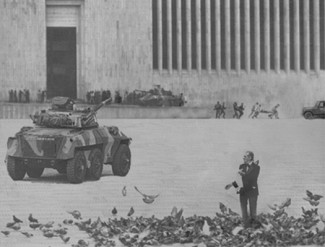
It has been nearly 30 years since one of the darkest episodes in Colombia’s recent history: the siege of the Justice Palace. Late last year, the families of those disappeared managed to take a step forward in their long struggle to obtain some measure of justice when the Inter-American Court of Human Rights issued a ruling condemning the Colombian state for responsibility in the disappearance of 12 individuals.