






345 results

In this op-ed, ICTJ's President David Tolbert expresses concern about the new "Reconciliation Bill" proposed by the Tunisian government, which would grant amnesty to corrupt business people and Ben Ali-era officials in the guise of "reconciliation." "Massive corruption and violent human rights violations are mutually reinforcing, and unless this linkage is exposed and broken, it can lead to mutually reinforcing impunity," writes Tolbert.

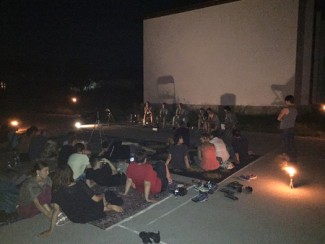
For the last three years, a group of young activists gather on the night of the 5th of August at the site of Trnopolje camp, out in the open, to reenact the way prisoners spent their night and through dialogue explore alternative ways of dealing with the past.

Bosnia and Herzegovina is marking the twentieth anniversary of the Srebrenica genocide. In this Op-Ed, ICTJ's Refik Hodzic asks, can we constructively talk about reconciliation in a country still gripped by war?

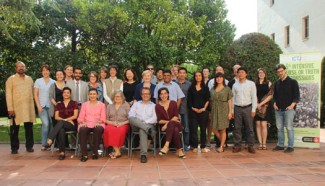
ICTJ and the Barcelona International Peace Resource Center (BIPRC) are pleased to announce the 7th Intensive Course on Truth Commissions, focused on a practical approach about the challenges in the design and implementation of a truth commission and, this year, exploring its intersections with media and the public sphere.

In the wake of the agreement between Colombia and FARC to form a truth commission, ICTJ's Fernando Travesí and Félix Reátegui discuss the role such a body should be expected to fulfill.

As the Canadian Truth and Reconciliation Commission provides its final report this week, ICTJ presents a video in culmination of our work with youth in support of the TRC over the course of its mandate. "The Truth in the Classroom" demonstrates the commitment of children and youth across Canada to engage with issues related to Indian Residential Schools and to promote education about their legacy.

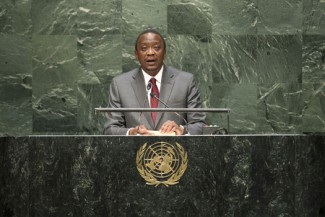
In this op/ed, the head of ICTJ's Kenya Program, Christopher Gitari, argues that President Kenyatta's recent apology to victims—though commendable—must be supported by solid reforms and initiatives for rebuilding the lives of those who have suffered the most.

ICTJ, in alliance with organizations Corporación Caribe Afirmativo, Colombia Diversa and Santa María Fundación organized meetings with activists and victims of the conflict to learn more about the needs of the LGBTI community, and to consider how transitional justice measures—especially non-judicial approaches—can contribute towards protecting their rights.

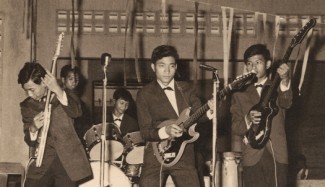
The new film "Don't Think I've Forgotten: Cambodia’s Lost Rock and Roll" explains the events of 1960s and 70s through the eyes of the musicians and artists who ushered in a new era of sound, only to be silenced too soon. As the world commemorates the 40th anniversary of the genocide in Cambodia, the new documentary presents the untold story of how their music managed to survive.

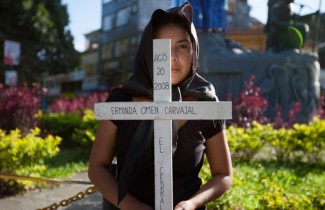
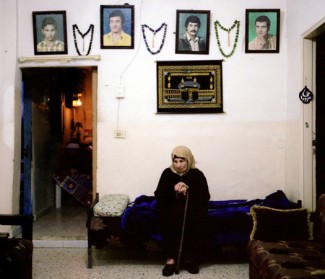
70-94% of the victims of enforced disappearances are men. But what happens to the women left behind? ICTJ's Amrita Kapur explains why women are uniquely impacted by the crime, and how transitional justice can help.