





345 results

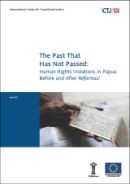
This joint report released today by the International Center for Transitional Justice (ICTJ) and the Institute for Human Rights Study and Advocacy (ELSHAM-Papua) provides important insight into the ongoing debate on steps required to achieve a sustainable peace in Papua. The report reviews Papua's recent history within a transitional justice framework, and provides expert recommendations on truth seeking, justice, reparations, institutional reform, and enforcing the rights of women victims.

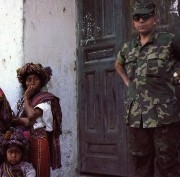
Granito: How to Nail a Dictator, a recent documentary from Skylight Pictures, shows the international effort that has worked tirelessly to bring Montt to account for his crimes. ICTJ is pleased to announce that Granito will be aired on Thursday, June 28 at 10pm on the PBS series P.O.V.

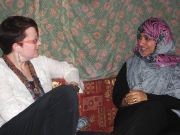
As Yemen prepares to embark on a national dialogue about its future, addressing the legacy of the past human rights violations remains one of its key challenges. A Law on Transitional Justice and National Reconciliation has been under discussion since February 2012 and may now be adopted in the coming weeks.

The Truth and Reconciliation Commission (TRC) of Canada held its fourth national event in Saskatoon, Saskatchewan June 21. After attending a prior hearing, students from the We'koqma'q Mi'kmaw School in Nova Scotia created “Our Legacy Our Hope,” a documentary bearing witness to the intergenerational effects of Residential Schools and the ongoing work of the commission to address these legacies.

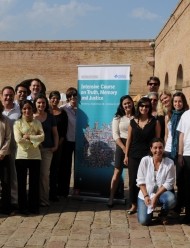
Under what conditions can truth commissions make a positive contribution to gender justice? How can they put in place a friendly process for children? Can they contribute to the rights of indigenous peoples? ICTJ, in partnership with the Barcelona International Peace Resource Center, is pleased to announce the 4th Intensive Course on Truth Commissions, focused this year on the challenge of recognizing the experiences of vulnerable populations in the work of truth commissions.

In societies confronting the legacies of war, tyranny, or entrenched injustice, the experiences of indigenous people have often been marginalized. ICTJ has published a handbook offering guidance on planning truth commissions and commissions of inquiry that safeguard the interests of indigenous communities and address violations against them.

In seeking to establish accountability for past atrocity, many transitional justice mandates have also sought to redress crimes against indigenous populations. To further explore this relationship, ICTJ and our partners in Canada and Colombia are holding two side events to the UN Permanent Forum on Indigenous Issues.

As ArcelorMittal, the world’s largest steel company, invests 19.2 million pounds of steel to construct a monument marking London’s Olympic Games, a disturbing story is emerging about the refusal to memorialize a former concentration camp in Bosnia it owns today. Not only is ArcelorMittal unwilling to provide even a fraction of the cost of the London “Orbit” to commemorate the suffering of Bosnians in the notorious Omarska camp, but it has recently started denying victims access to the site.

The National Conference to Launch a Dialogue on Transitional Justice in Tunisia was held on Saturday, April 14 in Tunis, initiating a process which should result in the adoption of a comprehensive law on transitional justice by the country’s National Constituent Assembly. ICTJ president David Tolbert delivered a keynote address.

On April 9, Colombia commemorated for the first time the National Day of the Memory and Solidarity with the Victims. This photo gallery collects the expressions of commemoration that took place in three cities in the country: Bogotá, Medellín and Villavicencio.