19 results

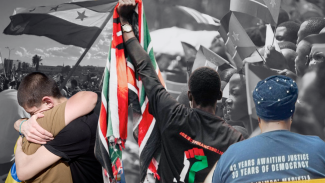
South Sudanese refugees and displaced persons currently comprise 40 percent of the country’s total population. Yet, these groups have been largely excluded from ongoing policy discussions related to South Sudan's transitional justice process in South Sudan. A new ICTJ report aims to amplify the perspectives and expectations of these groups and ensure they are included in the process's design and implementation.

This study aims to communicate the perspectives, expectations, and needs of South Sudanese displaced persons to relevant policymakers and thereby inform the ongoing transitional justice efforts emanating from South Sudan’s 2018 revitalized peace agreement. It also provides lessons lea...

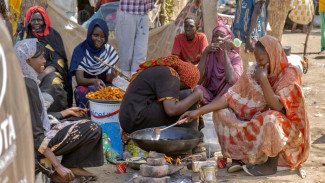
several women in colorful dresses crouch around an open fire pit, cooking food in a large pan.

Throughout 2025, ICTJ’s experts offered thoughtful analysis on conflicts and major political developments in more than 10 countries as part of the World Report newsletter. Their insightful commentaries shed light on the obstacles that victims, civil society, and their partners must navigate as they pursue sustainable peace and justice. In this edition, we look back on the past year through the Expert’s Choice column.

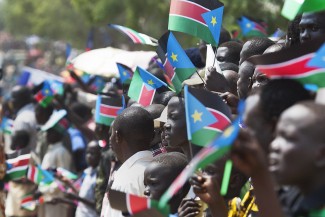
South Sudan’s transition to democratic governance through a highly anticipated, first-ever post-independence general election has to wait once again for another two years. Despite this latest extension, the country has achieved notable milestones in its transitional justice process.

Customary justice is the primary way in which most communities in South Sudan resolve disputes. Its ability, however, to deal with massive human rights violations is limited due to the complexity of intercommunal violence and a lack of clarity on its proper role. This report contends ...

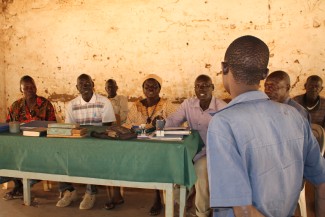
A man stands facing a table around which several men are seated.

In countries where state institutions have limited reach, customary and informal justice is often the most common way in which people resolve disputes and seek justice. Given its prominence, it is considered to be an important element of a people-centered approach to building peaceful, just, and inclusive societies. An understanding of the relationship between customary justice and transitional justice, however, remains underdeveloped. A new ICTJ report provides valuable empirical, qualitative research on the topic, in the context of South Sudan.

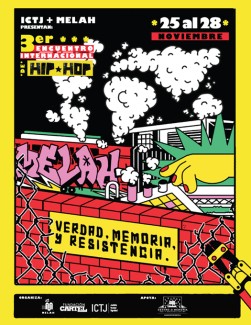
Bogotá, November 20, 2020—ICTJ and the Movement of Latin American Hip Hop Expressions have joined forces to cohost the third International Hip Hop Encounter, which will take place virtually this week from November 25 to November 28. The four-day online event will bring together artists and musicians from across Latin America and Africa along with activists, social leaders, and civil society representatives. The festival’s theme is the role of hip hop music and culture in uncovering truth, preserving memory, and resisting violence and oppression.

ICTJ was pleased to host the newly elected United Nations Special Rapporteur on the promotion of truth, justice, reparations, and guarantees of non-recurrence, Fabian Salvioli (Argentina), at its New York office, where he discussed his vision and priorities.

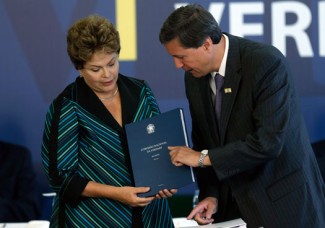
ICTJ welcomes the release of the final report of Brazil’s National Truth Commission after two and a half years of work to unveil the truth about serious human rights violations that took place in the country between 1946 and 1988, especially during the military dictatorship of 1964 to 1985. The final report is a historic contribution to truth and justice in a country where serious crimes have remained unaddressed for decades and calls on the Brazilian judiciary to disregard the Amnesty Law and act in cases of crimes against humanity.

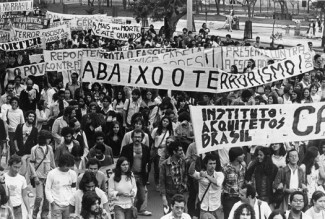
Human rights organizations in Brazil have created an online platform Brasil Nunca Mais Digital to preserve evidence and other documents related to more than 7,000 political prisoners tried before Brazil’s Military Supreme Court, during that country’s military dictatorship.