641 results

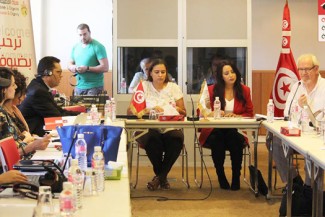
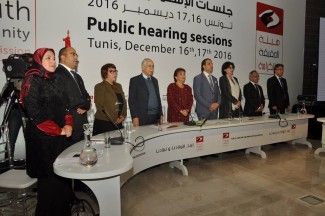
Following two days of historic public testimony last month, Tunisia's Truth and Dignity Commission's second set of public hearings continue. Watch the livesteam below and follow us on twitter at @theICTJ for live coverage.

Join President David Tolbert as we celebrate ICTJ at 15 years, during which there have been many pivotal moments, both for our organization and the struggle for justice globally.

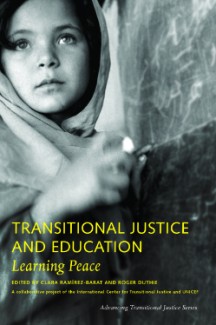
A groundbreaking new book from the International Center for Transitional Justice (ICTJ) and UNICEF examines the complicated relationship between education, justice and peacebuilding in societies grappling with a legacy of violent conflict. It offers lessons on how education can be harnessed in a divided society to overcome the past and create the conditions for peace, often under very difficult circumstances.

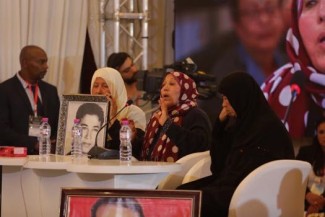
“I hesitated a lot before giving this testimony. But after much debate I decided to. History is not to be written in the palaces." That’s how Bechir Laabidi opened testimony on day two of public hearings at Tunisia’s Truth and Dignity Commission, where Tunisians continued to write the history of the country from the victims’ perspective. This final day of testimony focused on torture perpetrated by the dictatorship, with eight victims sharing their stories into the early hours of the morning.

Victims of Tunisia’s dictatorship shared their stories publicly on November 17 in a historic moment for the country. The Truth and Dignity Commission (TDC) - charged with investigating gross human rights violations in the country since 1955 committed under the dictatorship - held its first public hearings in Tunis, gathering victims to testify to their experiences under dictatorship. The hearings present an essential opportunity for the country to confront its painful past. Since its inception in 2014, the TDC has received over 62,000 submissions and heard testimony from about 11,000 people.

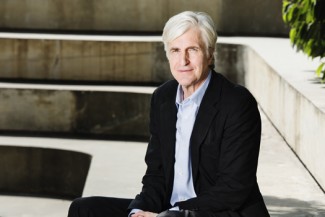
Later this month, Tunisians will have an opportunity to hear the truth about the dictatorship's abuses directly from victims in a series of public hearings hosted by the Truth and Dignity Commission. However, in order for these public testimonies to be effective, the media must cover victims' stories fully and explore the issues underpinning their experiences. South African journalist Max du Preez spoke with his Tunisian counterparts to help prepare them for the challenges they will face. We sat down with him afterwards to discuss the role of media in transitional justice processes.

Ukraine's Maidan Revolution in 2014 ushered in a wave of decommunization efforts, ostensibly in order to ensure respect for human rights and to prevent a recurrence of the crimes of Communist and Nazi regimes. However, the laws were largely a product of contentious politics of memory: they further a particular understanding of past events that will likely continue to fuel division and distrust among Ukrainians, and between Ukraine and Russia.

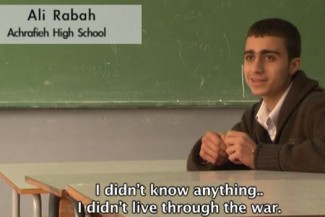
While Lebanon is post-peace agreement, it is not necessarily "post-conflict." The country struggles to address the legacy of decades of violence, and the lack of a comprehensive approach to dealing with the past means the country's youth are growing up with scant knowledge of their history. But they want to know more: one project is helping them ask those around them about the past, and giving those who lived it a chance to tell their stories.

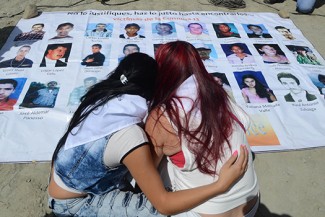
On International Day of the Victims of Enforced Disappearances, the families of the missing maintain their vow: "until we find them." As special bodies to search for their loved ones develop, what do victims expect?

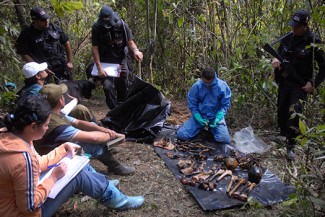
As the government and FARC reach a peace deal, they have agreed to the creation of a special unit that will search for, locate and identify the disappeared. What do victims expect from this new body?

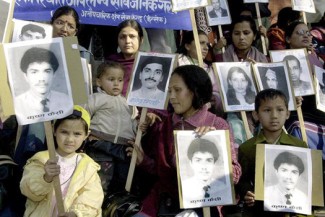
1,300 are still missing in Nepal, nearly a decade after the country's bloody civil war ended. The peace agreement was meant to provide for the families of the disappeared, but today they are still searching for answers. As a new government body begins investigations, victims wonder: is the commission fully committed to addressing their needs?

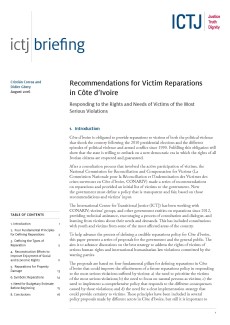
Côte d’Ivoire is obligated to provide reparations to victims of both the political violence that shook the country following the 2010 presidential elections and the different episodes of political violence and armed conflict since 1990. Fulfilling this obligation will show that the st...

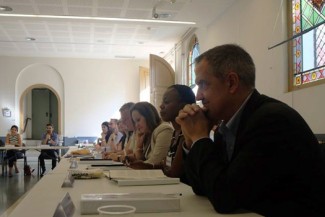
This summer, our Intensive Course on Transitional Justice and Peace Processes brought experts from around the world together in Barcelona to examine how transitional mechanisms can be integrated into peace negotiations. Read about the course and watch interviews with our experts.

The voices of Tunisian women were in danger of being lost in the country's transitional process. Salwa El Gantri explains how one network of women's organizations made sure that did not happen by helping women find their voice and fight for justice.

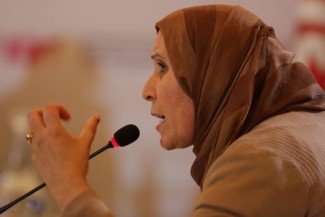
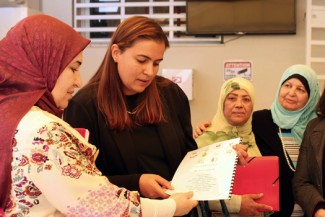
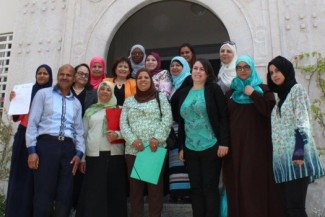
For decades, veiled women in Tunisia were deprived of their rights and discriminated against because of their religious beliefs. Now, they’re joining together to tell their stories and seek justice from the Tunisian government.

Myanmar may have a new government under Aung San Suu Kyi, but former political prisoners continue to face challenges throughout the country. A new report sheds light on prisoners' challenges and recommends steps the government can take to offer redress.

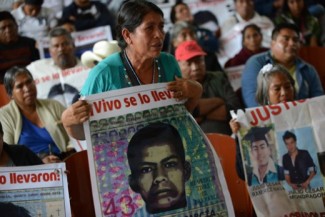
Carlos Martín Beristain is part of the panel investigating the disappearance of 43 students in Mexico. We sat down with him to discuss his work, the resistance the investigation has faced from the Mexican government and whether transitional mechanisms have a role in this context.

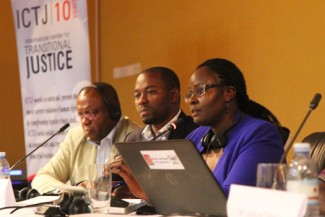
Today, ICTJ opened a two-day conference in Kampala, Uganda, gathering activists and officials from the African Great Lakes Region to discuss efforts at redress and accountability for serious human rights violations committed in their countries.

Civil society leaders, members of victims' groups and state officials throughout the Great Lakes region will convene in Kampala, Uganda next week at a conference hosted by ICTJ. Attendees will share their experiences working for redress in their communities and discuss what strategies have proven effective at the local level.

After a society is torn apart by conflict or repression, who decides whether to remember or forget the painful past? Can forgiveness happen without acknowledgement of wrongdoing? Is there a difference between forgetting and denial? Join us as ICTJ debates the impact of remembrance on reconciliation with David Rieff and Pablo de Greiff.

After consulting nearly 2,000 of their peers, youth activists in Cote d'Ivoire present their reparations policy recommendations in a special event on Friday.

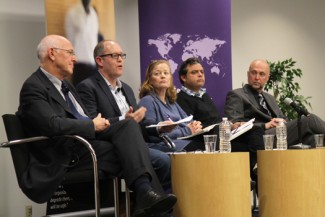
What happens when a state refuses to acknowledge the suffering of victims of mass atrocities? Or when the public celebrates perpetrators as heroes? Earlier this month, a panel discussion hosted by The International Center for Transitional Justice and New York University’s Center for Global Affairs grappled with the impact of denial on justice.

As the refugee crisis deepens, does action on transitional justice issues have to wait for peace? A new paper explores what sort of consultation and documentation work can be done now, while conflict is ongoing, to shape outcomes moving forward.

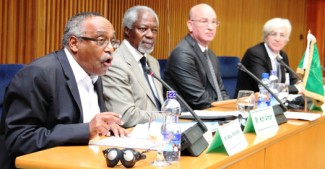
The African Union, the Kofi Annan Foundation and ICTJ opened a high-level conference examining the role of truth commissions in peace processes. The two-day conference, titled “Truth Commissions and Peace Processes in Africa,” has gathered senior staff from the African Union and member states as well as international and national experts to reflect on lessons learned from truth commissions that have emerged from peace processes in Africa and other continents.

Bosnian Serb leader Radovan Karadzic was recently sentenced by the ICTY to 40 years for genocide and crimes against humanity, crimes which have decisively shaped the society in Bosnia and Herzegovina. In this essay, ICTJ’s Refik Hodzic explores what would it take for this poisonous legacy to be dismantled and makes a case for acknowledgement and reparations as matters of moral imperative, but also of political necessity.