




629 results

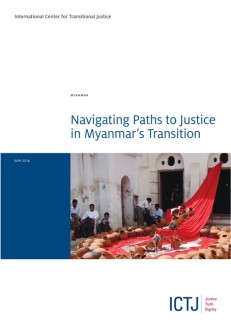
Continuing political repression, cronyism, and ongoing conflicts are disrupting attempts to put Myanmar on a linear path to democracy, peace, and development, says a new report from the ICTJ. According to the report, titled “Navigating Paths to Justice in Myanmar’s Transition,” dealing with current and historical abuses is essential to achieving genuine progress on peacebuilding and economic development in the country.

This report asserts that dealing with past abuses in Myanmar is essential to achieving genuine progress on peacebuilding and economic development in the country. Conflict and high levels of political repression have racked Myanmar for more than half a century. Both President Thein Sei...

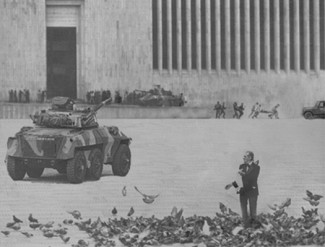
The recent re-election of Colombia’s president, Juan Manuel Santos, brings hope to a country seeking to end a half-century of conflict. But, as with so many peace processes, finding a balance between creating a stable accord and acknowledging the terrible injustices that occurred during the conflict can be difficult to achieve.

During Nepal's armed conflict, more than 13,000 people were killed and 1,300 forcibly disappeared. Today, a new government has voted to create a Truth and Reconciliation Commission, as well as a Commission of Inquiry on the Disappearance of Persons. Many victims have protested the flaws in the proposals; meanwhile, no comprehensive reparations have been provided for those left most vulnerable by conflict. In this interview with ICTJ's Santosh Sigdel, we discuss developments related to ICTJ's work in Nepal.

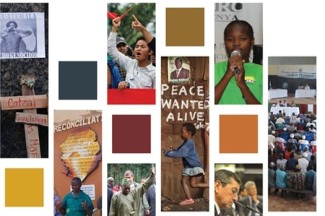
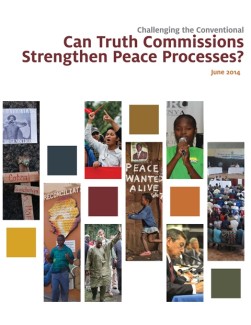
Truth commissions can make important contributions to peace processes if all parties can agree on common objectives and there is genuine local political will to shed light on past events. This is the key finding of a new study – titled “Challenging the Conventional: Can Truth Commissions Strengthen Peace Processes?” – to be released on 19 June 2014 by ICTJ and the Kofi Annan Foundation.

This joint report by ICTJ and the Kofi Annan Foundation explores common assumptions about why truth commissions are created in the wake of armed conflict and what factors make them more likely to succeed – or fail. It arises from a high-level symposium hosted by the two organizations ...

A new report by ICTJ and the Kofi Annan Foundation explores common assumptions about why truth commissions are created in the wake of internal armed conflict and what factors make them more likely to succeed – or fail. The new study will be released on June 19, 2014, at a public presentation jointly hosted by ICTJ and the Kofi Annan Foundation in Geneva.

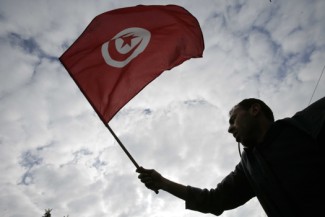
ICTJ welcomes the launch of Tunisia’s Truth and Dignity Commission (TDC), a momentous step in the country’s effort to establish the truth about past human rights violations.

Since the uprising that sparked the "Arab Spring," Tunisians have demonstrated unwavering commitment to transitional justice. In this interview, ICTJ's Head of Office Rim El Gantri gives an overview of the country's efforts to address the truth about the past, seek justice for abuses committed under decades of repression, and provide reparations for harm suffered under the former regime.

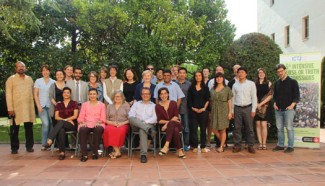
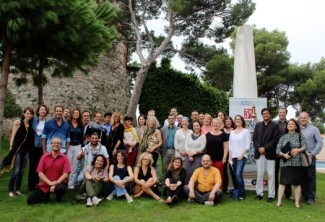
ICTJ and the Barcelona International Peace Resource Center (BIPRC) are pleased to announce the 6th Intensive Course on Truth Commissions, focused on a practical approach about the challenges in the design and implementation of a truth commission and, this year, exploring its intersections with peace processes.

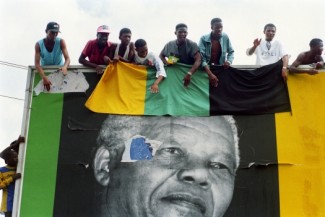
In early May, the African National Congress (ANC) held on to power in South Africa’s general election. However, there is a widespread feeling that the party that oversaw the creation of the groundbreaking Truth and Reconciliation Commission has walked away from its obligations to the South African people.

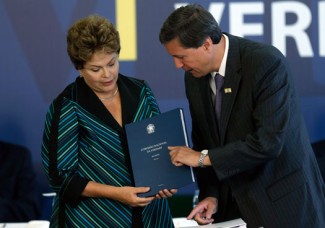
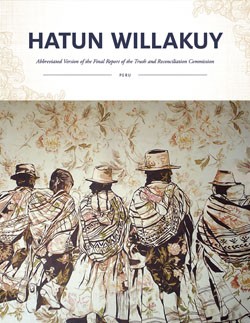
Three human rights groups have joined together to publish a new English edition of Hatun Willakuy, a book presenting the abridged findings of Peru’s Truth and Reconciliation Commission, on its tenth anniversary. The book, which is available online, will allow a larger number of readers to benefit from the findings of Peru’s truth-seeking process.

ICTJ President David Tolbert will be a featured speaker at this year’s Al Jazeera Forum in Doha, Qatar. Al Jazeera Forum is the flagship event of Al Jazeera Media Network, at which Al Jazeera showcases its contribution to the world of media and politics.

Seven and a half years after the signing of the Comprehensive Peace Agreement, Nepal's Parliament voted to establish the Truth and Reconciliation Commission and a Commission of Investigation on Disappeared Persons. In this op-ed, ICTJ's Eduardo González Cueva explains why many victims have rejected the bill.

One year after its release, ICTJ presents a critical overview of the Final Report of Kenya’s Truth, Justice and Reconciliation Commission in a new study released today. The ICTJ study argues that, despite the controversies that surrounded the commission during its tenure, the Final Report should be read and treated with seriousness by those who support human rights and the rule of law in Kenya.

This paper analyzes the contents of the Final Report that the Kenyan Truth, Justice and Reconciliation Commission (TJRC) presented to President Uhuru Kenyatta on May 21, 2013, after four years of investigations. In particular, it evaluates the report’s information and findings, the lo...

After emerging from its revolution with a new constitution and a comprehensive transitional justice law, Tunisia is setting into motion a process to learn the truth about the country’s time under repressive rule.

ICTJ is pleased to announce the opening of an innovative site-specific theater performance in Beirut to mark the 39th anniversary of the Lebanese Civil War.

As Nepal’s Parliament discussed key proposal to establish truth-seeking bodies, the ICTJ expresses deep concern that the bill retains flaws already rejected by the country’s Supreme Court in January.

From March 27 to 30, some 20,000 Canadians gathered in Edmonton, Alberta, for the final national event of the Truth and Reconciliation Commission of Canada (TRC). Established in 2008, the TRC is now entering a new stage: the writing of its final report based on the more than 6,500 statements it has gathered.

In this op-ed, ICTJ President David Tolbert argues that in order to meet the EU’s high standards on the rule of law and human rights, Serbia must address the legacy of its recent past in which Slobodan Milosevic’s regime and the institutions under its control were involved in some of the most notorious crimes committed in Europe since World War II.

Lebanon has ruled that families of missing and disappeared persons would be allowed access to the investigation files and full report of the Commissions of Inquiry on the Missing and Forcibly Disappeared in Lebanon. In a new episode of our ICTJ Forum, we speak with lawyer Nizar Saghieh about what the ruling means for Lebanese families who continues to search for their missing loved ones.

In the span of only one month, Tunisia has witnessed the historic passing of a transitional justice law and adoption of a new constitution. A key actor in the country's transition is the media.

To mark International Women’s Day, we invite you to read about four countries at the top of our gender justice priorities in the coming year, each with its own history, context, and complex sets of challenges.

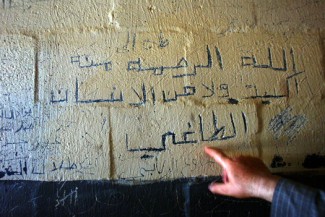
For decades, Lebanese governments have made only partial and ineffective attempts to hold powerful individuals, groups, and foreign states accountable for violations committed on Lebanese soil, including against civilians. The consequences of their failure to act – for victims and Lebanese society – are grave. ICTJ's new report looks at the culture of impunity for serious violations of human rights continues to thrive in Lebanon.