


629 results

Following the first international conference on the subject (Memorialization and Democracy), this report considers how memorialization efforts around the globe can serve democracy. It encourages policy-makers to view memorials as serious social and political forces and to create innov...

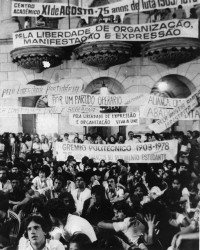
Brazil’s new government is showing strong support for the passage of a bill creating a National Truth Commission investigating past human rights violations, writes Eduardo González, director of ICTJ's Truth and Memory Program. ICTJ also spoke with Marlon Weichert, human rights activist and regional prosecutor for Brazil's Federal Public Ministry, on the current debate surrounding truth-seeking and accountability in Brazil.

ICTJ spoke with Marlon Weichert, prominent human rights advocate and regional prosecutor with the Federal Public Ministry of Brazil (Ministério Público Federal), on Brazil's pending truth commission bill and calls for accountability measures addressing past violations in Brazil.

As the United States and Colombia near the signing of a free-trade agreement and resolve differences over labor rights and other issues, the problematic extraditions of paramilitaries accused of savage crimes committed during the years of counter-insurgency remain far from the spotlight.

South Africa’s Constitutional Court recently made a landmark ruling on the right to speak the truth about crimes amnestied by the Truth and Reconciliation Commission. ICTJ Truth-Seeking Consultant Howard Varney speaks about the ruling and its significance for South Africa and other countries.

ICTJ provides an overview of various United States Commissions of Inquiry. This publication includes briefs on the Senate and House Committee Investigations of the Palmer Raids in 1920, the Senator Frank Church Committee in 1975, a commission into wartime relocation and internment of ...

The survey sought to ascertain the opinions and expectations of the victims and their families in Nepal on a range of transitional justice issues, such as human rights violations, truth-seeking, justice, accountability, reparations, and reconciliation.

This initiative aims to promote accountability within the media through independent monitoring of the performance of the media during the TRC process. While freedom of the press is essential to the cultivation of a democratic culture, it is only fair for the media to labor in overcomi...

A range of transitional justice measures should be considered in addressing the Kenyan crisis, including holding key perpetrators to account in a court of law, providing reparations for victims of the recent violence, and vetting security forces in order to remove those involved in ab...

Indonesia and Timor-Leste created the Commission for Truth and Friendship (CTF) bilaterally in 2005. The commission has not yet delivered substantive transitional-justice benefits, and its public hearings have seriously compromised the goals of truth and resconciliation. This report i...

Of the more than 30 truth commissions created since the 1980s, four that were organized in Africa and the Americas are notably good examples of how circumstances in each society helped shape the commissions’ work.

More than 30 countries have created truth commissions to investigate and report on human rights abuses. These commissions of inquiry help seek recognition for victims and promote possibilities for peace, reconciliation and democracy.

The Liberian Truth Reconciliation Commission (TRC) was necessitated by the Accra Comprehensive Peace Accord signed in 2003. The insertion of the TRC in the peace agreement was largely seen by various actors as Liberia’s maiden step towards addressing a history that was fraught with gr...

Indigenous populations throughout the world are widely recognized as groups affected by political and economic marginalization. Countries that have used truth commissions to examine patterns of exclusion—including Chile, Guatemala and Peru—have found clear links between racism, politi...

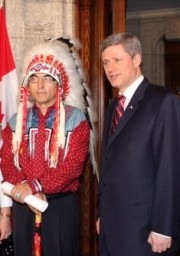
As the first national truth commission to be created in an established democracy, Canada’s Truth and Reconciliation Commission (TRC) is a bold experiment. It is also the first TRC to focus exclusively on crimes committed against children and indigenous groups.

Treatment of historical legacies of discrimination against Aboriginal groups in Canada (First Nations, Inuit, Métis) currently focuses on settlement for abuses committed against Aboriginal children in educational institutions known as “Indian Residential Schools” (IRSs), which pursued...

In July 2008 the Timorese-Indonesian Commission of Truth and Friendship (CTF) submitted its final report on atrocities committed in East Timor in 1999. Previously the CTF had been criticized by human rights groups, especially in relation to its power to recommend amnesties and its con...

As the first truth commission in the region, Morocco’s Equity and Reconciliation Commission sought to address the legacy of more than 40 years of repression and human rights violations known as the “Years of Lead.” The commission was part of a gradual process of dealing with the past,...

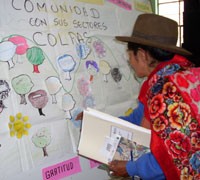
In the absence of governmental action or as preparation for it, some local communities or civil society groups sometime seek to recognize and investigate the legacy of past human rights abuses. Such actions can help lead to more formal transitional justice approaches, including truth ...

The Documentation Affinity Group (DAG) was established in 2005 by ICTJ and five partner organizations as a peer-to-peer network with a primary focus on human rights documentation. Documenting Truth collects the best practices derived from the work of the DAG organizations in Cambodia,...

For the last 50 years Cypriots have been living amid various forms of conflict between political leaders, communities and armed forces. Divisive re-tellings of key moments in these conflicts continue to be important to the politics of all communities on the island.

Transforming a Legacy of Genocide presents the findings of a November 2007 survey of visitors to Choeung Ek, a public memorial of one of Cambodia's notorious "killing fields" during the Khmer Rouge regime, where approximately 20,000 people were killed between 1975 and 1979. The survey...

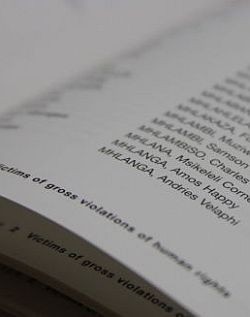
The Liberia Truth and Reconciliation Commission (TRC) released its final report in December 2009 after more than three years of operations. The report offers valuable insights into Liberia’s turbulent history, including the gross human rights violations committed during the country’s ...

This chapter examines the largely overlooked relationship between female ex-combatants, DDR, and transitional justice, with a particular focus on truth commissions. The potential of truth commissions to recognize women’s multiple and contradictory roles during armed conflict and to pu...

Generally, disarmament, demobilization, and reintegration (DDR) programs and truth commissions have operated independently of one another. This has resulted in missed opportunities for strengthening DDR and truth commissions. DDR’s reintegration aims may be furthered by increased trut...