637 results

ICTJ is pleased to announce the “Overseas: Writing Contest,” an open call for young migrants originally from or currently residing in Lebanon, Libya, or Tunisia to share their personal experiences of migration in the form of a short, written testimony.

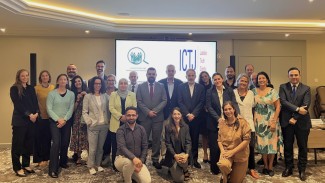
ICTJ, in collaboration with the Dutch Ministry of Foreign Affairs, recently convened the first international dialogue in Geneva in support of Syria’s two new justice commissions. From July 10 to 11, members of the National Commissions for Transitional Justice and for the Missing joined representatives of Syrian victim groups and experts and practitioners from around the world to discuss the present opportunities and challenges for peace and justice in Syria and how best to support the nascent institutions in fulfilling their mandates and advancing acknowledgment, truth, accountability, and repair.

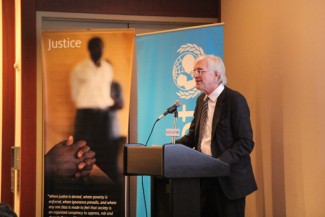
On January 21, ICTJ and UNICEF held a special event to launch an important new report on the links between education and transitional justice. The launch was accompanied by a panel discussion moderated by ICTJ President David Tolbert.

To encourage public engagement in truth-telling and memorialization in Colombia, ICTJ and the Center for Historic Memory (Centro de Memoria Histórica) are pleased to announce a photography contest for non-professionals.

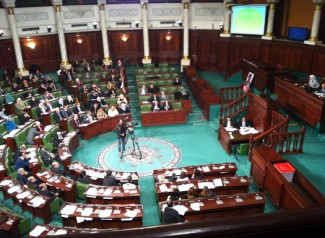
Ten years have passed since Tunisians took the streets to demand “Employment, Freedom, and National Dignity.” The revolution’s loud, courageous voice against corruption, extreme inequality, and repression echoed around the globe and inspired the “Arab Spring.” Today, Tunisians are still proud of their revolution. However, they continue to strive for goals, yet unattained, that the political class does not even seem to understand. It was thus not surprising to see large protests on the 10th anniversary, demanding concrete action and new public policies to advance social justice and better integrate marginalized regions and populations.

In seeking to establish accountability for past atrocity, many transitional justice mandates have also sought to redress crimes against indigenous populations. To further explore this relationship, ICTJ and our partners in Canada and Colombia are holding two side events to the UN Permanent Forum on Indigenous Issues.

A report released today by ICTJ, together with the Indonesian Association for Families of the Disappeared (IKOHI) and the Coalition for Justice and Truth (KKPK), calls on the government to fulfill its obligations to provide reparations to thousands of victims of gross human rights violations.

Indonesia has initiated transitional justice mechanisms to address human rights abuses that occurred during and after the New Order regime, but insufficient political will has rendered these efforts inadequate in achieving justice and reconciliation for victims.

Following a restive year, Indonesia's human rights record is one of the situations under review during the 13th session of the UN Human Rights Council Universal Periodic Review (UPR) process in May–June 2012.

Despite the overwhelming percentage of Lebanese who were affected by recent wars and political unrest, discussion of Lebanon’s past is largely absent from public spheres. A new documentary follows youth in Lebanon as they set out to find the truth.