637 results

On June 29, the government of Maine joined chiefs from the state's five tribes to sign an agreement creating the Wabanaki-State Child Welfare Truth and Reconciliation Commission. Eduardo Gonzalez, director of ICTJ's Truth and Memory Program, attended the signing ceremony, and spoke about its importance—both local and global—in an interview with the Maine Public Broadcasting Network. Listen to the interview MPBN 04:54min

On October 31, Armenian Prime Minister Nikol Pashinyan met with Russian President Vladimir Putin and Azerbaijani President Ilham Aliyev in Sochi to discuss steps to normalize relations between Yerevan and Baku and a longer-term peace deal that would finally end the decades-long, on-and-off conflict over Nagorno-Karabakh. This willingness on both sides to come to the negotiating table is without question welcome news. However, the two parties seem to want to talk about peace on different terms and without addressing core human rights issues in their respective countries in connection with the conflict.

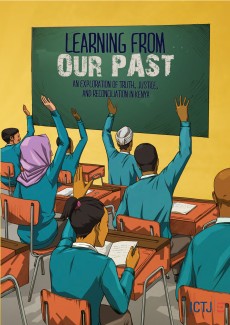
This educational tool for educators and mentors is designed to help teach young people in Kenya about difficult periods in Kenyan history and foster discussion on issues of justice, democracy, leadership, and their role as Kenyan citizens.

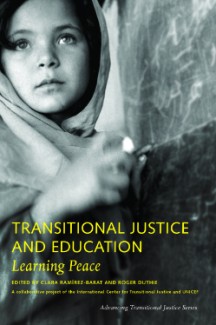
A groundbreaking new book from the International Center for Transitional Justice (ICTJ) and UNICEF examines the complicated relationship between education, justice and peacebuilding in societies grappling with a legacy of violent conflict. It offers lessons on how education can be harnessed in a divided society to overcome the past and create the conditions for peace, often under very difficult circumstances.

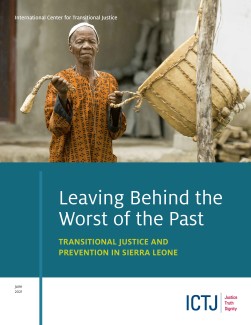
This study analyzes how transitional justice in Sierra Leone has contributed to prevention by responding to the grievances of those harmed by violations, reducing exclusion, addressing through institutional reforms the causes of past violence, and catalyzing long-term change. While tr...

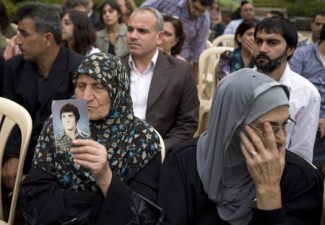
In an article first published in El Periodico, journalist Andrea López-Tomas paints an intimate portrait of the Lebanese women who against the odds continue to search for their missing loved ones half a century after the civil war began.

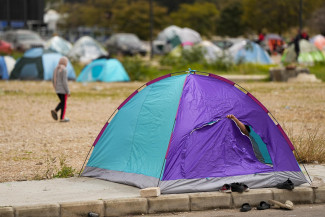
For many people in Lebanon, being uprooted from home is no longer an exceptional event. In this Expert’s Choice, ICTJ's Firas BouZeineddine draws a connection between the dire situation many Lebanese are facing and the culture of impunity that prevails in the country. In particular, he calls on domestic and external actors to be held accountable for past and present violations.

The wives of the missing and disappeared in Lebanon continue to suffer serious social, psychological, legal and financial effects on their lives, and the lives of their children, says a new report by ICTJ and the Institute for Women’s Studies in the Arab World at Lebanese American University.

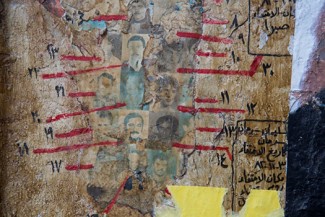
Life continues to stand still for the many families of the missing and disappeared in Lebanon. The Lebanese War ended 28 years ago, but for these families the war rages on. A recent legislative breakthrough, however, might finally pave the way for Lebanon to confront this legacy.

While Lebanon is post-peace agreement, it is not necessarily "post-conflict." The country struggles to address the legacy of decades of violence, and the lack of a comprehensive approach to dealing with the past means the country's youth are growing up with scant knowledge of their history. But they want to know more: one project is helping them ask those around them about the past, and giving those who lived it a chance to tell their stories.