637 results

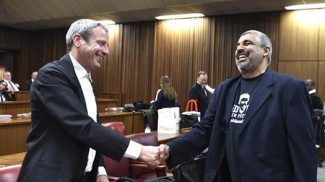
Anti-apartheid activist Ahmed Timol died in South African police custody in 1971, and his family continues to demand justice. While police claimed Timol died by suicide, evidence indicated that he was tortured and murdered. The family’s tenacious efforts led to the reopening of an inquest into Timol's death this year, with ICTJ senior program advisor Howard Varney representing the family. Last month the Pretoria High Court ruled in the family’s favor, finding that Timol did not kill himself but was indeed murdered while in police custody. ICTJ’s Sam McCann sat down with Varney to discuss the ruling, what it means to Timol’s family, and its significance for the fight for justice in South Africa.

The Spanish Supreme Court has ruled the judiciary has no place investigating the deaths and disappearances of the Franco era. The verdict is a disappointment for the victims of Francoism and confirms Spain remains unwilling to deliver justice for the crimes of the past, writes Eduardo González, director of ICTJ's Truth and Memory program

On August 9, 2012, UN Special Rapporteur on the promotion of truth, justice, reparation, and nonrecurrence Pablo de Greiff presented the first annual report to the Human Rights Council. The report provides an overview of key activities undertaken by the Special Rapporteur between May 1 and July 25, reviews the foundations of the mandate and outlines the strategy for its implementation.

ICTJ was pleased to host the newly elected United Nations Special Rapporteur on the promotion of truth, justice, reparations, and guarantees of non-recurrence, Fabian Salvioli (Argentina), at its New York office, where he discussed his vision and priorities.

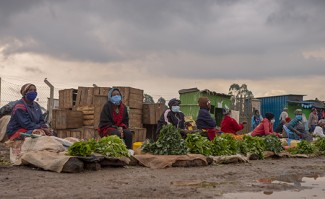
Sparing almost no corner of the world from its wrath, the COVID-19 pandemic has now spread to every country. In an effort to slow the contagion, governments in most countries have been taking drastic measures requiring all residents other than essential workers to confine themselves in their homes, and shutting down vast sectors of their economies. The impact has been crushing. COVID-19 has profoundly affected every country where ICTJ currently works: Armenia, Colombia, Cote d’Ivoire, Ethiopia, Gambia, Kenya, Lebanon, Libya, Sudan, Syria, Tunisia, and Uganda. We recently caught up with ICTJ’s heads of country programs to learn more about the impact the pandemic is having on transitional justice and society more broadly.

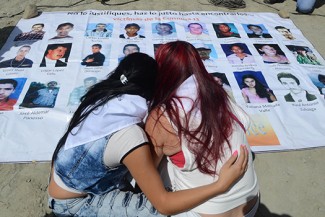
On International Day of the Victims of Enforced Disappearances, the families of the missing maintain their vow: "until we find them." As special bodies to search for their loved ones develop, what do victims expect?

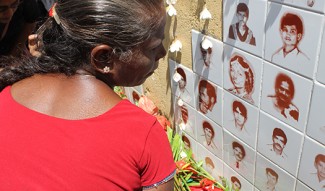
Enforced disappearances continue to affect hundreds of thousands of people around the world. The hopes of Sri Lankan victims reached a peak in 2015, when President Maithripala Sirisena was elected on a centrist platform and a commitment to truth, justice, and reconciliation. Later that year, the Sri Lankan government agreed to a UN Human Rights Council resolution that offered a roadmap for the search for the missing and forcibly disappeared. To the dismay of many, however, the government has done little since to implement these commitments and to take the opinions of victims seriously.

The start of 2022 was marked by two important victories in the fight for justice and redress for victims of human rights violations in Syria. The first was the sentencing of Anwar Raslan, a former colonel in the Syrian intelligence service, to life in prison by the Higher Regional Court in Koblenz...

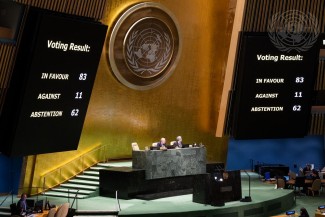
On June 29, 2023, the United Nations General Assembly adopted a resolution creating a new independent institution on the missing in the Syria Arab Republic. Eighty-three member states voted in favor, 11 voted against, and 62 abstained. ICTJ welcomes the resolution, which represents a momentary reprieve in Syria’s otherwise bleak justice landscape. This vote represents a critical step forward in supporting all those who seek answers about the fate and whereabouts of their loved ones and who suffer daily from the indignities and grave hardships that ensue when a loved one goes missing.

On Friday, the United Nations hailed the progress made since 2014 in Tunisia in terms of transitional justice, underlining the importance of “enabling the transitional justice process to achieve its objectives." "The United Nations Resident Coordinator in Tunis, Diego Zorilla, congratulates all...