



637 results

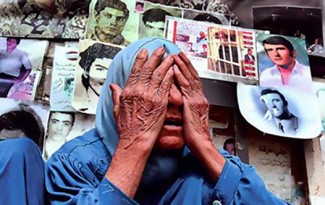
Beirut, June 23, 2020 — Almost a year and a half after passing Law 105 for the missing and disappeared, the Lebanese government has finally appointed the members of the National Commission for the Missing and Forcibly Disappeared. ICTJ welcomes this action, which is another step closer to uncovering the fate of thousands of victims. However, the appointment of the commissioners will be meaningless, unless the government demonstrates greater commitment to addressing the families’ right to the truth and takes the necessary action to create a commission that is credible and effective.

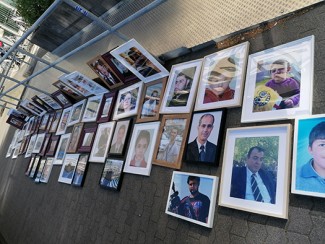
On Thursday, January 13, 2022, the Higher Regional Court in Koblenz, Germany, convicted Anwar Raslan, a senior official in the Syrian government, for crimes against humanity. The landmark trial, the first ever to prosecute a member of Bashar al-Assad’s regime for such crimes, highlights a crucial component without which Raslan would never have been convicted: the role of victims in achieving justice.

Alonso Ojeda Awad and Medardo Correa joined Colombia’s notorious leftist guerrilla group the National Liberation Army (ELN) in their youth. After fighting with the group for several years, they and a handful of other ELN members demobilized voluntarily in the 1980’s. But it was not until 2019 that they were able to sit down with former members of paramilitary groups to discuss acknowledgment and responsibility for past crimes, reparation, and the importance of non-recurrence.

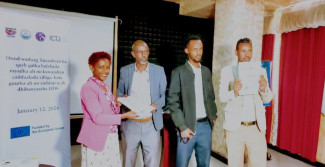
On July 28, 2025, the Somali Regional State Council passed a resolution designating April 6 as Victims’ Memorial Day, formally recognizing those who experienced violence and human rights violations across Ethiopia’s Somali Region. For years, victims and civil society actors, with support from ICTJ and other international partners, have persistently advocated for this acknowledgment, which marks a milestone in Ethiopia’s journey toward accountability and repair.

ICTJ is more than two decades old. At the time it was established, many of those who contributed to transitions in Argentina, Chile, Guatemala, South Africa, and the former Yugoslavia saw the value of a specialized organization that could draw from diverse national experiences to prov...

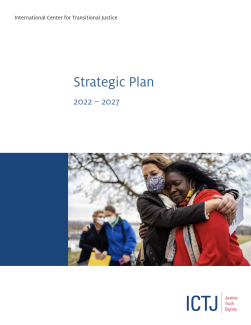
The cover of a report with the text, "2022-2027, Strategic Plan," with an image of people embracing underneath.

In societies confronting the legacies of war, tyranny, or entrenched injustice, the experiences of indigenous people have often been marginalized. ICTJ has published a handbook offering guidance on planning truth commissions and commissions of inquiry that safeguard the interests of indigenous communities and address violations against them.

ICTJ's expert conference on the relationship between truth-seeking and indigenous rights is in session. View the live stream here.

Indigenous peoples are among those most affected by contemporary conflict. The resource-rich territories they occupy are coveted by powerful, often violent groups. Their identity is perceived with mistrust, sometimes with hate. Indigenous communities live at a precarious intersection ...

ICTJ hosted a conference on “Strengthening Indigenous Rights through Truth Commissions” July 19-21, 2011. Regional and international experts convened to discuss how truth commissions can incorporate and address indigenous peoples’ rights. Videos of each session and summaries of the conference proceedings are available.

Haiti is currently confronting several challenges regarding stability, the rule of law, and corruption. The establishment of the United Nations Mission for Justice Support in Haiti (MINUJUSTH) in April 2017 is aimed at contributing to state and civil society efforts to effectively add...