726 results

ICTJ was pleased to host the newly elected United Nations Special Rapporteur on the promotion of truth, justice, reparations, and guarantees of non-recurrence, Fabian Salvioli (Argentina), at its New York office, where he discussed his vision and priorities.

The 2030 Agenda for Sustainable Development establishes an ambitious set of goals and targets, the achievement of which will be a formidable challenge for any country struggling with poverty and inequality. This challenge increases dramatically for countries currently experiencing or emerging from violent conflict.

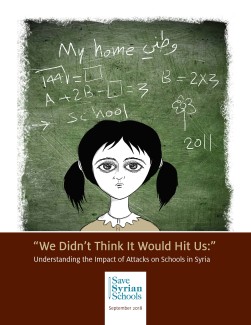
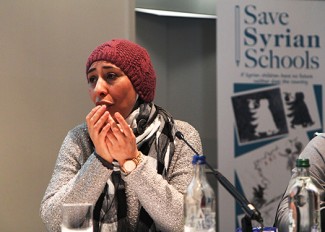
By looking at the documentation efforts of Syrian civil society organizations, this paper challenges the notion that criminal prosecution is the sole avenue of justice available for alleged crimes in Syria. Documentation could be used for important other avenues of justice, such as ac...

ICTJ's Virginie Ladisch spoke with Heythem Guesmi, a young Tunisian activist who is fighting systemic oppression, economic exclusion, and impunity that persist despite the Revolution’s initial success, and Thenjiwe McHarris, a young organizer working with Black Lives Matter in the United States—a movement whose urgency also stems from historic marginalization leading to widespread impunity and systematic failures in law enforcement.

TUNIS—ICTJ hosted a conference on May 2 and 3 to address the current challenges facing Tunisia’s Specialized Criminal Chambers (SCC) as it proceeds to adjudicate cases of serious human rights violations committed under the former regime. The 90 guests who attended included members of Tunisia’s Truth...

This briefing paper focuses on the role of victims of human rights violations in criminal proceedings. This paper will provide examples of recent developments in the advancement of victim participation in criminal proceedings in international criminal law and domestic jurisdictions.&n...

Pursuing justice in a transitional context may take the form of multiple measures and goes beyond the pursuit of criminal prosecutions. Tunisia’s Basic Law on Transitional Law, adopted in December 2013, is a case in point. Despite its flaws, the the law introduced a fairly c...

In some contexts, the global community has resorted to international tribunals to prosecute the most serious past crimes, such as war crimes, crimes against of humanity, and genocide. While these international efforts contributed significantly to international justice, they were ...

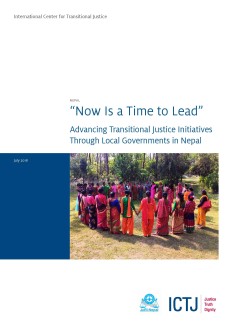
Nepal’s new local government structure – comprised of districts, municipalities, sub-municipalities, and wards formed within the new federal system under the 2015 Constitution – offers the possibility of some individualized redress for victims at the community-level. This article by Elena Naughton was published in the Kathmandu Post on May 6, 2018.

These are especially challenging times for those of us who work to assist societies in dealing with a legacy of atrocities and massive human rights violations. Violent armed conflicts have increased in number, duration, and ferocity around the globe. Immense displacement and waves of ...