



534 results

NEW YORK/BRASÍLIA, Oct. 27, 2011—The Brazilian Senate’s passage of the National Truth Commission bill yesterday represents an important step for the struggle against impunity. The Government of Brazil now has the opportunity to acknowledge a painful past and to implement an effective tool to establish the facts about past abuse, to help victims heal and to allow Brazilian society to understand a painful period of their history, therefore preventing recurrent violations.

Morocco’s “Years of Lead” period was marked by policies of state violence against political dissidents including torture, arbitrary detention, and enforced disappearances. “ Morocco: Gender and the Transitional Justice Process” analyzes whether the various transitional justice processes undertaken by the IER sufficiently fulfill the gender-specific focus of its mandate.

ICTJ enthusiastically welcomes today’s decision of the United Nations Human Rights Council to establish a mandate for a special rapporteur on the promotion of truth, justice, reparation and guarantees of non-recurrence of serious crimes and gross violations of human rights.

Since 1990, 65 former heads of state or government have been legitimately prosecuted for serious human rights or financial crimes. Many of these leaders were brought to trial in reasonably free and fair judicial processes, and some served time in prison as a result. This book explores...

Women played a crucially important role in brokering peace in Solomon Islands but they still face significant barriers to inclusion in transitional justice initiatives. ICTJ has been working closely with women groups to facilitate their formal contribution to the Truth and Reconciliation Commission (TRC).

ICTJ filed an amicus brief in the apartheid reparations case before the Southern District Court of New York on November 25, 2009. The brief supports a decision by the South African Government not to oppose legal action against five international companies that are accused of aiding an...

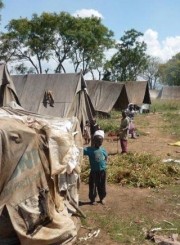
As Kenya continues to address its 2007-08 postelection violence, greater emphasis should be placed on victims’ reparative justice demands, according to a new ICTJ report. The report, “To Live as Other Kenyans Do”: A Study of the Reparative Demands of Kenyan Victims of Human Rights Violations, is a...

This paper documents the opinions of victims of human rights violations in Kenya about the country’s unfolding transitional justice process. The first section gives background into the human rights violations; the second section presents victims ideas about reparative justice. The rep...

The South African Coalition for Transitional Justice (SACTJ) submits the following comments regarding the May 11, 2010 General Notice 282 published in the Government Gazette. The Coalition objects to the Notice 282 regulations on procedural, constitutional, and international law groun...

On May 11, the South African Department of Justice and Constitutional Development (DOJ) invited comments on new regulations governing the distribution of reparations to victims of the apartheid era in the form of medical and educational benefits. Civil society organizations and groups representing survivors’ interests have raised concerns regarding the scope of the regulations, as well as the DOJ’s overall failure to engage with survivors and consider their views when drafting reparations policies.