6 results

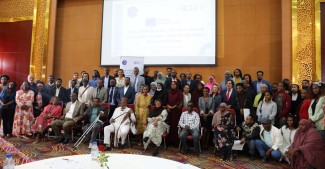
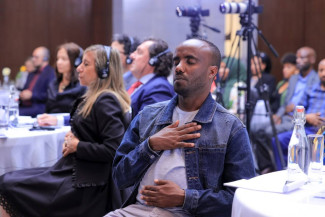
Victims, civil society advocates, policymakers, and development partners recently met for a high-level policy roundtable on integrating mental health and psychosocial support (MHPSS) in Ethiopia’s transitional justice process. Organized by ICTJ and the Advocacy Center for Democracy and Development, the convening offered a space for participants to discuss the need for MHPSS and how to improve access to it across the country.

ICTJ and the Consortium of Ethiopian Human Rights Organizations cohosted a national event to increase victims’ and civil society’s meaningful participation in Ethiopia’s transitional justice process. The event brought together Ethiopian government officials and policymakers, civil society representatives, members of the media, and international stakeholders to discuss strategies to ensure victims and gender-related concerns remain at the center of the efforts underway in the country to deal with recent and past violence and its consequences.

This year marks the 50th anniversary of the hip hop movement. To honor its contributions to the struggle for justice, truth, and equality, the Skoll Foundation hosted a panel discussion and concert event featuring hip hop artists, including cofounder of the legendary rap group Run-DMC Darryl McDaniels and Colombian rapper and producer Ali aka Mind, as part of its 20th World Forum held in April in Oxford, United Kingdom. ICTJ, which received the Skoll Award for Social Innovation in 2009 and has partnered with the Skoll Foundation since, invited Ali aka Mind as a representative of Rexistencia Hip Hop, an artistic mentorship and creation lab led by ICTJ’s office in Colombia and the Latin American media outlet and foundation Cartel Urbano.

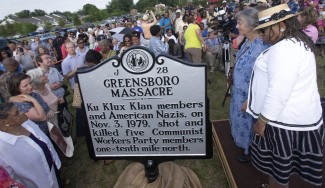
At a time when truth-seeking and reparations initiatives are taking hold across the United States, this report offers reflections from various civil society-led truth-seeking processes. Drawing on case studies from the United States, Colombia, Scotland, and West Papua, the report iden...

People gather around a plaque marking the Greenboro Massacre outside during an inaugural ceremony

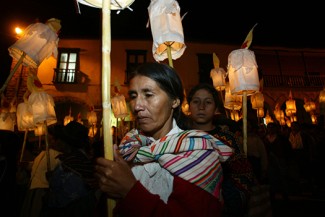
Indigenous peoples are still some of the most marginalized and vulnerable communities around the world. In a conflict, they are often some of the most affected as their resource-rich territories are coveted by powerful and violent groups, their identity and loyalty perceived with mistrust, and their...

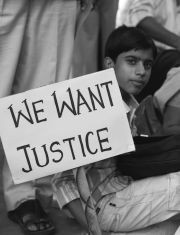
As we mark July 17, designated International Justice Day by the states parties of the International Criminal Court (ICC) just over two years ago, we should not limit our focus to the work of the court or criminal justice as such. Pursuing justice in the aftermath of atrocity presents an opportunity to do three crucial things: reaffirm a society’s shared values about basic ideas of right and wrong; restore confidence in the institutions of the state charged with protecting fundamental rights and freedoms; and recognize the human dignity of the victims of atrocities that have taken place.