5 results

Customary justice is the primary way in which most communities in South Sudan resolve disputes. Its ability, however, to deal with massive human rights violations is limited due to the complexity of intercommunal violence and a lack of clarity on its proper role. This report contends ...

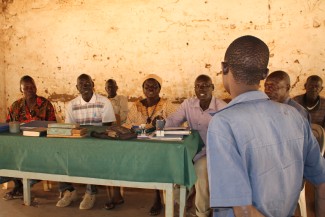
A man stands facing a table around which several men are seated.

In countries where state institutions have limited reach, customary and informal justice is often the most common way in which people resolve disputes and seek justice. Given its prominence, it is considered to be an important element of a people-centered approach to building peaceful, just, and inclusive societies. An understanding of the relationship between customary justice and transitional justice, however, remains underdeveloped. A new ICTJ report provides valuable empirical, qualitative research on the topic, in the context of South Sudan.

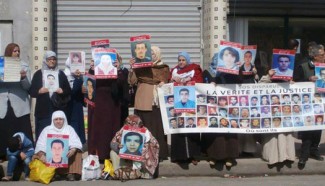
For more than two decades, some 40 women have been protesting every Wednesday against government inaction on the disappeared in front of Algeria’s official human rights commission. They stand on the sidewalk holding photos of their disappeared relatives — their children, fathers, and husbands — breaking the silence at a dangerous time in Algeria.

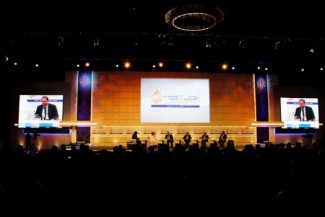
ICTJ President David Tolbert will be a featured speaker at this year’s Al Jazeera Forum in Doha, Qatar. Al Jazeera Forum is the flagship event of Al Jazeera Media Network, at which Al Jazeera showcases its contribution to the world of media and politics.

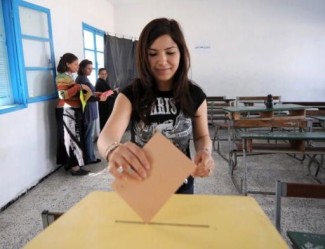
The latest ICTJ Program Report explores transitional justice issues in the Middle East and North Africa (MENA) and charts our work in this important and dynamic region. Claudio Cordone, ICTJ’s program director covering the MENA region, discusses individual country scenarios, prospects for transitional justice processes and explains ICTJ’s involvement and impact. Cordone speaks about transitional justice principles being at the root of popular uprisings referred to as “Arab Spring” and the challenges facing societies in their efforts to reckon with legacies of dictatorships and recent violence. He describes ICTJ’s efforts to address the impact of violence on women and promote their participation in transitional justice initiatives. The interview provides a thorough overview of ongoing initiatives and future prospects in Tunisia, Libya, Egypt, Syria, Yemen, Lebanon and Israel and Occupied Palestinian Territory.