4 results

Customary justice is the primary way in which most communities in South Sudan resolve disputes. Its ability, however, to deal with massive human rights violations is limited due to the complexity of intercommunal violence and a lack of clarity on its proper role. This report contends ...

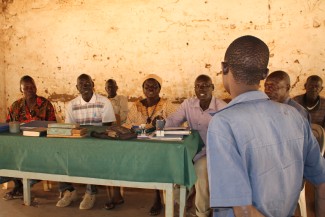
A man stands facing a table around which several men are seated.

In countries where state institutions have limited reach, customary and informal justice is often the most common way in which people resolve disputes and seek justice. Given its prominence, it is considered to be an important element of a people-centered approach to building peaceful, just, and inclusive societies. An understanding of the relationship between customary justice and transitional justice, however, remains underdeveloped. A new ICTJ report provides valuable empirical, qualitative research on the topic, in the context of South Sudan.

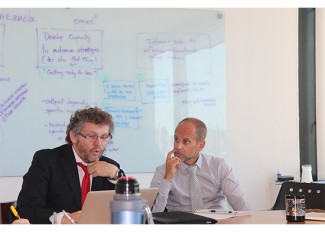
ICTJ was pleased to host the newly elected United Nations Special Rapporteur on the promotion of truth, justice, reparations, and guarantees of non-recurrence, Fabian Salvioli (Argentina), at its New York office, where he discussed his vision and priorities.

NEW YORK/BRASÍLIA, Oct. 27, 2011—The Brazilian Senate’s passage of the National Truth Commission bill yesterday represents an important step for the struggle against impunity. The Government of Brazil now has the opportunity to acknowledge a painful past and to implement an effective tool to establish the facts about past abuse, to help victims heal and to allow Brazilian society to understand a painful period of their history, therefore preventing recurrent violations.