259 results

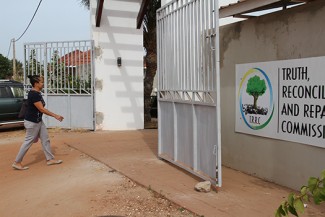
On November 25, 2021, The Gambia’s Truth, Reconciliation and Reparations Commission (TRRC) presented its 17-volume final report and recommendations to President Adama Barrow, after multiple delays. The final report includes a record of serious human rights violations committed under Jammeh’s repressive regime and recommendations for pursuing justice. Despite the challenges, steps have already been taken that offer hope that the TRRC’s recommendations will take effect.

Because transitional justice processes are complex, politically contested, and not necessarily linear, they present unique theoretical and practical challenges for measuring their results. This report seeks to improve monitoring and evaluation practices and support evidence-based proc...

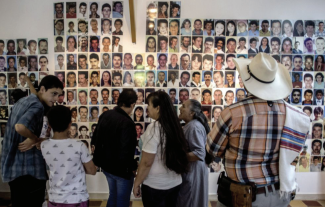
Children, women, and men look at a wall covered in faces of people.

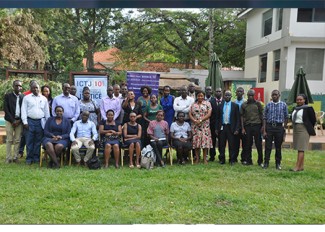
For years, ICTJ has championed the media and the role it plays in supporting truth-seeking and advancing accountability and redress for victims of conflict-related atrocities. In the places where we work, from South Africa, to the Gambia, Guatemala, Colombia and the Philippines, media projects and coverage—both mainstream and alternative—have been crucial in ensuring participation, mediating public discourse, contributing to acknowledgment for victims, and revealing long-hidden truths about crimes. This month, we share a dispatch from our work in Uganda.

The taboo around sexual violence against men and boys can leave victims in the shadows, write ICTJ's Kelli Muddell and Sibley Hawkins. Without acknowledgment of these crimes, efforts to address injustices of the past will be hard-pressed to develop inclusive and effective responses.

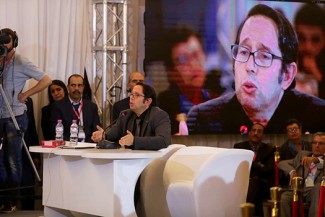
ICTJ’s Gender Symposium, held on February 2 to 4, 2019, in Tunis, Tunisia, brought together fearless women leaders working in 8 countries to advance the needs of victims and to bring gender issues to the center of transitional justice processes. What was achieved? What experiences cut across these diverse contexts? Kelli Muddell and Sibley Hawkins reflect on these questions and more in this short podcast.

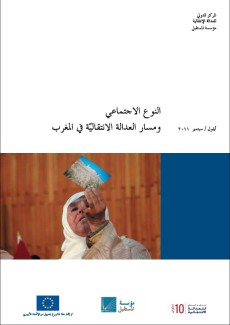
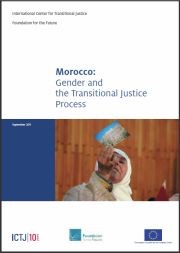
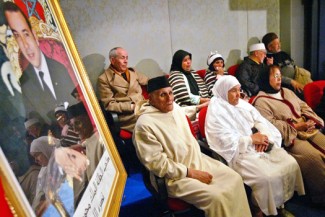
Established in 2004, Morocco’s Equity and Reconciliation Commission (IER: l’Instance équité et réconciliation) was one of the first attempts made in the Arab world to address human rights violations perpetrated in the post-independence period. It also aimed to include female victims o...

Morocco’s “Years of Lead” period was marked by policies of state violence against political dissidents including torture, arbitrary detention, and enforced disappearances. “ Morocco: Gender and the Transitional Justice Process” analyzes whether the various transitional justice processes undertaken by the IER sufficiently fulfill the gender-specific focus of its mandate.

The month of January has a particular significance in the Middle East and North Africa. It was the month when the Arab uprisings were sparked five years ago. It was also the month when the transitional justice process was inaugurated in Morocco, 12 years ago. What can be learned from Morocco’s experience?

On November 28, 2023, ICTJ organized an international dialogue in Bogotá, Colombia, to share innovative strategies for advancing victims’ rights to redress for human rights abuses and for establishing more victim-centered development policies. The gathering also marked the official launch of ICTJ’s new report—Advancing Victims’ Rights and Rebuilding Just Communities Local Strategies for Achieving Reparation as a Part of Sustainable Development—which presents findings from a two-year comparative study of local efforts in Colombia, The Gambia, Tunisia, and Uganda to advance reparations.

Despite earlier efforts to envision a national transitional justice policy, Ukraine remains overly cautious about establishing one. This report provides a robust substantiation of why Ukraine should revive its holistic transitional justice policymaking. In the first part, it debunks t...

A women holds up an infant in the air on sunny day outdoors, surrounded by yellow and blue balloons