


259 results

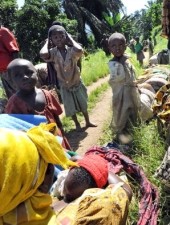
For the millions of victims of the country’s successive wars, Lubanga is just one of many who are responsible for crimes on an astonishing scale. Congolese authorities must end the widespread impunity enjoyed by those who remain in positions of power in the government and military or violence and instability are likely to continue for years to come.

As ICTJ looks back on its 15 years of work, join us in celebrating our allies across the globe who join us in the struggle for human rights, against impunity. To honor their efforts in the trenches of this shared struggle, we will bring you their stories in the weeks and months to come. We begin with Kenya's Jaqy Mutere, who provides both an empathetic ear and a political voice to survivors of sexual violence.

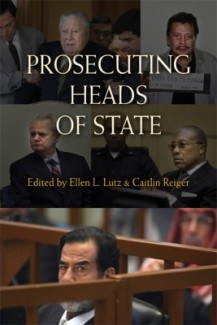
Since 1990, 65 former heads of state or government have been legitimately prosecuted for serious human rights or financial crimes. Many of these leaders were brought to trial in reasonably free and fair judicial processes, and some served time in prison as a result. This book explores...

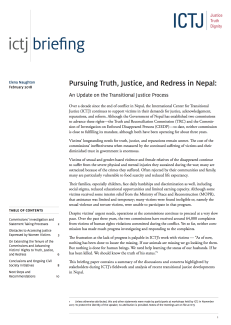
The ICTJ continues to support human rights victims in Nepal in their pursuit of justice, truth, reparations, and institutional reform. This briefing paper presents a summary of findings and recommendations from workshops that ICTJ conducted with women victims, as well as meetings it h...

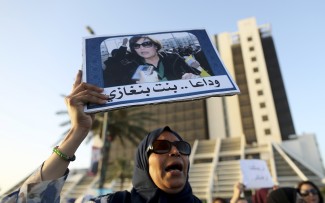
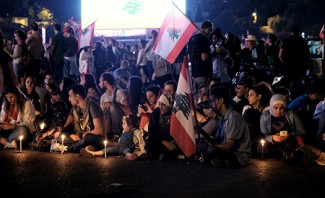
For over a month now, Lebanese people have been in the streets peacefully calling for an end to corruption, economic disenfranchisement, and government mismanagement, calling instead for accountability and reform of the systems that have allowed these things to occur. The protests are historic for several reasons: their scope and magnitude, as well as the way they have unified a country that has for so long had division baked into nearly every aspect of life, down to its system of governance.

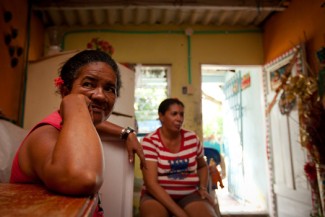
ICTJ's documentary Voices of Dignity inspired Wilson Herrera, professor of philosophy and researcher at the Universidad del Rosario in Colombia, to reflect on the role of victims in a democratic society, and on the importance of empowering them as agents of change and rights-holders, rather than relegating them to the status of permanent victims.

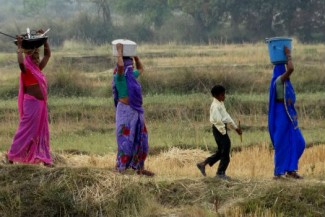
To mark 15 years of ICTJ, we asked staff past and present for memories that stand out to them - moments that throw the stakes of our work into sharp relief and resonate with them years later. Reshma Thapa, former ICTJ senior program associate in Nepal (2009- 2013), looks back on one particularly poignant dance shared among women in a small village.

This briefing paper examines the various actions that Ukrainian officials and members of the international community have launched to investigate and prosecute war crimes and other human rights violations committed in Ukraine since Russia invaded the country in February 2022. It explo...

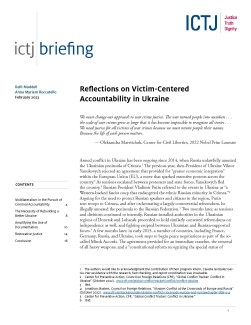
First of the briefing paper Reflections on Victim-Centered Accountability in Ukraine

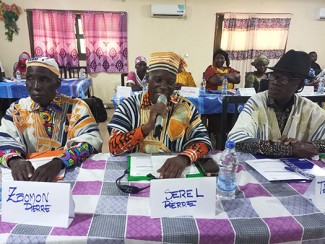
Youth activists and traditional leaders from the city of Duékoué, in western Côte d’Ivoire, gathered on October 15 to discuss how best to strengthen social cohesion and prevent future conflict. The city and surrounding region were among the areas most affected by the violence that broke out across the country following the 2010 presidential elections and that left thousands dead and many more injured, beaten, or raped.

On February 12, 2019, the Assembly of the African Union adopted the African Union Transitional Justice Policy. The policy serves as a guide for member states on effective and credible transitional justice processes to achieve sustainable peace, justice, reconciliation, social cohesion...

PDF of the first page of the briefing paper "A Roadmap for Justice in Africa"