259 results

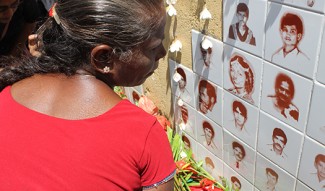
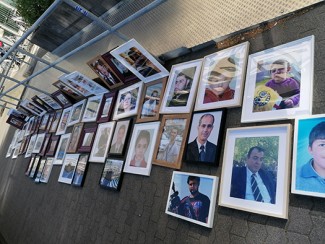
Enforced disappearances continue to affect hundreds of thousands of people around the world. The hopes of Sri Lankan victims reached a peak in 2015, when President Maithripala Sirisena was elected on a centrist platform and a commitment to truth, justice, and reconciliation. Later that year, the Sri Lankan government agreed to a UN Human Rights Council resolution that offered a roadmap for the search for the missing and forcibly disappeared. To the dismay of many, however, the government has done little since to implement these commitments and to take the opinions of victims seriously.

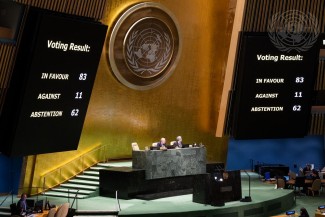
On June 29, 2023, the United Nations General Assembly adopted a resolution creating a new independent institution on the missing in the Syria Arab Republic. Eighty-three member states voted in favor, 11 voted against, and 62 abstained. ICTJ welcomes the resolution, which represents a momentary reprieve in Syria’s otherwise bleak justice landscape. This vote represents a critical step forward in supporting all those who seek answers about the fate and whereabouts of their loved ones and who suffer daily from the indignities and grave hardships that ensue when a loved one goes missing.

On Thursday, January 13, 2022, the Higher Regional Court in Koblenz, Germany, convicted Anwar Raslan, a senior official in the Syrian government, for crimes against humanity. The landmark trial, the first ever to prosecute a member of Bashar al-Assad’s regime for such crimes, highlights a crucial component without which Raslan would never have been convicted: the role of victims in achieving justice.

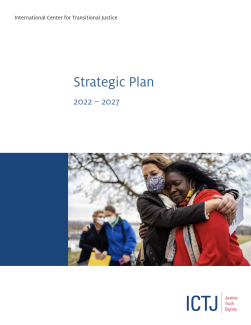
ICTJ is more than two decades old. At the time it was established, many of those who contributed to transitions in Argentina, Chile, Guatemala, South Africa, and the former Yugoslavia saw the value of a specialized organization that could draw from diverse national experiences to prov...

The cover of a report with the text, "2022-2027, Strategic Plan," with an image of people embracing underneath.

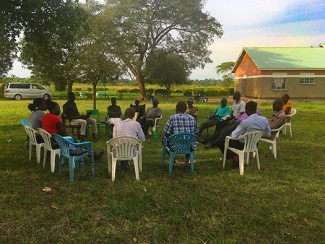
Over the last 15 years, the Ugandan government has implemented a series of recovery and reconstruction programs in Northern Uganda to address the social and economic devastation caused by the two-decade armed conflict in the region and set it on the path to sustainable peace. While these development programs alone cannot fulfill the state’s obligation to provide reparations to victims of human rights violations, if designed well, they can form a foundation upon which future reparations initiatives can be built.

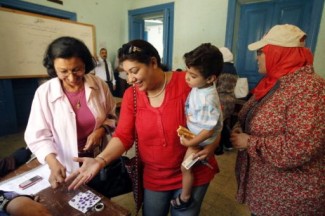
Transitional justice measures should serve to rectify, not replicate, patterns of discrimination against women. These mechanisms can challenge structural causes of gender inequality, by publicly acknowledging the factors that made such abuse possible. In the Middle East and North Africa, like in many other contexts, it is a challenge to ensure transitional justice measures do not further entrench the invisibility of gender-based abuses. As different countries consider the ways to confront the legacies of past abuses, ICTJ works with women’s groups across the region to build their capacity to engage in discussions around transitional justice and gender.

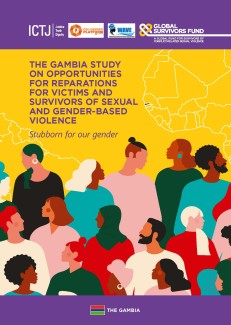
This report presents findings from research on the needs and expectations of survivors of sexual and gender-based violence in The Gambia. Based on focus group discussions with survivors and other stakeholders, it analyses obstacles to, as well as opportunities to improve, survivors’ a...

Cover of the report on SGBV in The Gambia.

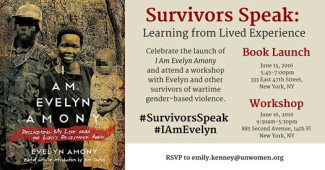
Evelyn Amony tells the harrowing story of her years in captivity with the LRA, and experience of grinding poverty and stigma after returning home with two children, in her new memoir, I Am Evelyn Amony: Reclaiming my Life from the Lord's Resistance Army. The autobiography, which tells the difficult truths of women and girls in wartime as only a firsthand witness can, will be launched today in New York, at the Japan Society.

During the Ben Ali dictatorship in Tunisia, Najet Gabsi, an educator pursuing a diploma in law, was imprisoned for six months for her political activities. Through her participation in the "Voices of Memory" art exhibition, she was able to reignite her passion for activism and articulate the harms she endured at the hand of the regime.

This briefing paper reviews the Kenyan government’s response to sexual and gender-based violence committed against women, men, and children during the 2007/2008 post-election crisis. It draws on interviews with over 40 survivors about their experience and analyzes the laws and transit...