620 results

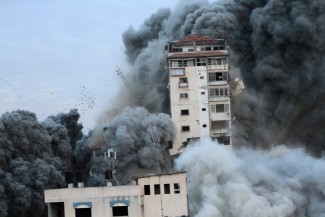
On October 7, the world watched in horror as members of the militant group Hamas slaughtered over 1,400 Israelis, most of whom were civilians including children and the elderly, in a premeditated and sophisticated attack. Israel’s response has so far been no less horrific. Incessant waves of indiscriminate airstrikes on Gaza have hit residential buildings, medical facilities, and other critical civilian infrastructure, besieging the entire enclave and leaving more than 5,000 people dead including 2,000 children. Unfortunately, these unspeakable atrocities—the condemnation and rejection for which we have run out of words—are not isolated events happening in a vacuum. They are, in fact, just the latest episodes in a 75-yearlong cycle of violence.

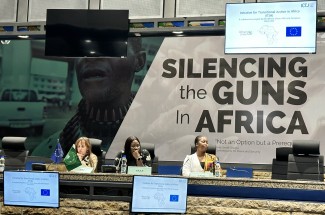
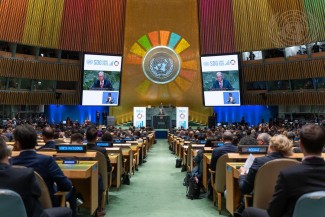
On September 18 and 19, world leaders gathered in New York for the UN Sustainable Development Goals Summit to take stock of the progress that the global community has made toward achieving the 2030 Sustainable Development Agenda and the challenges it still faces. At the summit, the UN General Assembly adopted a political declaration, which asserts that the achievement of the SDGs is “in peril,” describing progress toward them as moving too slowly and even regressing in some countries as a result of multiple, overlapping crises, such as persistent armed conflict. The international community must go further in specifying the obstacles that societies affected by conflict and widespread abuses face and the role that human rights can play in overcoming them.

The study of macro-criminality is critically important to transitional justice and specifically to efforts to pursue accountability for large-scale, systematic human rights violations. To help enliven debates concerning macro-criminality and broaden access to them, ICTJ has translated into Spanish for the first time ever the seminal essay "Can Politics Be Criminalized?" written by German criminologist Herbert Jäger.

In advance of the 2023 SDG Summit, the Working Group on Transitional Justice and SDG16+ has released a new report underscoring the contribution of transitional justice to the advancement of sustainable peace and development and offering stakeholders strategies to better incorporate it into relevant agendas and action plans. The SDG Summit marks the halfway point of the 2030 Agenda for Sustainable Development and offers the global community an opportunity to take stock of the progress it has made and the challenges it still faces in achieving the Sustainable Development Goals.

International policymakers recognize that transitional justice is an important component of the 2030 Agenda for Sustainable Development, especially in countries affected by systemic violence, repression, and marginalization. Yet responses to massive human right violations often remain...

Cover image of the report Toward Victim-Centered Change: Integrating Transitional Justice into Sustainable Peace and Development. It features several black lines that lean slightly to the right. A single yellow at the far right stands straight.

Five years ago, in August 2018, to mark his 100 days in office, Armenian Prime Minister Pashinyan addressed a large rally in Yerevan’s Republic Square to officially announce his government’s intentions to incorporate transitional justice mechanisms into Armenian post-revolution reform agenda. Since then, Armenia has been pursuing a range of transitional justice initiatives alongside other democratic reforms, and it has made some limited headway, despite setbacks and major challenges including renewed conflict with Azerbaijan.

More than 20 years after the end of the Yugoslav Wars of the 1990s, Kosovo is still contending with unresolved ethnic tensions. Formerly an autonomous region of Serbia within the former Yugoslavia, Kosovo declared independence in 2008. Ethnic tensions were a root cause of the violent conflicts, during which an estimated 140,000 died and numerous atrocities were committed. ICTJ recently sat down with ICTJ's Anna Myriam Roccatello and Kelli Muddell to learn more about ICTJ's work and the present challenges to truth and justice in the country.

July 17, 2023, marked 25 years since the Rome Statute was adopted at a conference in Rome, Italy. The statute created the world’s first permanent international court, the International Criminal Court, which was probably the most significant milestone in international criminal justice since the Nuremburg and Tokyo trials of the mid-20th century. It signaled the firm intention of many nations to address ongoing impunity of the most serious crimes known to humankind. After 25 years, however, the ICC has not yet reached its full potential.

Eight years ago, the United Nations General Assembly declared June 19 as the International Day for the Elimination of Sexual Violence in Conflict in an effort to raise awareness about this endemic tactic of war; honor the innumerable victims and survivors across the world, as well as those working to end these violations; and ultimately eradicate this dehumanizing practice. History has shown that whenever there is a political or security crisis juxtaposed with a militarized response, conflict-related sexual violence is deployed as a tactic to subdue, dehumanize, and terrorize civilians and opponents.

On May 12, the Council of Europe’s Committee of Ministers agreed to create a mechanism to receive claims for damages caused by the Russian crime of aggression in Ukraine. The new registry is intended to receive information on claims of damage, loss, or injury caused by Russia’s invasion of Ukraine since February 24, 2022 and assess their eligibility for future adjudication or compensation. Many of the register’s chief proponents are hailing its creation as a key step toward accountability for the many violations of international law that Russia has committed in or against Ukraine. However, the register alone will not be sufficient to address the multitude of harms caused by the war.