789 results

Enforced disappearances continue to affect hundreds of thousands of people around the world. The hopes of Sri Lankan victims reached a peak in 2015, when President Maithripala Sirisena was elected on a centrist platform and a commitment to truth, justice, and reconciliation. Later that year, the Sri Lankan government agreed to a UN Human Rights Council resolution that offered a roadmap for the search for the missing and forcibly disappeared. To the dismay of many, however, the government has done little since to implement these commitments and to take the opinions of victims seriously.

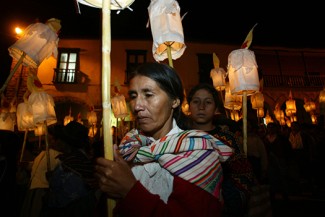
Indigenous peoples are still some of the most marginalized and vulnerable communities around the world. In a conflict, they are often some of the most affected as their resource-rich territories are coveted by powerful and violent groups, their identity and loyalty perceived with mistrust, and their...

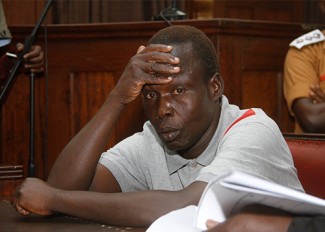
Kampala—On the 23rd of July, the Ugandan Judiciary announced that the pretrial hearing of the case Uganda v. Thomas Kwoyelo had been adjourned indefinitely, due to a shortage of funds needed to hold the hearing. The Pretrial Judge of the International Crimes Division (ICD) was expected to deliver a...

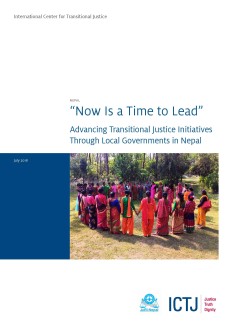
This report aims to help local governments, victims’ groups, and other stakeholders in Nepal to understand the scope of and potential inherent in local governmental powers and to identify what local governments can do to design and implement initiatives that support victims ...

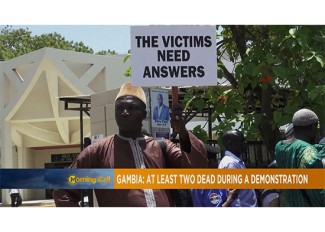
Last week, police opened fire on unarmed protesters, killing three and injuring several others in Faraba Banta, a small town in southwestern Gambia. ICTJ condemns these acts and supports civil society and victims in their call for swift actions ensuring justice, reparations, and an independent investigation into the causes of the attacks.

ICTJ was pleased to host the newly elected United Nations Special Rapporteur on the promotion of truth, justice, reparations, and guarantees of non-recurrence, Fabian Salvioli (Argentina), at its New York office, where he discussed his vision and priorities.

The 2030 Agenda for Sustainable Development establishes an ambitious set of goals and targets, the achievement of which will be a formidable challenge for any country struggling with poverty and inequality. This challenge increases dramatically for countries currently experiencing or emerging from violent conflict.

By looking at the documentation efforts of Syrian civil society organizations, this paper challenges the notion that criminal prosecution is the sole avenue of justice available for alleged crimes in Syria. Documentation could be used for important other avenues of justice, such as ac...

This report is based on qualitative interviews with Central African refugees living in Chad and Cameroon, in which they were asked about their experience of displacement and their intentions and concerns regarding return, reconciliation, and justice. Refugees said that if peace a...

ICTJ's Virginie Ladisch spoke with Heythem Guesmi, a young Tunisian activist who is fighting systemic oppression, economic exclusion, and impunity that persist despite the Revolution’s initial success, and Thenjiwe McHarris, a young organizer working with Black Lives Matter in the United States—a movement whose urgency also stems from historic marginalization leading to widespread impunity and systematic failures in law enforcement.