


789 results

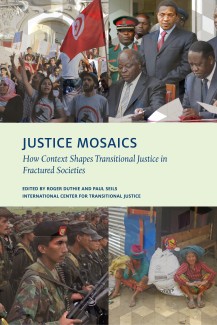
What hope is there for justice for victims of atrocities in profoundly fractured societies, where systems of government have broken down and social and political divisions run deep? What is the role of transitional justice in forging peace in countries like Colombia, after decades of ...

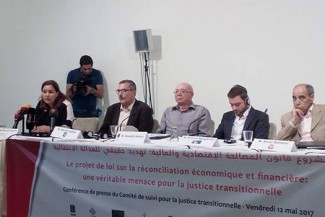
The International Center for Transitional Justice today repeated the call for the withdrawal of the revamped “Economic Reconciliation” Draft Law. As one of the key expert organizations that has supported the transitional process in Tunisia since its inception, ICTJ has opposed the flawed “Economic Reconciliation” Draft Law since it was first presented in 2015, because its provisions undermine key goals of transitional justice: accountability, truth and reform.

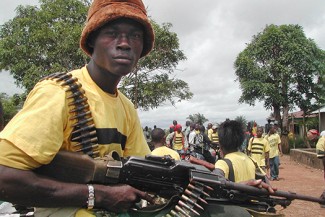
In the Netherlands, a court sentenced an arms dealer to 19 years in prison for his role in war crimes in Liberia. What does his case tell us about pursuing justice for economic crimes in Liberia and beyond?

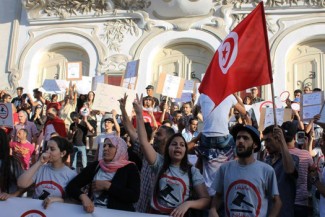
This is the third time that the Tunisian government, supported by several Members of Parliament, has put debate of the National Reconciliation Law on the political agenda. Rearranged in form but with the same substantial faults, this law has mobilized the opposition — for the third time — of approximately 20 civil society organizations that met yesterday and plan to soon hold a press conference.

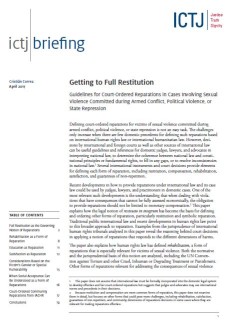
A new briefing paper from the International Center for Transitional Justice provides guidance for national courts issuing decisions on redress of human rights violations involving sexual violence. It encourages judges, advocates and prosecutors to consider the full range of possible forms of redress when ordering reparations for victims, to make use of relevant national and international decisions in interpreting domestic laws, and to pay particular attention to how sexual violence may affect different victims.

Defining court-ordered reparations for victims of sexual violence committed during armed conflict, political violence, or state repression is not an easy task. The challenges only increase when there are few domestic precedents for defining such reparations based on international huma...

A new ICTJ report argues that in Africa's interconnected Great Lakes region, each country’s attempt to provide justice for past violations offers lessons for similar processes in others. We gathered civil society activists from across the region to discuss which strategies have worked for them, which have not, and opened up about the greatest challenges they face in securing justice.

The right to the truth carries special resonance in Kenya, and so on March 24th Kenyan state agencies, survivors, civil society organizations, and international partners will join together in Nairobi to observe the International Day for the Right to the Truth. It provides an opportunity not just for remembrance, but also for greater dialogue between the government and victims about the implementation of reparations programs and of the findings presented in the Truth, Justice and Reconciliation Commission's final report.

Six years into the carnage in Syria, atrocious crimes run rampant, with savage abuses committed against all groups in the devastated country, and the murderous regime, abetted by powerful allies, is still in power. The UN Security Council remains deadlocked and unable to take any steps towards...

South Africa Parliament faces a historic moment. In this op-ed, ICTJ's Vice President Paul Seils remembers the great hope that marked the ICC’s emergence: "No country embodied that hope and that reality more powerfully and more inspiringly than South Africa."