272 results

As gunfire dies down over Tripoli, the new Libyan authorities will be coming to terms with enormous dilemmas about the hierarchy of priorities in building a new society. Their offices will see long processions of emissaries from near and far in the coming days and weeks. Some will be sternly pressing for issues of security to be immediately addressed and others will demand that business and development concerns precede all else, while there are also bound to be those advocating for justice to be done first and quickly.

The appearance of Hosni Mubarak in the opening of his trial this week reassured millions of Egyptians that their revolutionary struggle was not in vain. But the truth about Mubarak’s ability to participate in his trial is still unclear. With the public doubting the court’s seriousness, Mubarak’s appearance could have been a political decision aimed at boosting confidence. If this is the case, the judiciary risks appearing politicized in the eyes of Egyptians.

As we approach International Justice Day on July 17, calls for accountability for human rights abuses resound across the globe, from Cairo to Washington, from Bogotá to Kinshasa, from Srebrenica to Colombo. The demands for justice are today a driving force of social change and popular revolutions, and their reach now extends to those at the highest levels of power.

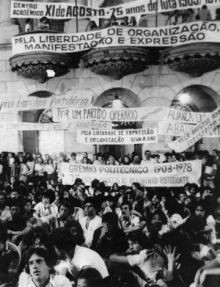
Although Brazil's dictatorship ended years ago, focus on transitional justice there is peaking now, as debate stirs over how to best address its past. Recent developments - including the Brazilian government's proposal of a truth commission, the opening of national archives, and the Inter-American Court of Human Rights' decision limiting the 1979 amnesty law - are at the core of the discussion. Eduardo Gonzalez, director of ICTJ's Truth and Memory Program, discusses the role accountability for the past can play in Brazil today.


The International Criminal Court (ICC) must better communicate what is driving its actions to the public of the Middle East and North Africa (MENA) and elsewhere around the world if it is to develop confidence in its capacity to act as a guardian of international criminal law.

The arrest of Ratko Mladic reignited debates on a wide spectrum of related issues, from its implications on the prospects for true reckoning with the past in the countries of the former Yugoslavia to the possible jolt it will give to Serbia’s hopes of joining the European Union. Beyond the immediate impact on the region, the strongest reverberations of Mladic’s transfer to the International Criminal Tribunal for the former Yugoslavia (ICTY) will be felt in the discourse on international justice.

As the United States and Colombia near the signing of a free-trade agreement and resolve differences over labor rights and other issues, the problematic extraditions of paramilitaries accused of savage crimes committed during the years of counter-insurgency remain far from the spotlight.

As the number of victims of violence against demonstrators in Syria, Yemen, Bahrain and elsewhere in the region rises, a question emerges for the government of Bashar al-Assad of Syria, but also those of Ali Abdullah Saleh of Yemen, Hamad bin Isa al-Khalifah of Bahrain and the vacillating international community: Can impunity for such crimes be permitted in this day and age?

The allegations of war crimes and crimes against humanity committed in the final phases of the conflict in Sri Lanka, made in the Report of the Secretary-General’s Panel of Experts on Accountability in Sri Lanka released on April 25, must be thoroughly investigated. This is the first comprehensive UN report examining the events in the Vanni region between January and May of 2009 and it alleges that “tens of thousands of civilians” were killed. The Government of Sri Lanka, but also the relevant international bodies, cannot claim credibility if these findings are ignored.

SEILS: ICTJ are delighted to host today a real giant in the world of political and legal struggle. Albie Sachs has not only played a huge and influential role in the development of the South African constitution but after being nominated by Nelson Mandela for 15 years in the new constitutional court...