5 results

A new ICTJ report urges the revitalization of Ukraine’s holistic transitional justice policymaking. Debunking the most common myths about transitional justice in Ukraine, the report presents the key legal, policy, and victim-centered arguments in favor of advancing a comprehensive transitional justice framework.

Despite earlier efforts to envision a national transitional justice policy, Ukraine remains overly cautious about establishing one. This report provides a robust substantiation of why Ukraine should revive its holistic transitional justice policymaking. In the first part, it debunks t...

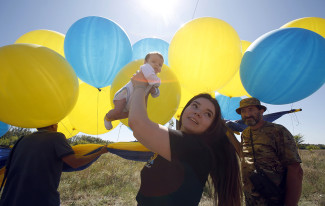
A women holds up an infant in the air on sunny day outdoors, surrounded by yellow and blue balloons

ICTJ was pleased to host the newly elected United Nations Special Rapporteur on the promotion of truth, justice, reparations, and guarantees of non-recurrence, Fabian Salvioli (Argentina), at its New York office, where he discussed his vision and priorities.

NEW YORK, March 15, 2012—Brazilian federal prosecutors announced yesterday that they have opened a criminal investigation against a military officer accused of the enforced disappearance of civilians during the 1964–1985 military dictatorship. This is a welcome blow against the use of a 1979 amnesty law to shelter government agents who committed horrific crimes against civilians from accountability.

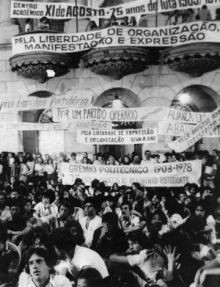
Although Brazil's dictatorship ended years ago, focus on transitional justice there is peaking now, as debate stirs over how to best address its past. Recent developments - including the Brazilian government's proposal of a truth commission, the opening of national archives, and the Inter-American Court of Human Rights' decision limiting the 1979 amnesty law - are at the core of the discussion. Eduardo Gonzalez, director of ICTJ's Truth and Memory Program, discusses the role accountability for the past can play in Brazil today.