7 results

On February 19, 2026, Venezuela’s National Assembly passed the Amnesty Law for Democratic Coexistence, which seeks to extinguish criminal liability for certain acts committed in the country over the past 26 years. While the law has sparked debate, it undeniably represents a significant development in the country's political landscape.

In this era of technological transformation, it is critically important to develop digital strategies for documenting human rights violations, analyzing data for accountability or reparations purposes, and safely advocating for human rights online. This is particularly true in contexts where victims, human rights actors, and members of the media live in fear. To this end, ICTJ has recently led trainings for human rights activists in conflict-affected countries on open-source investigation tools to help them do their work more effectively.

Throughout 2023, ICTJ’s experts have offered their unique perspective on breaking news around the globe as part of the World Report. Their insightful commentaries have brought into focus the impact these events have on victims of human right violations as well as larger struggles for peace and justice. In this edition, we look back on the past year through the Expert’s Choice column.

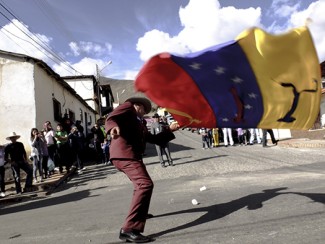
In Venezuela, there is now an absence of representative democracy and a vacuum of public trust in politicians. However, this situation presents an opportunity for other actors and other approaches, so far disparaged by hardliners on both sides. Civil society organizations, which have earned credibility through their dedicated work addressing the humanitarian crisis and defending human rights, can seize this opportunity.

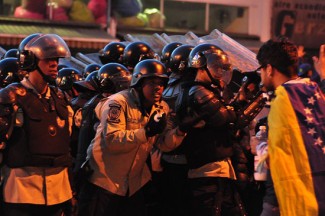
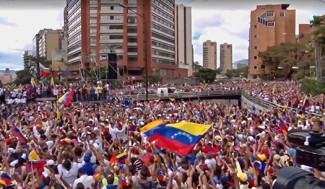
The political crisis in Venezuela has reached a breaking point. The upcoming parliamentary elections scheduled for December 6 threaten to deprive the opposition of its institutional foothold, on which the legitimacy of its demand to establish an interim government rests. Moreover, observers both inside and outside Venezuela have repeatedly warned that the conditions are unsuitable for fair and impartial elections. A political solution now depends on the government backpedaling from its recent refusal to postpone the elections and allowing the European Union to observe them. It also requires the opposition to take a clear stance beyond calling for the removal of the president.

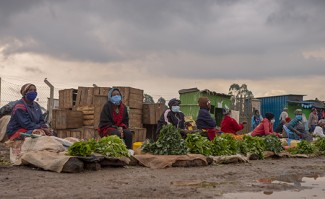
Sparing almost no corner of the world from its wrath, the COVID-19 pandemic has now spread to every country. In an effort to slow the contagion, governments in most countries have been taking drastic measures requiring all residents other than essential workers to confine themselves in their homes, and shutting down vast sectors of their economies. The impact has been crushing. COVID-19 has profoundly affected every country where ICTJ currently works: Armenia, Colombia, Cote d’Ivoire, Ethiopia, Gambia, Kenya, Lebanon, Libya, Sudan, Syria, Tunisia, and Uganda. We recently caught up with ICTJ’s heads of country programs to learn more about the impact the pandemic is having on transitional justice and society more broadly.

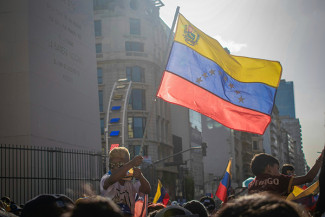
The political crisis in Venezuela seems to have reached a stalemate. In September, the Norway-mediated negotiations between the Maduro government and the opposition came to a halt, leaving both sides struggling for the upper hand. But since it remains difficult for either party to prevail, it is likely that this impasse is a momentary setback rather than an indication that the negotiations are defunct.