4 results

Despite earlier efforts to envision a national transitional justice policy, Ukraine remains overly cautious about establishing one. This report provides a robust substantiation of why Ukraine should revive its holistic transitional justice policymaking. In the first part, it debunks t...

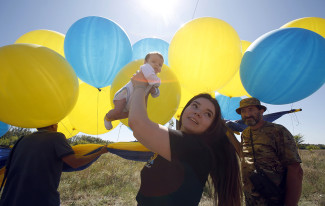
A women holds up an infant in the air on sunny day outdoors, surrounded by yellow and blue balloons

A new ICTJ report urges the revitalization of Ukraine’s holistic transitional justice policymaking. Debunking the most common myths about transitional justice in Ukraine, the report presents the key legal, policy, and victim-centered arguments in favor of advancing a comprehensive transitional justice framework.

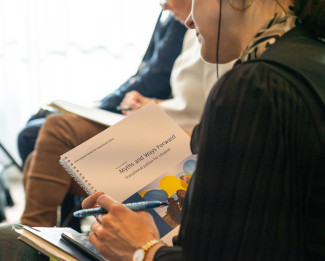
In this era of technological transformation, it is critically important to develop digital strategies for documenting human rights violations, analyzing data for accountability or reparations purposes, and safely advocating for human rights online. This is particularly true in contexts where victims, human rights actors, and members of the media live in fear. To this end, ICTJ has recently led trainings for human rights activists in conflict-affected countries on open-source investigation tools to help them do their work more effectively.

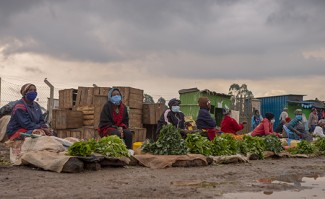
Sparing almost no corner of the world from its wrath, the COVID-19 pandemic has now spread to every country. In an effort to slow the contagion, governments in most countries have been taking drastic measures requiring all residents other than essential workers to confine themselves in their homes, and shutting down vast sectors of their economies. The impact has been crushing. COVID-19 has profoundly affected every country where ICTJ currently works: Armenia, Colombia, Cote d’Ivoire, Ethiopia, Gambia, Kenya, Lebanon, Libya, Sudan, Syria, Tunisia, and Uganda. We recently caught up with ICTJ’s heads of country programs to learn more about the impact the pandemic is having on transitional justice and society more broadly.