


611 results

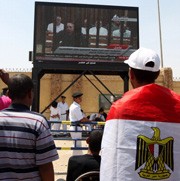
The appearance of Hosni Mubarak in the opening of his trial this week reassured millions of Egyptians that their revolutionary struggle was not in vain. But the truth about Mubarak’s ability to participate in his trial is still unclear. With the public doubting the court’s seriousness, Mubarak’s appearance could have been a political decision aimed at boosting confidence. If this is the case, the judiciary risks appearing politicized in the eyes of Egyptians.

The newly released United Nations report on strengthening the rule of law and transitional justice in conflict and post-conflict settings outlines progress made since issuing the landmark 2004 report and reaffirms transitional justice as a crucial component of the UN’s broader work on the rule of law.

This report examines the preventive impact of transitional justice mechanisms in Colombia before the 2016 peace agreement. It finds that these measures have contributed to prevention by strengthening institutional responses to rights violations, shaping the public agenda, developing a...

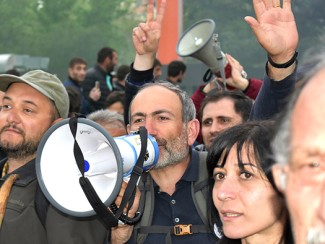
In July, ICTJ’s Program Director Anna Myriam Roccatello and Senior Transitional Justice Expert Ruben Carranza traveled to Yerevan to meet with civil society organizations, human rights and anti-corruption activists, and key government officials, to join them in exploring strategies for change.

This handbook explains the mandate, origins, purposes, and operating methods of the Truth and Reconciliation Commission (TRC) and Special Court in Sierra Leone. It discusses the differences and similarities between them, in clear, non-technical language. The TRC and Special Court can...

On International Justice Day, July 17th, ICTJ looks at the legacy of the Special Court for Sierra Leone through the voices of those to whom its work was most important: the citizens of Sierra Leone. Our new multimedia project, “Seeds of Justice: Sierra Leone,” presents five portraits of Sierra Leoneans whose lives were impacted by this court.

This paper explores political exclusion in Kenya and its consequences on the social fabric of the nation. It draws from past governmental reports and analysis to formulate new recommendations that can inform current discourse. It first provides an overview of ethnicity in Kenya. ...

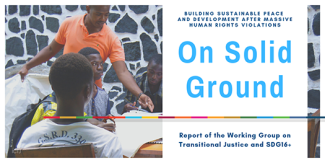
New York, June 3, 2019—Today, with just over a month to go before the 2019 UN High-Level Political Forum (HLPF) on Sustainable Development, ICTJ and its partners have released the Report of the Working Group on Transitional Justice and SDG16+, entitled “On Solid Ground: Building Sustainable Peace and Development After Massive Human Rights Violations.”

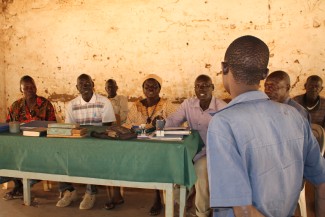
Customary justice is the primary way in which most communities in South Sudan resolve disputes. Its ability, however, to deal with massive human rights violations is limited due to the complexity of intercommunal violence and a lack of clarity on its proper role. This report contends ...

A man stands facing a table around which several men are seated.

South Africa Parliament faces a historic moment. In this op-ed, ICTJ's Vice President Paul Seils remembers the great hope that marked the ICC’s emergence: "No country embodied that hope and that reality more powerfully and more inspiringly than South Africa."