



611 results

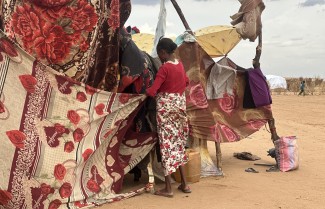
Despite the enormous challenges, Sudanese civil society and other stakeholders are prioritizing transitional justice, acknowledging the need to address past injustices to end the cycle of conflict in their country. ICTJ continues to support them as they envision and design victim-centered, gender-sensitive, and inclusive strategies. Leading these efforts is ICTJ's Ilaria Martorelli. In this interview, she discusses the prospects for lasting peace, accountability, and repair in Sudan.

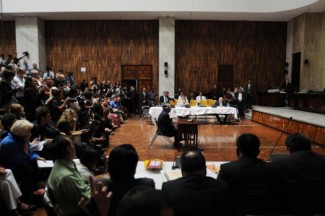
In this op-ed, ICTJ's Marcie Mersky argues that the significance of the genocide trial for José Efraín Ríos Montt stretches far beyond Guatemala: it is the first time that a former head of state is being tried for genocide in a credible national court, by the national authorities, in the country where the alleged crimes took place.

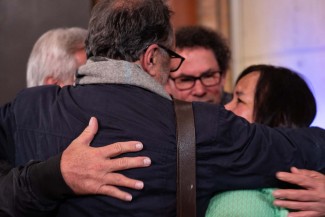
On June 21-23, Colombia’s Special Jurisdiction of Peace (JEP) held its first acknowledgment hearing on the taking hostages, serious deprivation of liberty, and other concurrent crimes (known as Case 01) in Bogotá. Seven former leaders of the guerrilla group Revolutionary Armed Forces of Colombia—People’s Army (FARC-EP) acknowledged their command responsibility for the kidnapping crimes that were the FARC-EP’s policy from 1993 to 2012 in the presence of victims, JEP officials, civil society representatives, and members of the press. This hearing marks the first time ever FARC-EP leaders publicly acknowledged their role in such systemic crimes. A decisive step in the country’s restorative justice process, it would not have been possible without years of preparation.

This briefing paper focuses on the role of victims of human rights violations in criminal proceedings. This paper will provide examples of recent developments in the advancement of victim participation in criminal proceedings in international criminal law and domestic jurisdictions.&n...

July 17, 2023, marked 25 years since the Rome Statute was adopted at a conference in Rome, Italy. The statute created the world’s first permanent international court, the International Criminal Court, which was probably the most significant milestone in international criminal justice since the Nuremburg and Tokyo trials of the mid-20th century. It signaled the firm intention of many nations to address ongoing impunity of the most serious crimes known to humankind. After 25 years, however, the ICC has not yet reached its full potential.

The field of transitional justice is increasingly recognizing the relevance of mental health and psychosocial support (MHPSS) in contexts of massive human rights violations. Despite growing advocacy and awareness at the global policy level, however, the field lacks a systematic approa...

an image of colorful painting featuring a young girl

This paper analyzes the serious crimes process the UN established in Timor-Leste to try serious violations of human rights perpetrated in 1999. The main difficulty facing this process is that the vast majority of suspects are in Indonesia, and the Timorese government has not been able...

In this op-ed, Rim El Gantri, head of ICTJ's Tunisian office, discusses the challenges facing Tunisia's transitional justice process and argues that the government's failure to provide accountability for crimes committed under past regimes threatens the country's transition to democracy.

This case study provides basic information and policy analysis on the Special Court for Sierra Leone. It aims to help guide policymakers establishing and implementing similar mechanisms. The Court broke new ground in terms of narrowly focusing on those bearing the greatest responsibi...

This report describes the Special Court for Sierra Leone’s accomplishments in the first 18 months of its mandate. The Court was established to try "those bearing the greatest responsibility" for serious violations of international law and certain provisions of domestic law since Nove...