






The Resource Library stores all of ICTJ’s published works since 2001 to the present, grouped by category and searchable by key word, country, issue, language, and more.
We are continually adding new content from our archives, especially our Multimedia content. Check back regularly to explore newly added videos, photo galleries, and audio products.
In Cote d’Ivoire, avenues for education system reform are limited. To help youth find their voice, ICTJ and UNICEF facilitated an innovative truth-telling project led by Ivorian young people themselves. The result: an exploration of the unique experiences of young people during the conflict, told through radio broadcasts, public discussions and reports to government officials.
UN operations are due to end in Côte d’Ivoire next June, but the country must pursue a victim-centered approach to justice even after UNOCI leaves. An ICTJ-organized conference works to prepare government, civil society, and the diplomatic community for the UN departure and chart a way towards justice and a stable peace for all of Côte d’Ivoire.
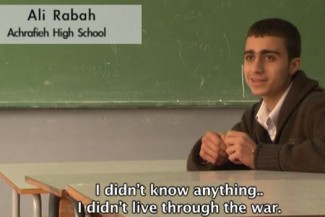
While Lebanon is post-peace agreement, it is not necessarily "post-conflict." The country struggles to address the legacy of decades of violence, and the lack of a comprehensive approach to dealing with the past means the country's youth are growing up with scant knowledge of their history. But they want to know more: one project is helping them ask those around them about the past, and giving those who lived it a chance to tell their stories.
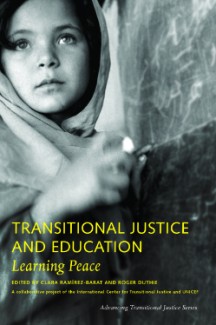
Understanding education as a form of both reconstruction and reparations is essential for societies in their efforts to address victims’ rights and help victims and their families overcome the consequences of a painful past.
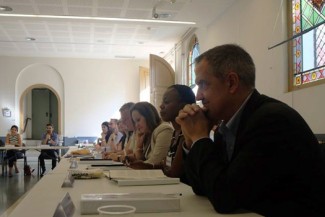
This summer, our Intensive Course on Transitional Justice and Peace Processes brought experts from around the world together in Barcelona to examine how transitional mechanisms can be integrated into peace negotiations. Read about the course and watch interviews with our experts.
Tunisian activists have taken to the streets this month to protest the proposed Economic Reconciliation Law recently revived in parliament. If approved, the bill would offer a path for corrupt Ben Ali-era officials and business people to legalize their stolen assets and secure a form of amnesty.
The Tunisian government reintroduced a bill that, if passed, would grant a path for reconciliation to corrupt business people and Ben Ali-era officials. They claim it will stimulate the economy, but economics professor Dr. Abdeljelil Bédoui explains why this law is not the solution.
The brazen abduction and brutal murder of human rights lawyer Willie Kimani, his client, Josephat Mwenda, and their taxi driver, Joseph Muiruri, underlines once more the urgent need for police reform in Kenya says ICTJ's Christopher Gitari.