


395 results

In cases other than those of environmental disasters, some mix of persecution and fear of violence based on ethnicity, race, or religion, plus violations of human rights and repression based on political beliefs and opinions often characterizes forced displacement for both internally ...

On April 4 last year, the commander of the Libyan National Army Khalifa Haftar ordered his troops to advance on Tripoli and “liberate it from terrorists.” Various stakeholders issued a multitude of statements and joint declarations after the assault, all asserting that only a political solution would resolve Libya’s crisis and threatening to hold accountable any faction that escalated the conflict. But in reality, most of the stakeholders have been playing two fields all along: the diplomatic one, in which they continuously reiterate support for political solutions and UN-led initiatives, and then the battlefield.

Bosnian Serb leader Radovan Karadzic was recently sentenced by the ICTY to 40 years for genocide and crimes against humanity, crimes which have decisively shaped the society in Bosnia and Herzegovina. In this essay, ICTJ’s Refik Hodzic explores what would it take for this poisonous legacy to be dismantled and makes a case for acknowledgement and reparations as matters of moral imperative, but also of political necessity.

The internationally acclaimed documentary “The Silence of Others" about the forgotten victims of Franco's fascist dictatorship in Spain brings much-needed attention to the right to the truth.

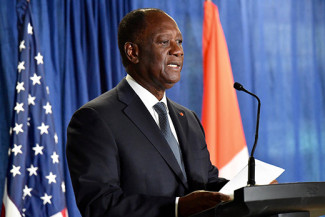
On the eve of Côte d'Ivoire’s 58th independence anniversary, in a dubious attempt at “social cohesion,” President Alassane Ouattara granted amnesty to 800 persons accused or convicted of crimes against the state during the post-election crisis of 2010-2011. Former First Lady Simone Gbagbo — who had been tried for undermining state security — and other high-ranking officials associated with former President Laurent Gbagbo’s party, the Ivorian Popular Front (FPI), were among those released. The lapses in accountability and acknowledgment in Cote d’Ivoire have emboldened perpetrators and made it impossible for many victims to move on with their lives. The challenges of transitional justice processes present clear obstacles to the sustainable peace that the people of Cote d’Ivoire have been working toward.

Transitional justice can contribute to prevention of violence and abuse, particularly if it addresses common drivers such as exclusion and associated grievances. It can facilitate the inclusion of social groups that have suffered human rights violations and marginalization, and promote long-term...

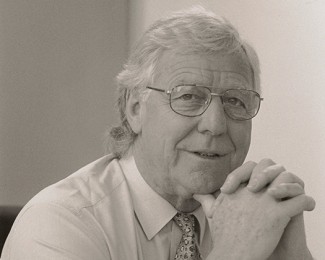
Alex Boraine, founder of the ICTJ and soldier in the struggle for human rights around the world, will be laid to rest in Cape Town today. He has been called the “Prince of Peace” for his lifelong commitment to transforming South Africa’s society through truth, reconciliation, justice, following the horrors of apartheid.

Myanmar’s democratic transition was brought to an abrupt halt on February 1, 2021, with the seizure of power by the country’s armed forces. Public protests against the military coup d'état quickly swelled to some of the largest since 2007, to which the military has responded with deadly force. Given the deteriorating situation, restoring civilian rule appears to be an increasingly immense challenge.

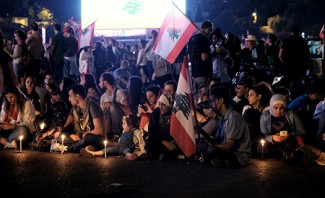
For over a month now, Lebanese people have been in the streets peacefully calling for an end to corruption, economic disenfranchisement, and government mismanagement, calling instead for accountability and reform of the systems that have allowed these things to occur. The protests are historic for several reasons: their scope and magnitude, as well as the way they have unified a country that has for so long had division baked into nearly every aspect of life, down to its system of governance.

On March 22 in Geneva, we listened to the experiences of Syrians affected by attacks on schools. The Save Syrian Schools project presented the results of its one-year-long research—an unprecedented collaboration of 10 Syrian human rights organizations and the ICTJ.