





206 results

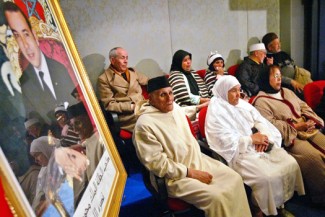
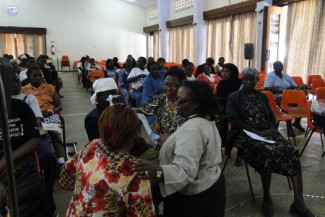
The month of January has a particular significance in the Middle East and North Africa. It was the month when the Arab uprisings were sparked five years ago. It was also the month when the transitional justice process was inaugurated in Morocco, 12 years ago. What can be learned from Morocco’s experience?

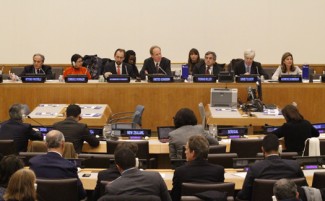
Seeking justice for victims of enforced disappearance is crucial to building peace and preventing recurrence of violence in societies emerging from conflict, ICTJ President David Tolbert told members of the United Nations Security Council and other diplomats last week.

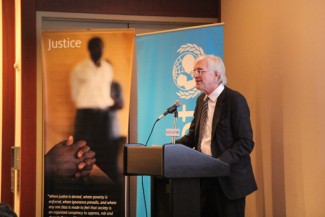
On January 21, ICTJ and UNICEF held a special event to launch an important new report on the links between education and transitional justice. The launch was accompanied by a panel discussion moderated by ICTJ President David Tolbert.

In this op-ed, ICTJ President David Tolbert argues that Japan's recent, controversial apology to South Korean "comfort women" falls short of international standards.

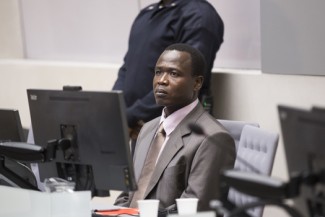
Ugandan victims of the LRA have waited over a decade to see the group’s leadership held accountable for crimes committed during the armed conflict with Uganda’s government. They saw it happen last week, when former LRA commander Dominic Ongwen appeared in court for an important hearing at the International Criminal Court.

After years of waiting for the government to take action by implementing the recommendations of Kenya’s Truth, Justice, and Reconciliation Commission, victims of past human rights violations and mass violence are demanding that something be done.

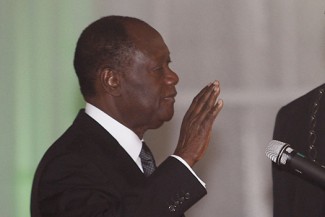
In this op-ed, ICTJ President David Tolbert argues that President Alassane Ouattara should use his second term as president to address widespread atrocities committed in Cote d'Ivoire's recent past.

In this analysis piece, ICTJ's Cristián Correa expresses concern about a decision by the Inter-American Court of Human Rights leaving room for interpretations that condone the use of methods for combating subversion and terrorism forbidden by international human rights law.

In this op-ed, ICTJ's President David Tolbert expresses concern about the new "Reconciliation Bill" proposed by the Tunisian government, which would grant amnesty to corrupt business people and Ben Ali-era officials in the guise of "reconciliation." "Massive corruption and violent human rights violations are mutually reinforcing, and unless this linkage is exposed and broken, it can lead to mutually reinforcing impunity," writes Tolbert.

In this op-ed, ICTJ's President David Tolbert urges President Uhuru Kenyatta and Kenyan institutions to take concrete actions without further delay to provide reparations for victims, tackle the struggling police vetting reform, and prosecute the serious crimes that were committed during the post-election violence.