427 results

What hope is there for justice for victims of atrocities in profoundly fractured societies, where systems of government have broken down and social and political divisions run deep? What is the role of transitional justice in forging peace in countries like Colombia, after decades of ...

This report presents the main findings of a multiyear research project conducted by the International Center for Transitional Justice on the challenges and opportunities of responding to serious and massive human rights violations in different contexts. The project commissioned 21 stu...

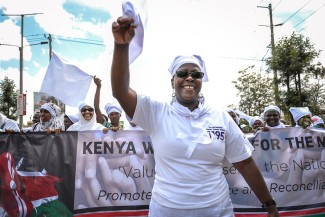
Thousands took to the streets across Kenya on January 27 following the gruesome slaying of more than a dozen women to denounce violence against women and demand action to end it. Protesters later gathered in Nairobi on February 14 for a Valentine’s Day vigil for the more than 30 women murdered in the country so far this year and to pressure the government to declare femicide and violence against women a national emergency and to establish a commission to address these crimes and thereby break the cycle of impunity. These efforts are laudable, if not inspiring. However, physical and sexual violence against women and femicide—at times perpetrated by law enforcement officers who are meant to protect them, as enshrined in Kenya’s 2010 Constitution—has persisted in Kenya for decades.

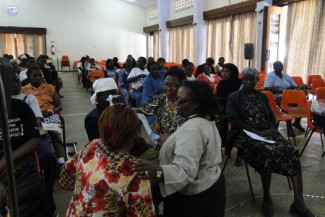
As Kenya moves closer to a climate where comprehensive reparations for victims of post-election violence are possible, ICTJ is supporting women victims of sexual violence to ensure that their needs are reflected in any program of restitution.

After years of waiting for the government to take action by implementing the recommendations of Kenya’s Truth, Justice, and Reconciliation Commission, victims of past human rights violations and mass violence are demanding that something be done.

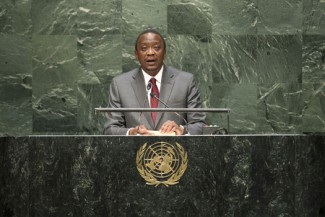
In this op/ed, the head of ICTJ's Kenya Program, Christopher Gitari, argues that President Kenyatta's recent apology to victims—though commendable—must be supported by solid reforms and initiatives for rebuilding the lives of those who have suffered the most.

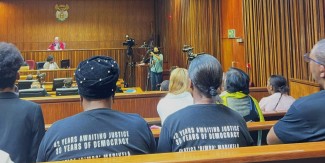
On April 14, 2025, the Johannesburg High Court handed down a landmark judgment. From his bench in courtroom 4D, Judge Dario Dosio dismissed the defense team’s objections to the inclusion of murder and apartheid as crimes against humanity charges in the indictment against two individuals accused of a deadly 1982 attack on anti-apartheid student activists. In so doing, the court cleared the way for crimes against humanity charges to be pursued in a South African domestic court for the first time. It also opened the door to the first ever prosecution of apartheid as a crime against humanity anywhere in the world.

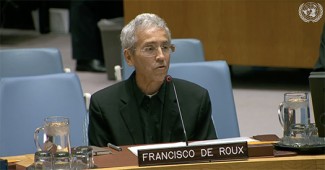
The United Nations Security Council has considered transitional justice on several occasions in the past and included many of its components in country-specific resolutions, and also stressed the links between transitional justice and the other items on its thematic agenda including women, peace and security, and children and armed conflict, and it has made explicit reference to transitional justice as a key part of efforts to sustain peace. Yet, on February 13, the Security Council held its first open debate focusing solely on transitional justice.

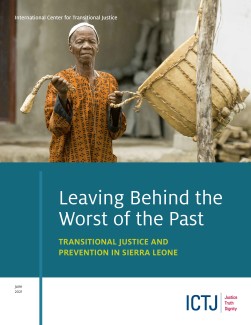
This study analyzes how transitional justice in Sierra Leone has contributed to prevention by responding to the grievances of those harmed by violations, reducing exclusion, addressing through institutional reforms the causes of past violence, and catalyzing long-term change. While tr...

On November 12, 2018, Lebanon finally passed the long-awaited, landmark Law for Missing and Forcibly Disappeared Persons in Lebanon. This breakthrough development is a result of the steadfast commitment of mobilized families and years of joint advocacy efforts, lobbying, and initiatives by local and international organizations aimed at advancing the families’ cause.