



427 results

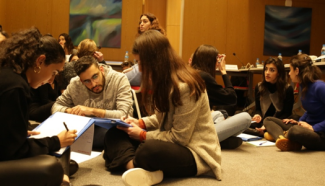
ICTJ held a two-day workshop on transitional justice for a group of university students in Beirut on February 14 and 15 as part of its ongoing support to the Committee of the Families of the Kidnapped and Disappeared in Lebanon. The students are currently serving as volunteers on a project to create an archive of the committee’s decades-long struggle and activism.

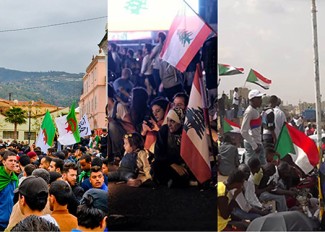
For decades, Lebanese governments have made only partial and ineffective attempts to hold powerful individuals, groups, and foreign states accountable for violations committed on Lebanese soil, including against civilians. The consequences of their failure to act – for victims and Lebanese society – are grave. ICTJ's new report looks at the culture of impunity for serious violations of human rights continues to thrive in Lebanon.

Reparations play a unique role within the transitional justice framework in providing justice for victims.

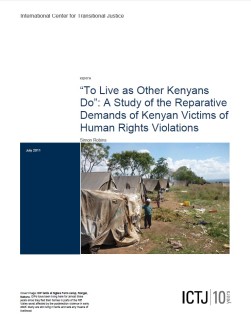
As Kenya continues to address its 2007-08 postelection violence, greater emphasis should be placed on victims’ reparative justice demands, according to a new ICTJ report. The report, “To Live as Other Kenyans Do”: A Study of the Reparative Demands of Kenyan Victims of Human Rights Violations, is a...

This paper documents the opinions of victims of human rights violations in Kenya about the country’s unfolding transitional justice process. The first section gives background into the human rights violations; the second section presents victims ideas about reparative justice. The rep...

As subscribers, you enjoy timely commentary on what’s happening in transitional justice around the world written by one of our experts exclusively for our monthly World Report newsletter. In this month’s edition, we bid farewell to 2019 by looking back on the experts’ choices of the past year.

ICTJ advocates for the inclusion of mental health and psychosocial support (MHPSS) in all transitional justice initiatives and undertakes research on best practices for the field. Leading this work is ICTJ Senior Expert Virginie Ladisch. She is the lead author of the forthcoming report, ‘The Search for People’s Well-Being’: Mainstreaming a Psychosocial Approach to Transitional Justice. In this interview, Ladisch discusses the importance of MHPSS for transitional justice and her work on the topic.

Mali's Truth Justice and Reconciliation Commission has a mandate to examine violence dating back to 1960, but it faces serious challenges. Can it serve as a foundation of a peaceful future in Mali? We discuss with transitional justice expert Kora Andrieu, who is currently working with the TJRC as an independent consultant.

To commemorate the 20th anniversary of the Justice and Peace Law—which created Colombia's first transitional justice system—media outlet Verdad Abierta, the Friedrich Ebert Stiftung, and ICTJ partnered to produce an investigative four-part series in Spanish that critically assesses its legacy. Now translated into English, this second installment explores the unprecedented challenges the country faced as the process got underway.

In this analysis piece, director of ICTJ's Reparative Justice program Ruben Carranza talks about the challenges Tunisia is facing in implementing individual and collective reparations measures since the fall of the Ben Ali dictatorship.