427 results

This report explores pathways for transitional justice in Yemen, emphasizing victims’ experiences, political dynamics, and existing justice mechanisms. It examines national and local efforts, including mediation and reconciliation initiatives, and highlights the role of Yemeni civil s...

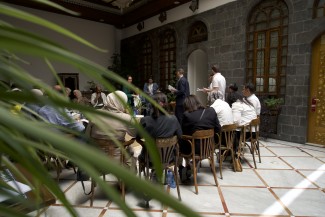
The sun shines into an urban courtyard of what it appears to be residential buildings.

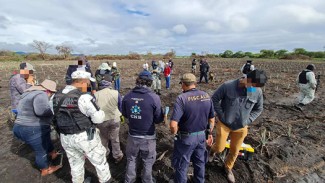
Expectations for advancing much-needed justice and dismantling state and non-state criminal networks that persistently violate human rights have been dashed over the past three years in Mexico. Violence and impunity have increased. President Andrés Manuel López Obrador's campaign promises have not materialized in a serious effort to address the lack of security in the country or the justice system’s inefficiency. However, several efforts have persisted, characterized by cooperation among state institutions, civil society, and victims’ groups that not only give hope, but confirm the way forward.

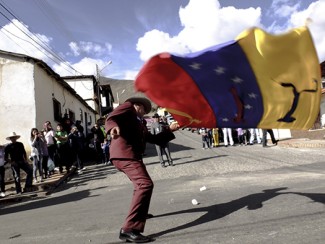
In Venezuela, there is now an absence of representative democracy and a vacuum of public trust in politicians. However, this situation presents an opportunity for other actors and other approaches, so far disparaged by hardliners on both sides. Civil society organizations, which have earned credibility through their dedicated work addressing the humanitarian crisis and defending human rights, can seize this opportunity.

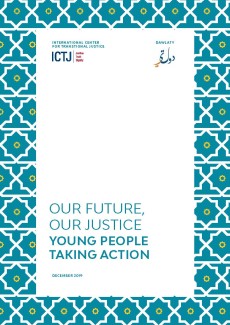
This guide is designed to engage young people who are interested in or are working on transitional justice issues in their communities. Intended to serve primarily as a training tool, it provides basic information about transitional justice and related principles and offers tips and s...

This report summarizes the key observations offered by Syrians during community dialogues in April 2025. Convened by Bridges of Truth, a collaboration of Syrian civil society organizations and ICTJ, the dialogues captured a wide spectrum of perspectives and experiences and provided va...

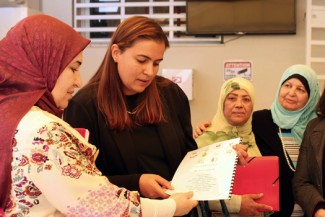
Some 20 people sit in chairs around a table located inside a courtyard.

The voices of Tunisian women were in danger of being lost in the country's transitional process. Salwa El Gantri explains how one network of women's organizations made sure that did not happen by helping women find their voice and fight for justice.

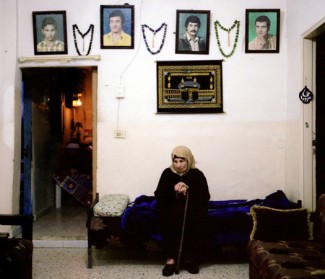
70-94% of the victims of enforced disappearances are men. But what happens to the women left behind? ICTJ's Amrita Kapur explains why women are uniquely impacted by the crime, and how transitional justice can help.

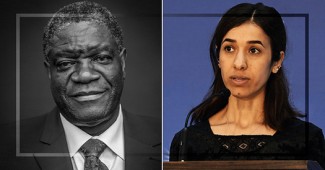
Recent recognition of the work of Nobel Laureate Nadia Murad has drawn global attention to the issue of sexual violence and gender-based violence in conflict. But, as ICTJ Expert Kelli Muddell argues, the nuances of gender norms and how they impact women, men, and vulnerable populations are still often missing from conversations about victims.

Pablo de Greiff, director of Research at ICTJ, has presented his candidacy for the role of Special Rapporteur for the Promotion of Truth, Justice, Reparation, and Guarantees of Non-Recurrence. This new position is being established by the United Nations Human Rights Council to bring greater attention to accountability for serious crimes and human rights violations.

What happens when a state refuses to acknowledge the suffering of victims of mass atrocities? Or when the public celebrates perpetrators as heroes? Earlier this month, a panel discussion hosted by The International Center for Transitional Justice and New York University’s Center for Global Affairs grappled with the impact of denial on justice.