




431 results

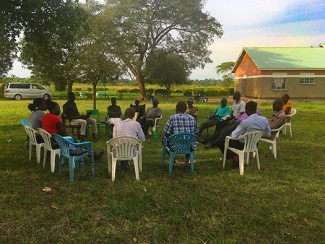
Over the last 15 years, the Ugandan government has implemented a series of recovery and reconstruction programs in Northern Uganda to address the social and economic devastation caused by the two-decade armed conflict in the region and set it on the path to sustainable peace. While these development programs alone cannot fulfill the state’s obligation to provide reparations to victims of human rights violations, if designed well, they can form a foundation upon which future reparations initiatives can be built.

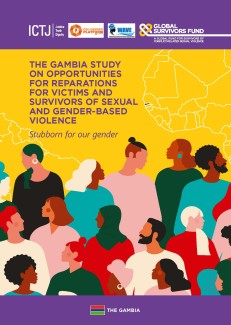
This report presents findings from research on the needs and expectations of survivors of sexual and gender-based violence in The Gambia. Based on focus group discussions with survivors and other stakeholders, it analyses obstacles to, as well as opportunities to improve, survivors’ a...

Cover of the report on SGBV in The Gambia.

In the United States, the debate over a national reparations program for slavery and Jim Crow has until now encountered political opposition. However, transitional justice approaches at the community level are increasingly surfacing to address racial injustice. A handful of 2020 presidential candidates have come out in support of reparations for slavery. Recently, Georgetown University took center stage in this debate when its student body voted in favor of a student-led initiative to establish a fee that will fund education and health care programs for the descendants of 272 enslaved persons sold by the university in 1838.

As Sudan’s devastating conflict enters its fourth year, the priorities of victims and Sudanese civilians must be central to efforts to end the violence and build sustainable peace. Against this backdrop, ICTJ and the Government of the Netherlands convened a policy roundtable in The Hague on advancing victim-centered justice for durable peace in Sudan.

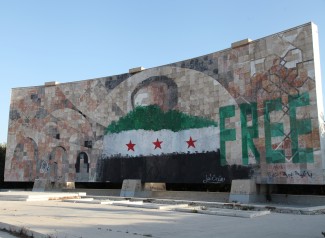
Across Syria today, we continue to witness human rights violations and abuses that run counter to the very principles upon which the revolution was built. In particular, recent violence in the coast and Sweida has deepened the sense of fear and mistrust already felt by many communities. Meanwhile, Syria's new transitional justice commissions have been working hard to lay the foundations of their mandates. Now, at this critical juncture, they must show that they are ready to lead and first and foremost to serve victims.

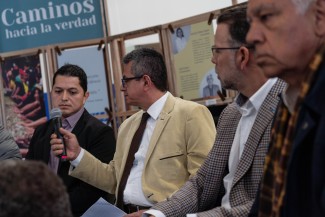
As part of its mandate, Colombia's Commission for the Clarification of Truth carried out 68 processes of acknowledgment led or supported by a specialized team. These processes sought to acknowledge victims and the harms they suffered, as well as individual or collective responsibiliti...

Former guerrilla member Gabriel Ángel holds the microphone for former paramilitary member Nodier Giraldo during an event at the Truth Commission.

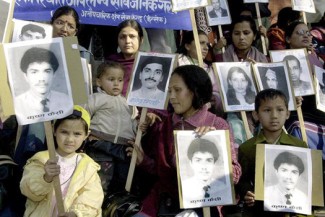
1,300 are still missing in Nepal, nearly a decade after the country's bloody civil war ended. The peace agreement was meant to provide for the families of the disappeared, but today they are still searching for answers. As a new government body begins investigations, victims wonder: is the commission fully committed to addressing their needs?

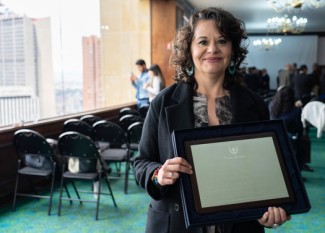
The purpose of Resolution 1325 is to highlight the particular way in which women and girls suffer in situations of conflict, as well as the critical role they play in peacebuilding. To commemorate the 20-year anniversary of the resolution, ICTJ would like celebrate the life and work of one its own women peacebuilders: María Camila Moreno Múnera, head of ICTJ’s Colombia office. She exemplifies what a woman leader can achieve in advancing truth, justice, reparation, and peace.

Recently, Tunisia held its third parliamentary elections since the revolution and the second presidential elections since late President Béji Caid Essebssi passed away on July 25, 2019. It remains to be seen if the election’s results will usher in a new era of dignity, for which Tunisians took the streets in 2010 and 2011.

Why pursue transitional justice in the aftermath of massive human rights violations? “The Case for Justice” provides a window into the debate about the relevance of transitional justice in today’s world.