


310 results
As Sudan’s devastating conflict enters its fourth year, the priorities of victims and Sudanese civilians must be central to efforts to end the violence and build sustainable peace. Against this backdrop, ICTJ and the Government of the Netherlands convened a policy roundtable in The Hague on advancing victim-centered justice for durable peace in Sudan.

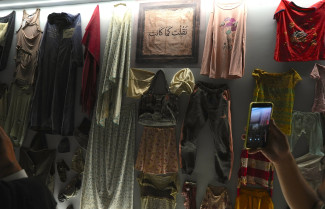
On August 30, the International Day of the Victims of Enforced Disappearances, I sat beside the president of Syria’s National Commission for Missing Persons at its headquarters in Damascus for a historic moment: the launch of a platform through which families will be able to report their missing loved ones. For Syrian families, August 30 has long been a day to remember those they lost to the unknown and renew their demand for truth. This year, marking it inside a Syrian institution created to search for them had a very different significance.

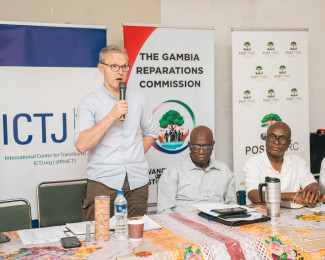
The establishment of the Reparations Commission in April 2025 and the recent appointment of British barrister Martin Hackett in April 2026 as The Gambia’s first special prosecutor represent crucial and long-awaited steps in the country’s transitional justice process. But to succeed, both require sustained public, political, and financial support.

Even though young people were driving forces behind the revolutions in Tunisia, Libya, and Lebanon, their lives have not significantly improved since then. Many have been pushed to leave their home countries for socioeconomic or political reasons. A new ICTJ book features the testimonies of 18 young migrants who made this difficult choice.

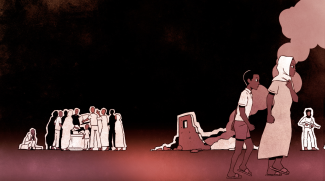
The relationship between violent conflict and the environment has been increasingly recognized in the past few decades. War can cause severe damage to ecological systems, and resource scarcity can act as a driver of conflict. While the current outlook for incorporating environmental issues into peacebuilding efforts may seem dire, there is reason for hope.

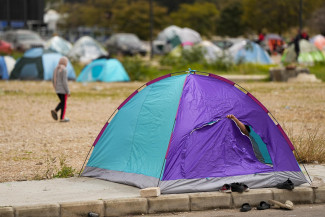
For many people in Lebanon, being uprooted from home is no longer an exceptional event. In this Expert’s Choice, ICTJ's Firas BouZeineddine draws a connection between the dire situation many Lebanese are facing and the culture of impunity that prevails in the country. In particular, he calls on domestic and external actors to be held accountable for past and present violations.

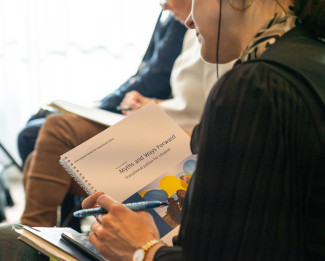
A new ICTJ report urges the revitalization of Ukraine’s holistic transitional justice policymaking. Debunking the most common myths about transitional justice in Ukraine, the report presents the key legal, policy, and victim-centered arguments in favor of advancing a comprehensive transitional justice framework.

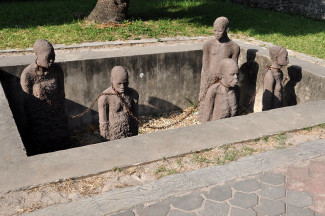
On March 25, 2026, the UN General Assembly adopted a resolution recognizing the enslavement of Africans as the gravest crime against humanity. The resolution is an integral part, if not the culmination, of a wider push by African states for reparations for historical injustices, including the transatlantic slave trade, colonialism, apartheid, and genocide.

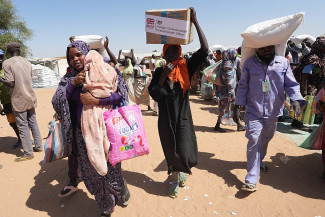
As the world marks the third anniversary of the brutal war in Sudan, it is a moment to reflect on a conflict that rarely receives the media attention it deserves and to consider the millions of Sudanese caught in cycles of violence.

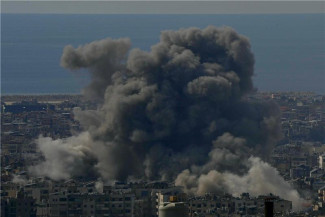
Recent Israeli strikes in Beirut and other populated areas in Lebanon, among the conflict's most intense so far, have destroyed critical infrastructure and devastated civilian communities. ICTJ stands unequivocally with the Lebanese people and all victims across the region and calls for an immediate end to all attacks on and threats to civilian communities and infrastructure.