77 results

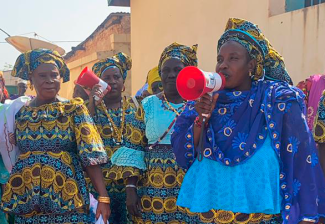
South Sudanese refugees and displaced persons currently comprise 40 percent of the country’s total population. Yet, these groups have been largely excluded from ongoing policy discussions related to South Sudan's transitional justice process in South Sudan. A new ICTJ report aims to amplify the perspectives and expectations of these groups and ensure they are included in the process's design and implementation.

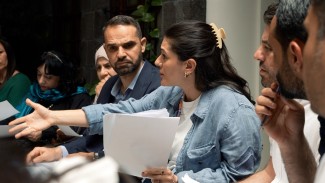
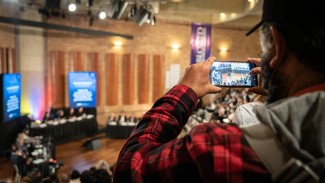
ICTJ and its partners in the Bridges of Truth project hosted an event in Damascus on October 7 to present findings from their recent report on the community dialogues held in April in Syria and to commemorate the project’s eighth anniversary.

On July 10 and 11, ICTJ convened a high-level dialogue in Geneva that brought members of Syria’s newly established transitional justice commissions together with international experts and representatives from Syrian civil society represented by the Bridges of Truth project and victims’ groups and multilateral institutions. The two-day event provided guidance to the commissioners as they develop and implement their mandates and supported Syrian-led efforts to build transparent and inclusive institutions.

Abuja, June 19, 2025—The African Union (AU) and the European Union (EU), in collaboration with the Consortium implementing the Initiative for Transitional Justice in Africa (ITJA), led by the International Center for Transitional Justice (ICTJ) and co-implemented by the Africa Transitional Justice...

ICTJ has announced the digital release of its award-winning short animated documentary that explores the trauma and resilience of families of the disappeared in Syria. After an extensive tour of international film festivals in Asia, Europe, and North America, the acclaimed film recently returned home for its first screening in Syria. Now, it is available to audiences the world over on the ICTJ website and YouTube channel.

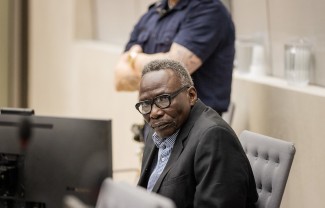
ICTJ accompanied more than 10 Sudanese victim stakeholders to the International Criminal Court (ICC) in The Hague to attend the closing statements in the case of The Prosecutor v. Ali Muhammad Ali Abd-Al-Rahman ("Ali Kushayb"). The statements took place on December 11 to 13. ICTJ supported the ICC in the selection of the stakeholders, who were chosen for their strong ties with affected communities.

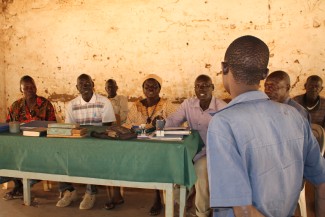
In countries where state institutions have limited reach, customary and informal justice is often the most common way in which people resolve disputes and seek justice. Given its prominence, it is considered to be an important element of a people-centered approach to building peaceful, just, and inclusive societies. An understanding of the relationship between customary justice and transitional justice, however, remains underdeveloped. A new ICTJ report provides valuable empirical, qualitative research on the topic, in the context of South Sudan.

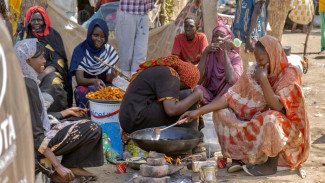
In the aftermath of armed conflict or repression, communities often struggle to rebuild social relations that have been damaged or destroyed by violence and abuse. Restorative justice can potentially play a valuable role in such societies, bringing together the people who have been harmed by crimes and the individuals responsible for those harms, often in the form of a dialogue, to address the offense and its consequences. A new ICTJ research report offers insight and guidance on the use of a restorative justice framework in responding to massive and grave human rights violations, drawing primarily from experiences in Colombia, Sierra Leone, Tunisia, and the Philippines’ Bangsamoro region.

On November 28, ICTJ hosted an international conference to explore the synergies between reparations and sustainable development in Bogotá, Colombia. The event, titled “Advancing Victims’ Rights and Rebuilding Just Communities: An International Dialogue on Reparations and Sustainable Development,” brought together ICTJ partners from The Gambia, Tunisia, and Uganda along with civil society and government representatives from Colombia to discuss local strategies for advancing reparations for human rights abuses and how repairing victims and affected communities can contribute to local and national development. On the occasion, ICTJ also launched a new research report on the topic.

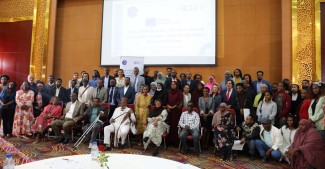
ICTJ and the Consortium of Ethiopian Human Rights Organizations cohosted a national event to increase victims’ and civil society’s meaningful participation in Ethiopia’s transitional justice process. The event brought together Ethiopian government officials and policymakers, civil society representatives, members of the media, and international stakeholders to discuss strategies to ensure victims and gender-related concerns remain at the center of the efforts underway in the country to deal with recent and past violence and its consequences.