
6 results

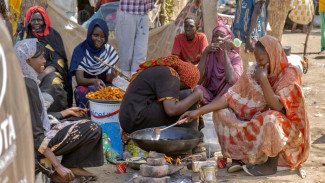
This study aims to communicate the perspectives, expectations, and needs of South Sudanese displaced persons to relevant policymakers and thereby inform the ongoing transitional justice efforts emanating from South Sudan’s 2018 revitalized peace agreement. It also provides lessons lea...

several women in colorful dresses crouch around an open fire pit, cooking food in a large pan.

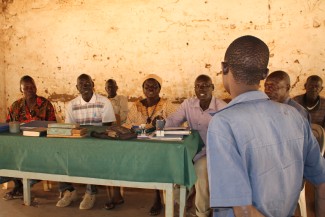
Customary justice is the primary way in which most communities in South Sudan resolve disputes. Its ability, however, to deal with massive human rights violations is limited due to the complexity of intercommunal violence and a lack of clarity on its proper role. This report contends ...

A man stands facing a table around which several men are seated.

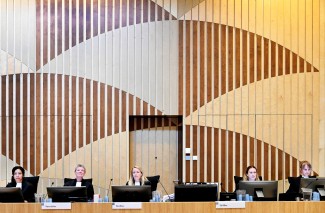
This study explores specialized units established in 23 countries to investigate and prosecute serious international crimes. Notwithstanding the challenges faced by these units, the study concludes that countries with a specialized institutional approach are considerably more successf...

several judges dressed in black gowns sit on a judicial bench.

Invoking the principle of universal jurisdiction opens the door to the possibility of some accountability in circumstances where justice is not possible in countries where the crimes took place. This study considers the challenges facing the exercise of universal jurisdiction and asse...

South Africa, Zimbabwe, Angola, Mozambique and Namibia have all experienced massive violations of human rights in the recent past. Apart from Zimbabwe, where a political crisis continues, all of these states have further seen the end of major conflicts within the last two decades. Onl...

Essential among South Africa's transition programs was a process to disarm, demobilize, and reintegrate ex-combatants and to create a new defense force integrating the armed forces of opposing parties into a united military structure. Yet, DDR remained largely independent from other t...

