



752 results

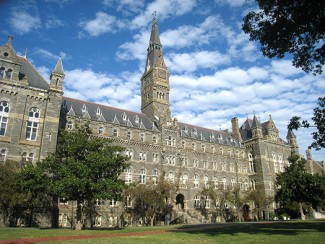
In the United States, the debate over a national reparations program for slavery and Jim Crow has until now encountered political opposition. However, transitional justice approaches at the community level are increasingly surfacing to address racial injustice. A handful of 2020 presidential candidates have come out in support of reparations for slavery. Recently, Georgetown University took center stage in this debate when its student body voted in favor of a student-led initiative to establish a fee that will fund education and health care programs for the descendants of 272 enslaved persons sold by the university in 1838.

ICTJ’s Gender Symposium, held on February 2 to 4, 2019, in Tunis, Tunisia, brought together fearless women leaders working in 8 countries to advance the needs of victims and to bring gender issues to the center of transitional justice processes. What was achieved? What experiences cut across these diverse contexts? Kelli Muddell and Sibley Hawkins reflect on these questions and more in this short podcast.

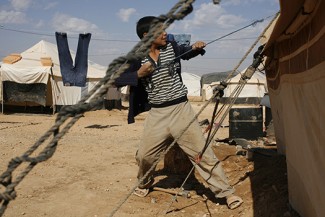
We sat down with Roger Duthie, ICTJ’s senior research expert, to reflect on the findings from the new report, An Uncertain Homecoming: Views of Syrian Refugees in Jordan on Return, Justice, and Coexistence, and the prospects for Syrian refugees if and when the conflict ends.

This paper explores political exclusion in Kenya and its consequences on the social fabric of the nation. It draws from past governmental reports and analysis to formulate new recommendations that can inform current discourse. It first provides an overview of ethnicity in Kenya. ...

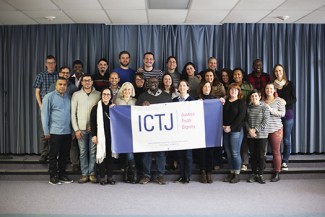
From February 22 to March 1, ICTJ held its annual retreat in Litchfield Hills, Connecticut. Staff members convened at the Wisdom House—an interfaith conference center that seeks to provide an environment conducive to introspection and teambuilding.

On February 14, Kenyans once again confronted their painful relationship with law enforcement and revisited the deep mistrust born of historical abuses. In an unprecedented ruling, a court found five senior police officers potentially culpable in gruesome murder during the police response to the 2017 post-election protests. On the same day, a senior police officer was convicted of murder and jailed for life.

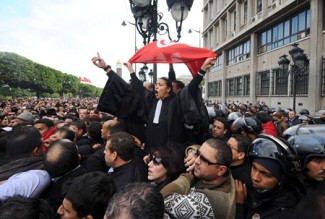
With the conclusion of the mandate of the Truth and Dignity Commission (TDC), ICTJ looks back on the major events in Tunisia stemming from the Arab Spring that led to the TDC's creation, which involved the participation of a broad spectrum of people representing the country's multifaith, politically divided, and economically stratified society.

Kaneleng are women who cannot bear children or whose children died at an early age. At a two-day summit held in December 2018, 25 kaneleng received training on transitional justice concepts. They worked to develop songs, comedy, and dramas that they will use to present justice messages through their work as traditional communicators.

On January 15, 2019, victims of the 2010-2011 post-election violence in Côte d'Ivoire were shocked, yet again, to learn that the Trial Chamber I of the International Criminal Court in The Hague had acquitted former President Laurent Gbagbo and the former Youth Minister Charles Blé Goudé of crimes against humanity allegedly committed during the crisis.

In little less than 10 months, Colombia has witnessed the creation of a completely new jurisdiction, the Special Jurisdiction for Peace (JEP). JEP has already opened two cases and three situations in its Chamber for the Acknowledgment of Truth and Responsibility.