
484 results

What does the obligation to provide reparations mean when serious human rights violations are at issue? This report explores the evolving interpretation of the right to reparation in international law and jurisprudence and how domestic courts have provided judicial reparations at the ...

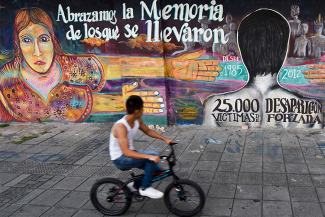
A man on a bicycle rides past a building whose exterior wall is covered in a colorful mural with writing in Spanish.

This paper focuses on the issue of reparations in Darfur. It particularly emphasizes victims' right to reparation for the harm done to them, and aims to ensure that this right is recognized and upheld in any peace process. Drawing on experiences from other regions, it reviews and addr...

The conviction of Thomas Lubanga is a milestone for the international criminal justice system established by the Rome Statute, and may make an important contribution to the development and definition of the right to reparations in international human rights law. ICTJ has produced a br...

The conviction of Thomas Lubanga is a milestone for the international criminal justice system and may make an important contribution to the development and definition of the right to reparations in international human rights law. Accompanying a submission filed with the ICC in advance of its reparations proceedings, ICTJ has produced a briefing note examining what lessons the court can learn from the broader transitional justice field.

Since independence Ugandans have endured episodes of violence and human rights abuses across successive political regimes and transitions with devastating consequences. During two decades of conflict in the northern Uganda involving the Lord’s Resistance Army (LRA) and the government ...

This report is intended to contribute to the work of National Commission for Social Action (NaCSA) and of other organizations involved in providing reparations to victims in Sierra Leone. It aims to identify some of the lessons from the Year One Program program, and to help define the...

With socio-economic development a crucial priority in Africa, transitional justice practitioners are asking whether methods of addressing past human rights abuses can also help tackle development issues. ICTJ, in conjunction with the Japan International Cooperation Agency (JICA), expl...

On February 12, 2019, the Assembly of the African Union adopted the African Union Transitional Justice Policy. The policy serves as a guide for member states on effective and credible transitional justice processes to achieve sustainable peace, justice, reconciliation, social cohesion...

PDF of the first page of the briefing paper "A Roadmap for Justice in Africa"

Efforts underway to address the 2008 Kenyan post-election crisis and the conditions that caused it have provided the country with a unique opportunity to address its long history of human rights violations.

Years after conflict, dictatorship, or historical injustice, victims throughout the world are still seeking redress and for their dignity to be affirmed. ICTJ has been standing alongside victims since 2001. We have worked in more than 50 different countries, helping to advance transitio...