50 results

A new ICTJ report urges the revitalization of Ukraine’s holistic transitional justice policymaking. Debunking the most common myths about transitional justice in Ukraine, the report presents the key legal, policy, and victim-centered arguments in favor of advancing a comprehensive transitional justice framework.

Despite earlier efforts to envision a national transitional justice policy, Ukraine remains overly cautious about establishing one. This report provides a robust substantiation of why Ukraine should revive its holistic transitional justice policymaking. In the first part, it debunks t...

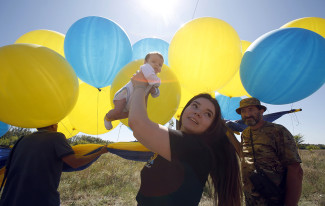
A women holds up an infant in the air on sunny day outdoors, surrounded by yellow and blue balloons

In the aftermath of armed conflict or repression, communities often struggle to rebuild social relations that have been damaged or destroyed by violence and abuse. Restorative justice can potentially play a valuable role in such societies, bringing together the people who have been harmed by crimes and the individuals responsible for those harms, often in the form of a dialogue, to address the offense and its consequences. A new ICTJ research report offers insight and guidance on the use of a restorative justice framework in responding to massive and grave human rights violations, drawing primarily from experiences in Colombia, Sierra Leone, Tunisia, and the Philippines’ Bangsamoro region.

This research report offers guidance on the application of a restorative justice framework in contexts of massive human rights violations, including its advantages and challenges. Based on the experiences of Colombia, Sierra Leone, Tunisia, and the Philippines, the study examines how ...

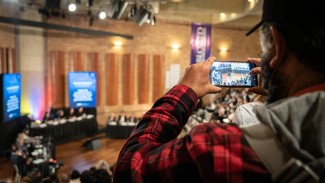
A man and audience member holds his phone to record proceedings of panel on the stage in front of him.

This multimedia project brings together voices of five Sierra Leoneans of different backgrounds reflecting on the legacy of the court as it nears the completion of its mandate.

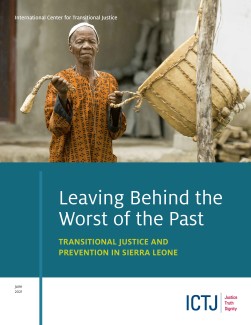
This study analyzes how transitional justice in Sierra Leone has contributed to prevention by responding to the grievances of those harmed by violations, reducing exclusion, addressing through institutional reforms the causes of past violence, and catalyzing long-term change. While tr...

This report summarizes the findings of an ICTJ research project on the contribution of transitional justice to prevention. Drawing from five country case studies, it contends that addressing the past can help to prevent the recurrence not only of human rights violations but also viole...

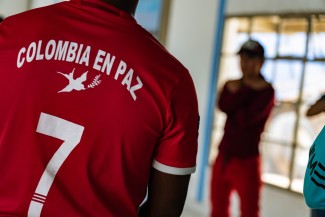
A young person with back facing the viewer is wearing a T-shirt that reads “Colombia in Peace"

This report aims to help practitioners in the transitional justice field to understand the experience of establishing and operating hybrid courts and to address some common assumptions about these entities. To do so, it looks at hybrid or mixed courts in practice, drawing on experienc...

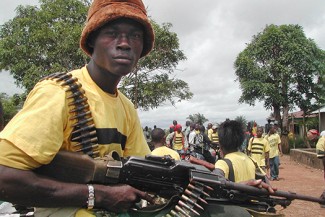
In the Netherlands, a court sentenced an arms dealer to 19 years in prison for his role in war crimes in Liberia. What does his case tell us about pursuing justice for economic crimes in Liberia and beyond?

South Africa Parliament faces a historic moment. In this op-ed, ICTJ's Vice President Paul Seils remembers the great hope that marked the ICC’s emergence: "No country embodied that hope and that reality more powerfully and more inspiringly than South Africa."