


118 results

This report examines the gender sensitivity of Uganda’s National Transitional Justice Policy (NTJP) and its potential to deliver inclusive justice for victims of conflict. While the NTJP represents a significant policy achievement, gaps in implementation, participation, and gender inc...

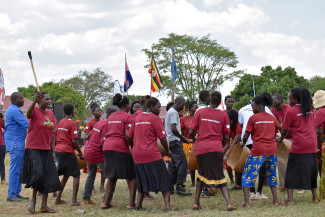
A large group of women dance in circle formation outdoors
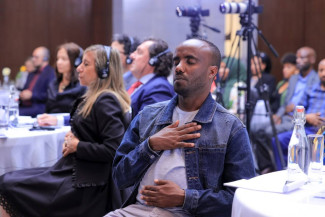
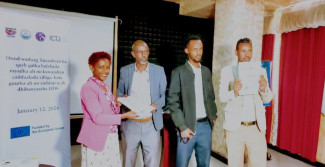
Victims, civil society advocates, policymakers, and development partners recently met for a high-level policy roundtable on integrating mental health and psychosocial support (MHPSS) in Ethiopia’s transitional justice process. Organized by ICTJ and the Advocacy Center for Democracy and Development, the convening offered a space for participants to discuss the need for MHPSS and how to improve access to it across the country.

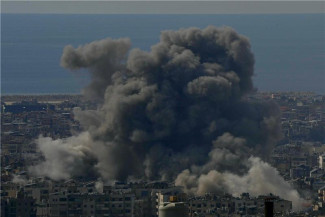
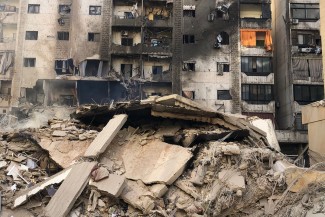
Recent Israeli strikes in Beirut and other populated areas in Lebanon, among the conflict's most intense so far, have destroyed critical infrastructure and devastated civilian communities. ICTJ stands unequivocally with the Lebanese people and all victims across the region and calls for an immediate end to all attacks on and threats to civilian communities and infrastructure.

ICTJ is watching with grave concern the unfolding war launched by the United States and Israel against Iran and its devastating ripple effects across the wider region. Over a month into the conflict, the human cost is staggering. We at ICTJ reaffirm the international principles that govern our shared world and stand unequivocally with all victims across the region.

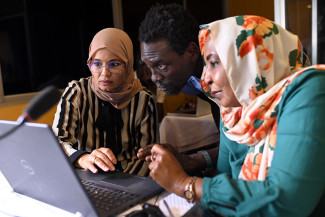
ICTJ recently convened human rights defenders, journalists, and lawyers from Libya, Sudan, Syria, Tunisia, and Yemen for a workshop on digital, open-source investigations. Held on November 3-8 in Kampala, Uganda, the course trained participants on open-source tools with a view to strengthening their work investigating, documenting, and monitoring human rights violations.

On July 28, 2025, the Somali Regional State Council passed a resolution designating April 6 as Victims’ Memorial Day, formally recognizing those who experienced violence and human rights violations across Ethiopia’s Somali Region. For years, victims and civil society actors, with support from ICTJ and other international partners, have persistently advocated for this acknowledgment, which marks a milestone in Ethiopia’s journey toward accountability and repair.

This report assesses the gender sensitivity of the African Union Transitional Justice Policy (AUTJP). Drawing on continental practice and scholarship, it identifies opportunities for AU member states, civil society, and donors to strengthen the policy’s implementation and its responsi...

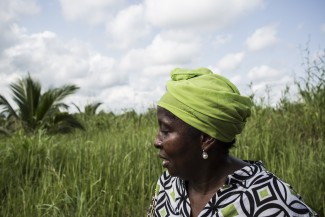
A woman stands in the profile position in a field of green plants on a sunny day with a clear blue sky

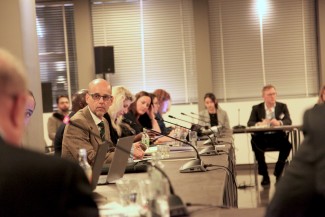
On December 2 to 6, 2024, the International Criminal Court’s (ICC) Assembly of States Parties—the court’s management oversight and legislative body—held its 23rd session in The Hague. As in previous years, ICTJ took an active part, and its experts joined many of the discussions sharing their knowledge and insight. ICTJ organized two side events, one focusing on Syrian victims and another on reparations for victims in Northern Uganda.

In February 2024, the International Criminal Court (ICC) delivered its long-awaited reparations order in the case of The Prosecutor vs. Dominic Ongwen. Nearly two decades after the ICC intervened in Northern Uganda, this milestone decision both acknowledges the suffering of survivors and underscores the complexities and limitations of international justice. For victims who have waited for justice for over two decades, the order has been bittersweet.

The ongoing war in the Middle East is not an isolated event; it represents a 75-year cycle of violence marked by historical grievances, geopolitical struggles, and humanitarian crises. In the latest episode of this tragic story, Lebanon has become the newest battlefield. So far, the conflict has caused widespread destruction, killed or injured thousands, and displaced over a million in Lebanon. The country now faces many daunting questions about reconstruction, reparations for victims, and the type of society that will emerge in the war’s aftermath.