414 results

Seven years after its approval, the ambitious project to demobilize illegal armed groups in Colombia called Justice and Peace is in crisis. The fact that it has only seven convictions, most of which have been appealed and only one upheld on appeal, is seen as proof of its failure...

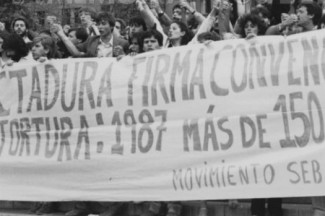
In September 1985, ninemembers of Argentina’smilitary junta, whose successive regimes covered the period in Argentine history known as the “dirty war,” walked into a courtroom in downtown Buenos Aires.

NEW YORK, March 15, 2012—Brazilian federal prosecutors announced yesterday that they have opened a criminal investigation against a military officer accused of the enforced disappearance of civilians during the 1964–1985 military dictatorship. This is a welcome blow against the use of a 1979 amnesty law to shelter government agents who committed horrific crimes against civilians from accountability.

As the number of victims of violence against demonstrators in Syria, Yemen, Bahrain and elsewhere in the region rises, a question emerges for the government of Bashar al-Assad of Syria, but also those of Ali Abdullah Saleh of Yemen, Hamad bin Isa al-Khalifah of Bahrain and the vacillating international community: Can impunity for such crimes be permitted in this day and age?

ICTJ's documentary Voices of Dignity inspired Wilson Herrera, professor of philosophy and researcher at the Universidad del Rosario in Colombia, to reflect on the role of victims in a democratic society, and on the importance of empowering them as agents of change and rights-holders, rather than relegating them to the status of permanent victims.

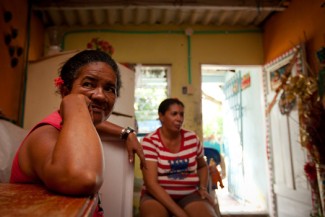
To mark 15 years of ICTJ, we asked staff past and present for memories that stand out to them - moments that throw the stakes of our work into sharp relief and resonate with them years later. Cristián Correa, Senior Associate in ICTJ’s Reparative Justice Program, shares a story about a Chilean mother's thirst to tell her daughter the truth about their past.

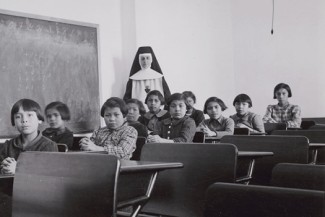
To mark 15 years of ICTJ, we asked staff past and present for memories that stand out to them - moments that throw the stakes of our work into sharp relief and resonate with them years later. Virginie Ladisch and Clara Ramirez-Barat recall how one Canadian student, in exploring the legacy of the country's Residential Schools, arrived at the concept of "never again."

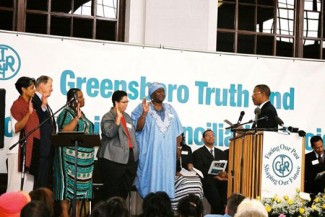
To mark 15 years of ICTJ, we asked staff past and present for the memories that stand out from their work. Former ICTJ consultant and Executive Director of the Truth and Reconciliation Commission in Greensboro, North Carolina Jill Williams reflects on her efforts to bridge a cultural gap in the pursuit of shared values.

Mexico is overwhelmed by criminal violence and human rights violations in ways that ordinary rule of law mechanisms cannot address. While not undergoing a political transition, Mexico could benefit from transitional justice experiences when designing policies for pursuing accountabili...