




7 results

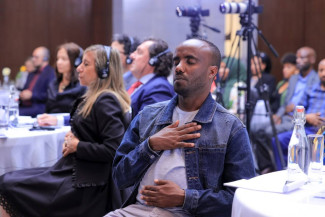
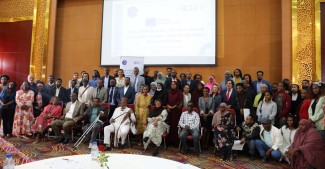
Victims, civil society advocates, policymakers, and development partners recently met for a high-level policy roundtable on integrating mental health and psychosocial support (MHPSS) in Ethiopia’s transitional justice process. Organized by ICTJ and the Advocacy Center for Democracy and Development, the convening offered a space for participants to discuss the need for MHPSS and how to improve access to it across the country.

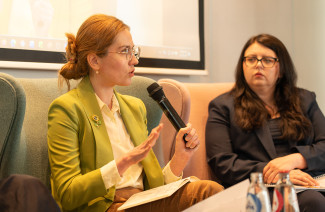
ICTJ strongly advocates for a holistic transitional justice vision for Ukraine as part of its programmatic activities. Leading this work is the head of ICTJ’s Ukraine program, Kateryna Busol. She is the author of the new report, “Myths and Ways Forward: Transitional Justice for Ukraine." In this interview, Busol discusses the path toward holistic justice for the country.

Despite earlier efforts to envision a national transitional justice policy, Ukraine remains overly cautious about establishing one. This report provides a robust substantiation of why Ukraine should revive its holistic transitional justice policymaking. In the first part, it debunks t...

A women holds up an infant in the air on sunny day outdoors, surrounded by yellow and blue balloons

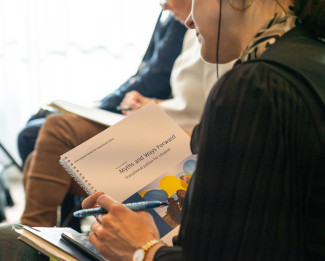
A new ICTJ report urges the revitalization of Ukraine’s holistic transitional justice policymaking. Debunking the most common myths about transitional justice in Ukraine, the report presents the key legal, policy, and victim-centered arguments in favor of advancing a comprehensive transitional justice framework.

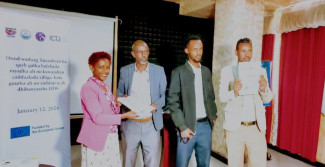
On July 28, 2025, the Somali Regional State Council passed a resolution designating April 6 as Victims’ Memorial Day, formally recognizing those who experienced violence and human rights violations across Ethiopia’s Somali Region. For years, victims and civil society actors, with support from ICTJ and other international partners, have persistently advocated for this acknowledgment, which marks a milestone in Ethiopia’s journey toward accountability and repair.

ICTJ and the Consortium of Ethiopian Human Rights Organizations cohosted a national event to increase victims’ and civil society’s meaningful participation in Ethiopia’s transitional justice process. The event brought together Ethiopian government officials and policymakers, civil society representatives, members of the media, and international stakeholders to discuss strategies to ensure victims and gender-related concerns remain at the center of the efforts underway in the country to deal with recent and past violence and its consequences.

As the United States and global audiences were informed of the death of Osama bin Laden at the hands of U.S. special forces, we are reminded how crucially important justice is in the discourse on America’s fight against terrorism. On the eve of these momentous events, ICTJ President David Tolbert spoke to an audience at American University in Washington about the need for the U.S. to ensure accountability for the conduct of its “war on terror.”