258 results

This briefing paper calls on the soon-to-be-established NLD-led Burmese government to seriously consider taking steps to deal with Myanmar’s troubled past as a way to help end the cycle of violence and human rights violations in the conflict-torn country.

This document presents a non‐exhaustive summary of some of the topics discussed at a workshop on outreach organized by the ICTJ in collaboration with the ECCC from March 3-5, 2010. It first provides a general overview of the ECCC functions and outreach activities. Thereafter, it highl...

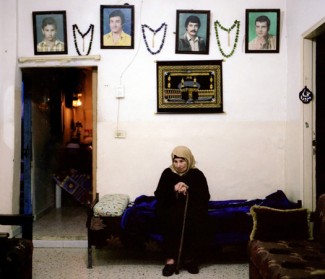
70-94% of the victims of enforced disappearances are men. But what happens to the women left behind? ICTJ's Amrita Kapur explains why women are uniquely impacted by the crime, and how transitional justice can help.

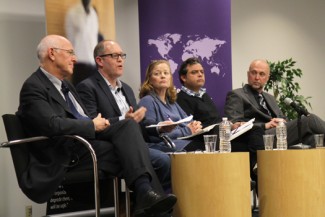
What happens when a state refuses to acknowledge the suffering of victims of mass atrocities? Or when the public celebrates perpetrators as heroes? Earlier this month, a panel discussion hosted by The International Center for Transitional Justice and New York University’s Center for Global Affairs grappled with the impact of denial on justice.

This paper is meant to help the Extraordinary Chambers in the Courts of Cambodia (ECCC), the civil parties before the court and other Khmer Rouge period survivors and their families deal with practical and legal issues in the course of fulfilling the reparations mandate of the ECCC. ...

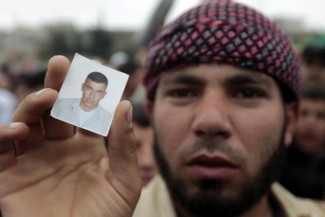
With enforced disappearances on the rise, ICTJ President David Tolbert says the path to prevention is clear: the international community must reorder its priorities and change its approach. The disproportionate attention on counterterrorism takes us further away from accountability and prevention, Tolbert writes. He urges the international community to lead the way in unequivocally censoring governments that use enforced disappearance as a political tactic — and ensuring there can be no impunity for this crime.

Overview of the proceedings of the ECCC, the hybrid tribunal created in 2006 to try senior leaders of the Khmer Rouge and those "most responsible" for the crimes that took place. The court has five suspects in custody and has almost completed its first trial which began in March of 20...

This paper analyzes the Maubuti case in Timor-Leste, the third serious crimes case to be brought to trial after the closure of the UN-supported Serious Crimes Unit in 2005. Maubuti was indicted for crimes against humanity including murder, attempted murder, and rape. The decision and ...

In the years immediately before the 2015 election, there was a palpable sense of waiting among those working in Burmese civil society. Many of their plans depended on one or two critical developments to take hold: the NLD coming to power and the signing of a nationwide ceasefire agree...

Myanmar’s democratic transition was brought to an abrupt halt on February 1, 2021, with the seizure of power by the country’s armed forces. Public protests against the military coup d'état quickly swelled to some of the largest since 2007, to which the military has responded with deadly force. Given the deteriorating situation, restoring civilian rule appears to be an increasingly immense challenge.